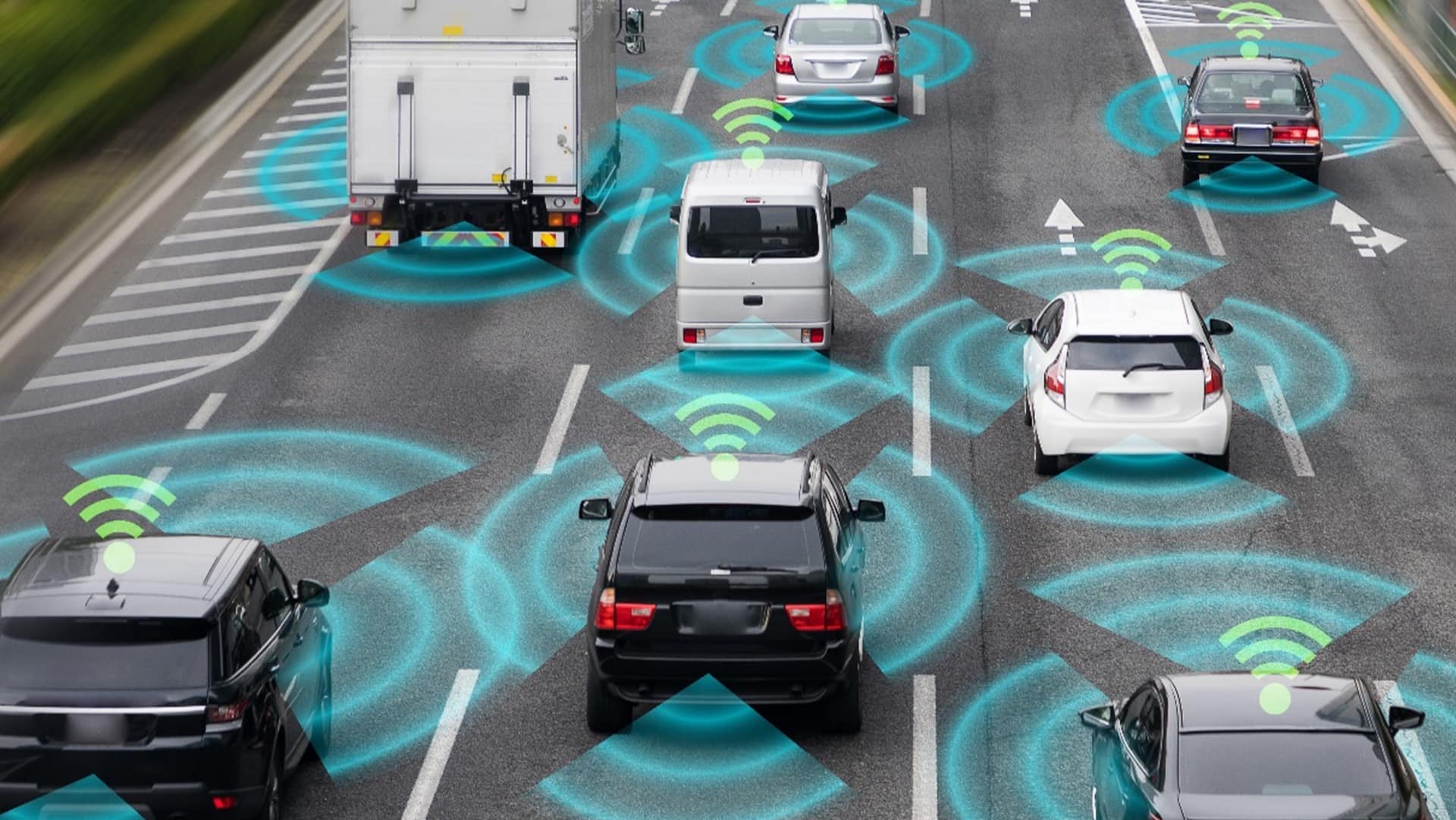
India to get vehicle-to-vehicle communication: How it helps you
What's the story
To combat the high number of over 1.8 lakh annual road fatalities, India is set to introduce vehicle-to-vehicle (V2V) communication technology. The system allows cars to exchange real-time safety data, making it a critical global tool for preventing accidents. The Department of Telecommunications (DoT) plans to de-license the 5.875-5.925 GHz spectrum band for V2V communications, with a notification expected soon to provide the necessary framework for such systems.
Tech details
How V2V communication works
The V2V technology allows vehicles to communicate wirelessly with each other, sharing data about their speed, position, direction of travel and road conditions.
The main goal is to give advance warnings of possible dangers like sudden braking by a vehicle ahead or blind-spot risks.
This would enable drivers to react sooner and avoid potential collisions.
Implementation strategy
DoT working on frequency range in consultation with MoRTH
A senior DoT official told BusinessLine that while the department will handle the spectrum part, it is up to the Ministry of Road Transport and Highways (MoRTH) to decide on making this tech mandatory in vehicles.
The official also said that the frequency range to be used would be decided in consultation with MoRTH and industry requirements.
Tech comparison
V2V v/s ADAS
Industry executives have noted that V2V technology is different from existing Advanced Driver Assistance Systems (ADAS).
While ADAS features like lane departure warning and collision avoidance rely on cameras, radar, and sensors mounted on the vehicle itself, V2V communication can extend a vehicle's awareness beyond its sensors' line of sight.
This could greatly improve safety in scenarios which involve curves, obstructions, fog or heavy traffic.
Market presence
Global adoption of V2V technology
V2V technology is already being used in several global markets, including the US and Europe.
In India, its use has been limited to some premium vehicle manufacturers who have launched their own connected-car systems with features similar to V2V communication.
For example, Mercedes-Benz introduced "Car-to-X Communication" feature through the S-Class model in 2021.
The system enables connected vehicles to share information on road hazards and adverse weather conditions via a cloud-based network.