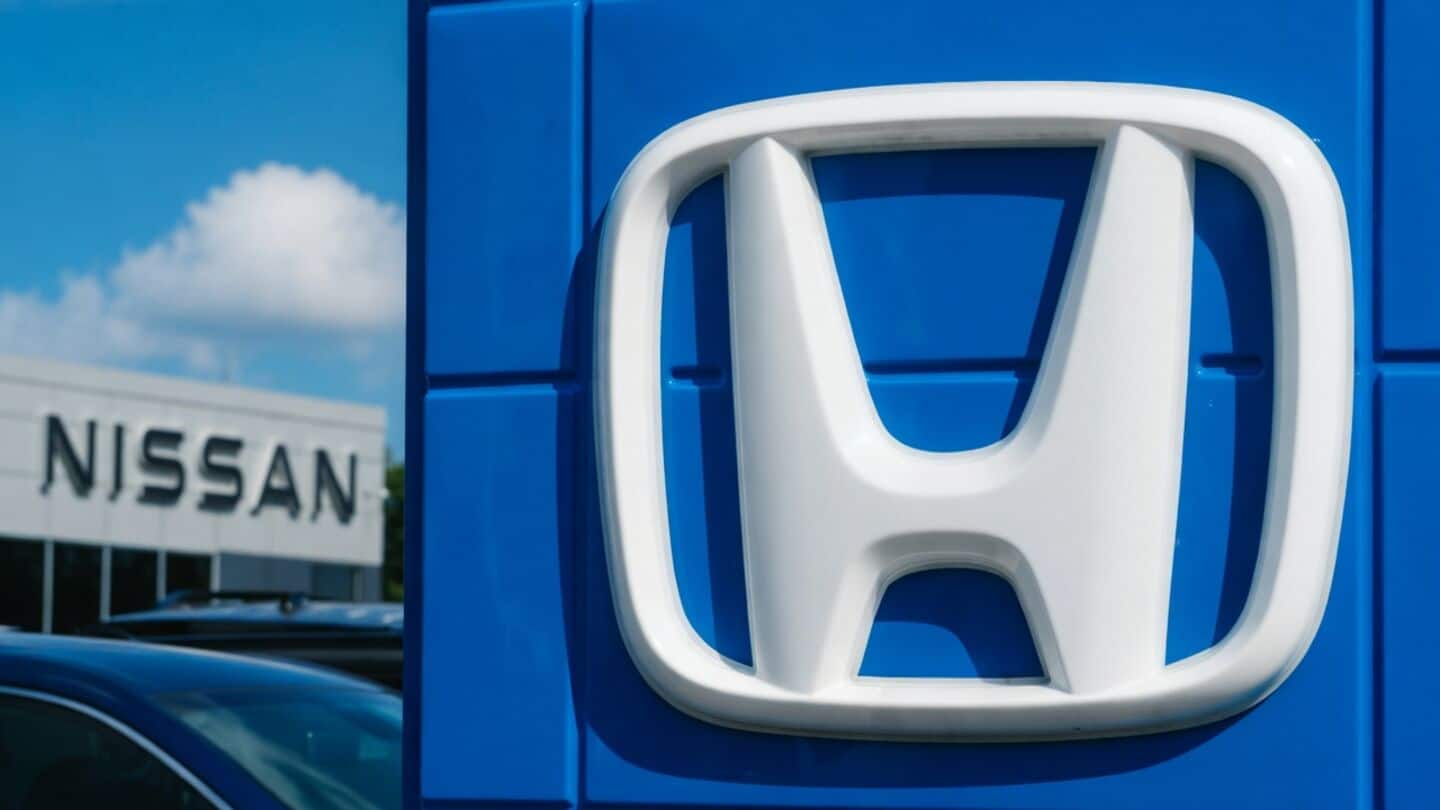
Why Nissan and Honda have joined hands
What's the story
Japanese automotive giants Nissan and Honda have announced a strategic partnership to develop software and electronic parts for their future vehicles. The collaboration will focus on standardizing components in "core ECUs," or electronic control units, as well as software. The two companies first started discussions in 2024 to work together on electric vehicles (EVs) and automotive intelligence technology.
Tech focus
Focus on software-defined vehicles
The partnership between Nissan and Honda is mainly focused on software-defined vehicles.
These are cars with functions and features controlled by software instead of hardware mechanics.
The deal doesn't specifically mention EVs or any particular model names, but it does highlight a shared commitment to advancing automotive technology through collaboration.
Efficiency boost
Cost-cutting and efficiency
The partnership is expected to cut costs and speed up development by sharing components and collaborating on research.
This will also add efficiency in the economy of scale once the vehicles go into production.
The move comes as global competition in the auto industry heats up with a shift toward automated driving and zero emissions technology.
Market response
Responding to market changes
The strategic partnership between Nissan and Honda is a direct response to the changing market landscape.
Both companies are aware of the need to boost competitiveness through faster development cycles and more efficient investment.
"The two companies have conducted extensive studies on potential collaboration in the software domain," they said in a statement, emphasizing their commitment to this new era of automotive technology.