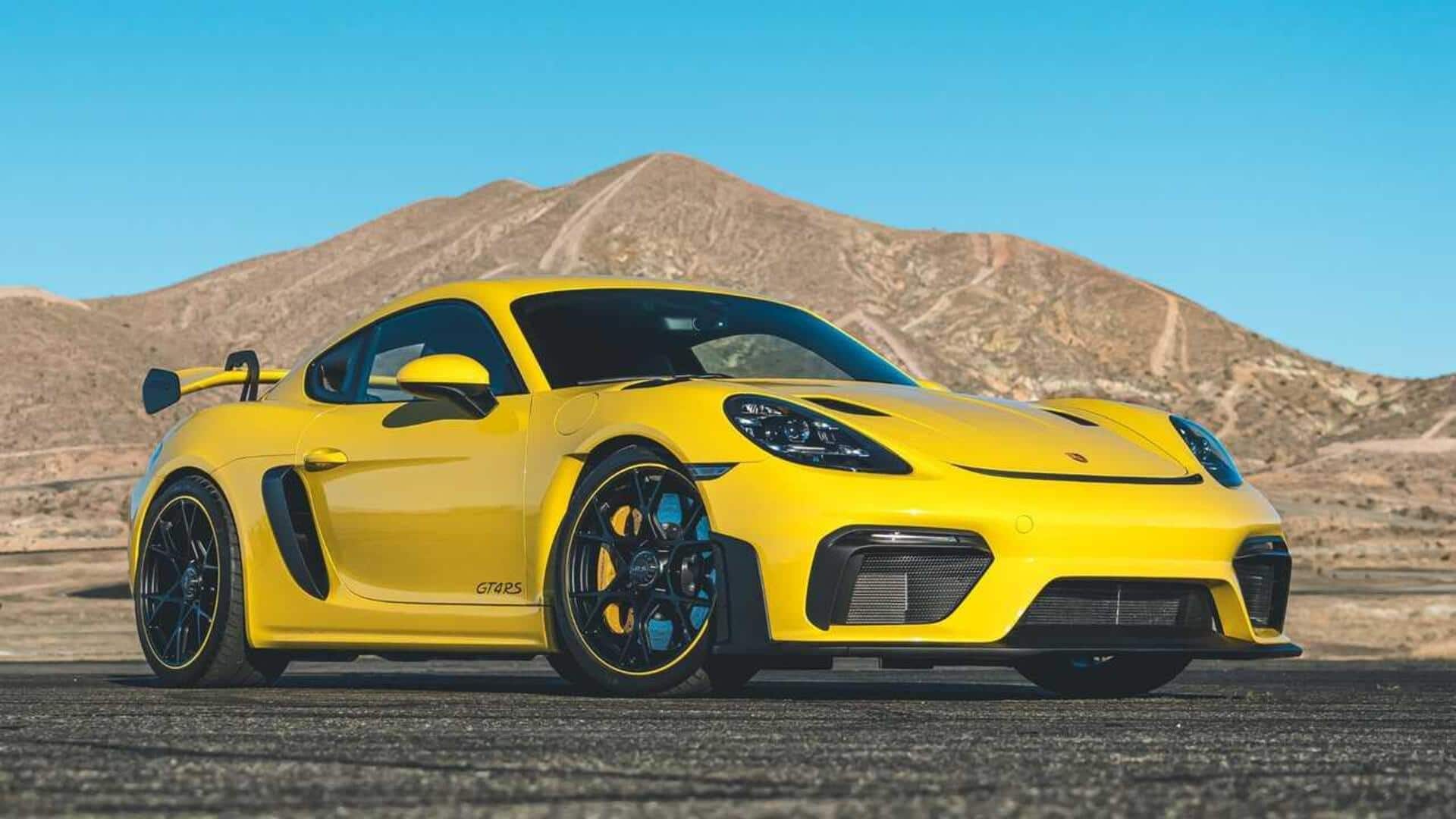
Porsche 718 Boxster, Cayman won't go fully electric anymore
What's the story
Porsche is reportedly reworking its next-generation 718 Boxster and Cayman models to accommodate petrol engines. The move comes as a major shift from the company's earlier plans to make these models fully electric. The production of the fourth-generation Boxster and Cayman was halted last month, with new electric versions expected this year. Due to declining EV demand, Porsche had already announced it would continue selling "top" variants of current models.
Strategic shift
Porsche's strategic realignment and EV plans rollback
The decision to continue selling "top" variants was part of a larger "strategic realignment" at Porsche.
The company has also rolled back several EV plans, incurring a £6.65 billion loss in the process.
Now, senior sources from Porsche's Weissach engineering center have revealed to Autocar that the company is working on bringing petrol engines back into its lineup, by retrofitting an electric-only platform for mid-mounted engines.
Efficiency focus
New strategy aims for production efficiency
The move to reintroduce petrol engines is aimed at maximizing production efficiency and scale on key components.
This marks one of the most radical drivetrain reversals in Porsche's history, following a trend seen in other automakers such as Fiat with its 500 Hybrid and Mercedes-Benz with the Viano.
The decision is part of a broader recalibration of Porsche's new-model strategy, which now includes cars like Macan that were previously slated to go fully electric.
Bridging gap
New PPE Sport-based 718s to bridge gap until 5th-generation models
The new PPE Sport-based 718s are different from the "top" variants that Porsche had announced during September's "strategic realignment."
The "top" trims are expected to be the successors of the current-generation RS and GT4 RS, which will sit above the 2026 EVs.
This new information indicates they will serve as a bridge until the fifth-generation models arrive toward the end of this decade.
Performance goal
Porsche aims for dynamic parity with new 5th-generation ICE models
Porsche insiders have stressed that the new fifth-generation internal combustion engine (ICE) models must achieve dynamic parity with their electric counterparts.
This is a tall order, considering the "ultra-low center of gravity" provided by the electric architecture.
Achieving this will be difficult as the PPE Sport platform uses a stressed, load-bearing battery pack and flat floor, which would compromise the entire bodyshell if removed.
Design solution
Engineers propose new structural floor section
To tackle these challenges, Porsche engineers have proposed a new structural floor section that bolts into the platform's existing hard points. This would add rigidity back into the design.
A redesigned rear bulkhead and subframe will then support the engine and transmission.
However, major packaging constraints remain as the electric structure doesn't provide a central tunnel or space for a fuel tank, fuel lines or exhaust system.