Why Tesla won't let minors ride in Cybercab
What's the story
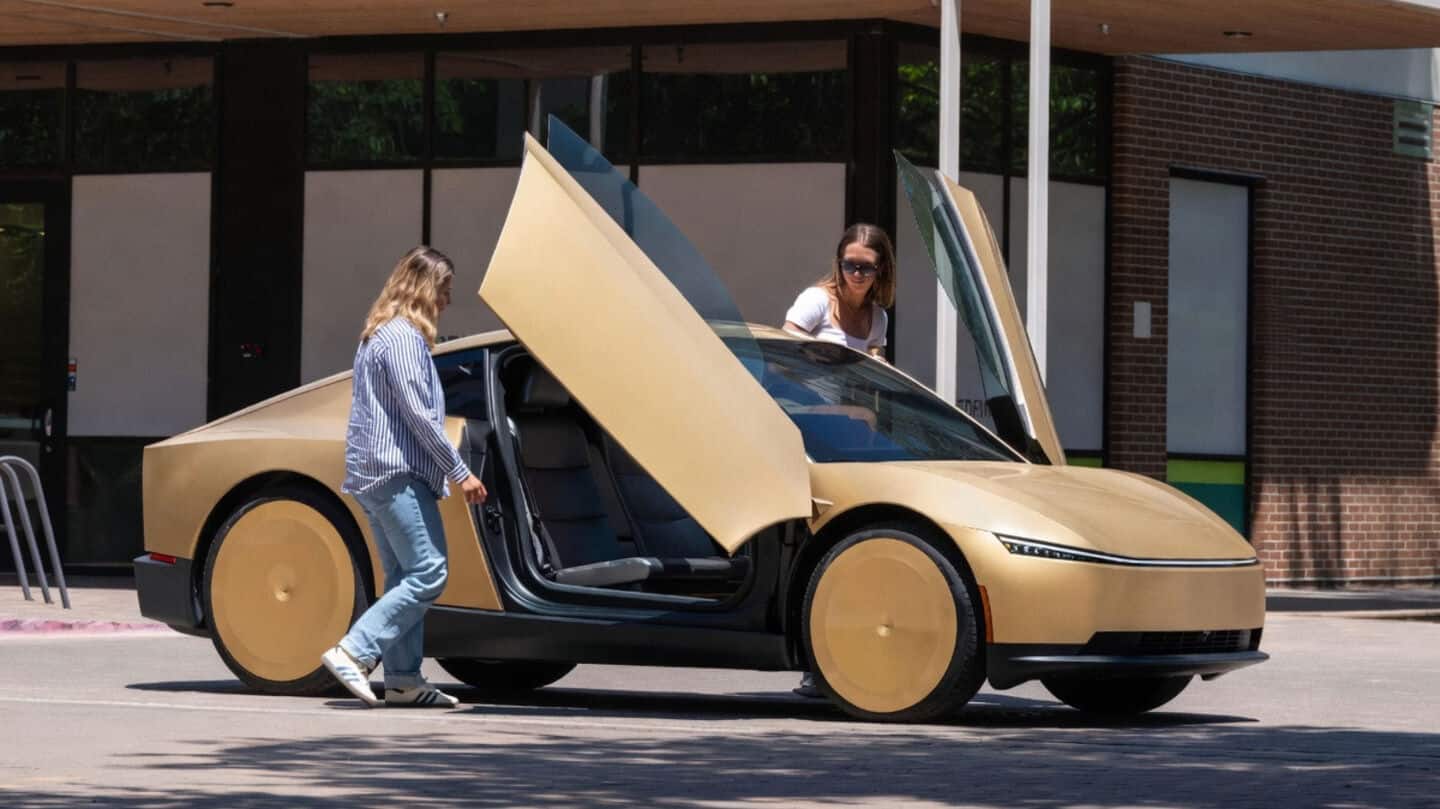
Tesla recently unveiled Cybercab at a private event, much different from the grand livestreamed shows it usually puts on. The event, which was mostly silent and short, didn't even feature CEO Elon Musk as a speaker. Notably, Tesla has barred minors under 13 from riding in the vehicle "at this time." Unlike its "Robotaxi" Model Y SUVs that allow kids aged 8-17, Cybercab doesn't have standard LATCH anchors for child seats. Instead, they can only be secured using seat belts.
Safety measures
NHTSA is already investigating the Cybercab's rollout
The Cybercab is a fully autonomous vehicle that relies solely on cameras and AI for navigation, promising to be more affordable than Waymo's offerings.
In the meantime, the Cybercab's launch has raised safety concerns, with the National Highway Traffic Safety Administration (NHTSA) already investigating its rollout.
The company must now demonstrate that these vehicles are safe to the public.
Crash protocol
In case of a collision, the vehicle takes these actions
In case of a collision, the Cybercab's airbags deploy, doors unlock, hazard lights and interior lights turn on, the high-voltage battery is disabled, windows vent, and brakes engage to stop and park.
It also establishes a two-way connection with Tesla's rider support team via the infotainment system.
The vehicle uses electronic door latches for automatic opening at start or end of rides but has manual releases on each door's armrest for emergencies.
Tech features
The vehicle employs a brake-by-wire system
The Cybercab employs a brake-by-wire system, replacing the traditional hydraulic one with electronic actuators for controlling brake calipers. This move is mainly to cut costs.
The vehicle also features USB-C outlets that provide an impressive 90W of power, nearly four times more than what's usually found in cars.
However, Tesla has yet to clarify why the windows of this innovative vehicle "cannot be fully opened at this time."