How China's export controls affect India's solar manufacturing efforts
What's the story
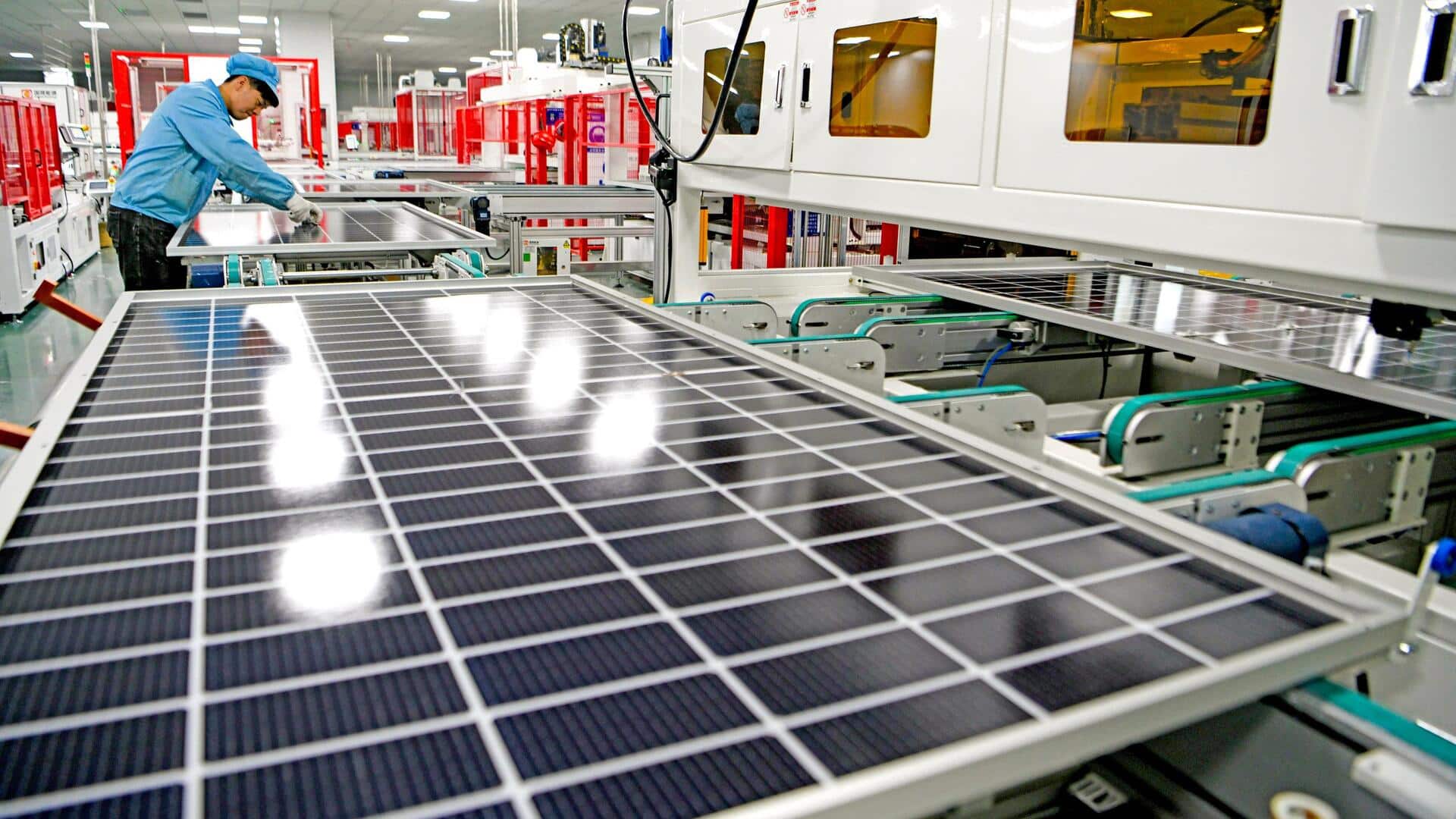
China has proposed export controls on 12 technologies used in the production of solar equipment. The move, which is part of a broader revision that also includes artificial intelligence (AI) and biotechnology, is aimed at protecting national security. The Ministry of Commerce said these photovoltaic technologies are being increasingly used in sensitive areas such as aerospace and national defense.
Impact on businesses
Implications for companies and India's domestic manufacturing efforts
The proposed export controls could have major implications for companies like Tesla, which are looking to expand their production in the US.
In April, Chinese officials had initial talks with manufacturers about possible restrictions on advanced solar-panel manufacturing technologies.
The move also comes as China has restricted exports of solar-manufacturing technology to India, a step analysts say is aimed at maintaining its dominance amid India's efforts to boost domestic manufacturing and reduce dependence on China.
Safeguarding tech
Ministry's statement on export restrictions
The export restrictions are designed to "guard against the risks of technologies from running out of control or being improperly disseminated, while safeguarding normal international exchanges and cooperation in science and technology," the Ministry of Commerce said.
Until the export-control catalog is formally updated, exporters are required to register certain overseas technology transfers.
The public consultation period for this proposal will end on November 15.
Tech ban
Specific technologies targeted in the proposed restrictions
China plans to ban technologies used in the production of some thin wafers, perovskite and tandem solar cells, as well as large-scale fluidized-bed polysilicon production technologies.
Perovskite is a new tech with the potential for higher conversion efficiency. Tandem cells combine perovskite and silicon layers to capture more sunlight spectrum.
Fluidized-bed tech for polysilicon production is cheaper and more energy-efficient than the dominant Siemens process.