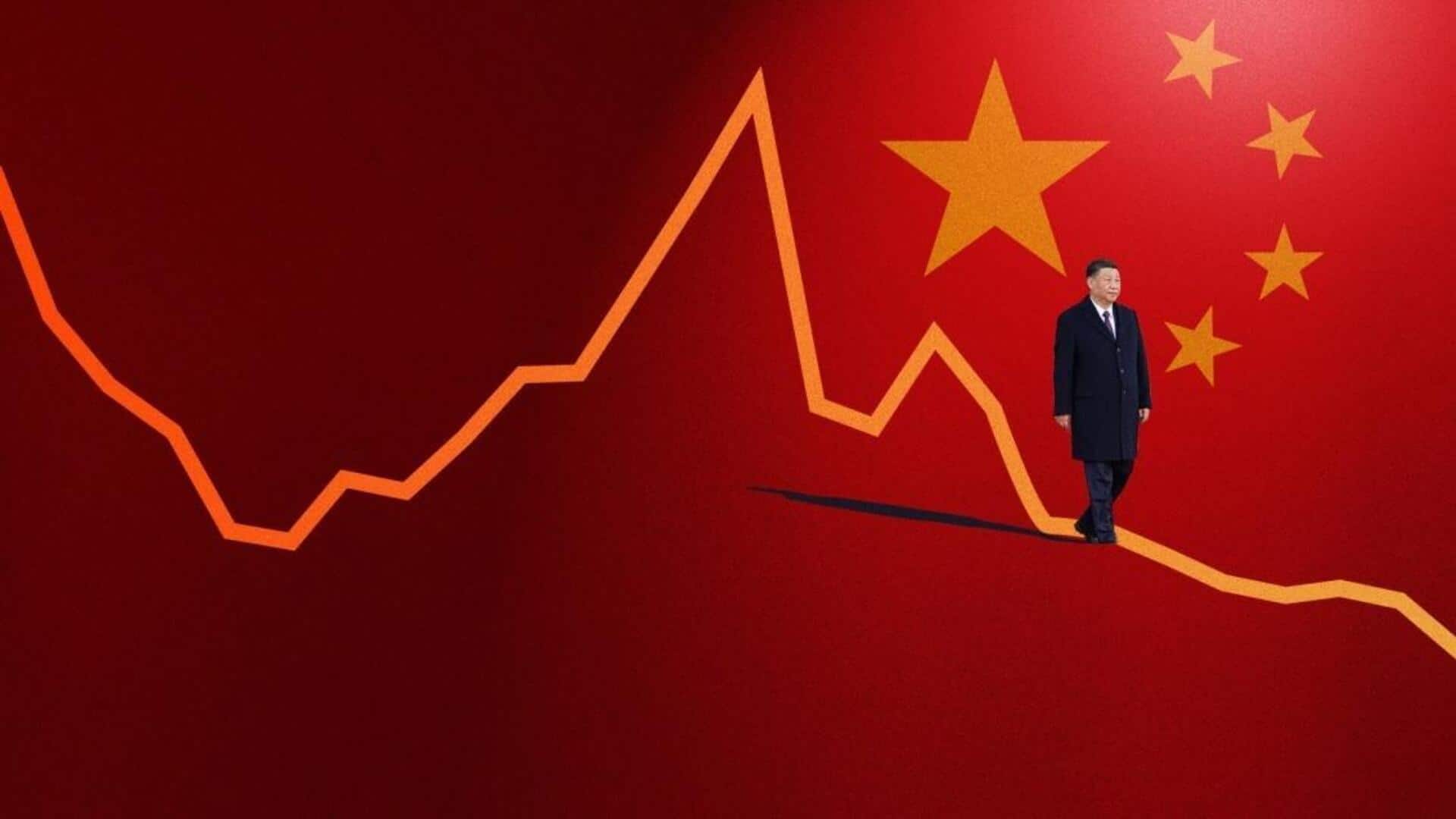
China to unveil new 5-year plan focusing on economic reform
What's the story
China is gearing up to unveil its latest five-year plan, a strategic blueprint outlining policy priorities and long-term goals for economic reform, industrial upgrading, technological innovation, national security, environmental protection and social development. The new plan will be the 15th since China adopted Soviet-style quinquennial planning in the 1950s. The upcoming plan, to be announced on March 5, is likely to focus on boosting consumer spending and driving technological innovation.
Growth targets
Xi's vision of 'Chinese-style modernization'
In 2022, President Xi Jinping unveiled his vision of "Chinese-style modernization," which aims to double the size of the economy by 2035.
This ambitious target would require an average annual growth rate of around 4.2% over the next decade.
However, the new plan is unlikely to set a specific economic growth target for the entire period from 2026-2030, unlike its predecessor which also skipped a multi-year goal for the first time.
Economic indicators
Consumption target and growth rate expectations
A key question is whether Beijing will introduce a consumption target, which would indicate how serious the leadership is about rebalancing growth drivers.
Analysts expect policymakers to aim for an annual growth rate of between 4.5% to 5% from 2026 onward.
They also expect Beijing to target an urban jobless rate below 5.5% for the period from 2026-2030, in line with its previous plan.
Development goals
R&D spending and urbanization rate targets
China is also expected to target a more than 7% annual increase in research and development spending, similar to its last plan but lower than the 10% average pace recorded in 2021-2025.
The country is likely to target an urbanization rate of 70% by 2030, compared with a goal of 65% under its previous plan.
These targets reflect China's commitment to technological self-reliance and green development.
Policy initiatives
Other priorities in the new 5-year plan
The five-year plan is likely to prioritize technological self-sufficiency through industrial policy, a goal that could conflict with consumption-boosting efforts.
China will probably promise to continue fighting price wars and excess capacity but may scale back if they threaten growth.
Beijing may also fast-track its push for a unified national market by breaking down local government protectionism and standardizing regulations across markets, labor, energy, land and industries.