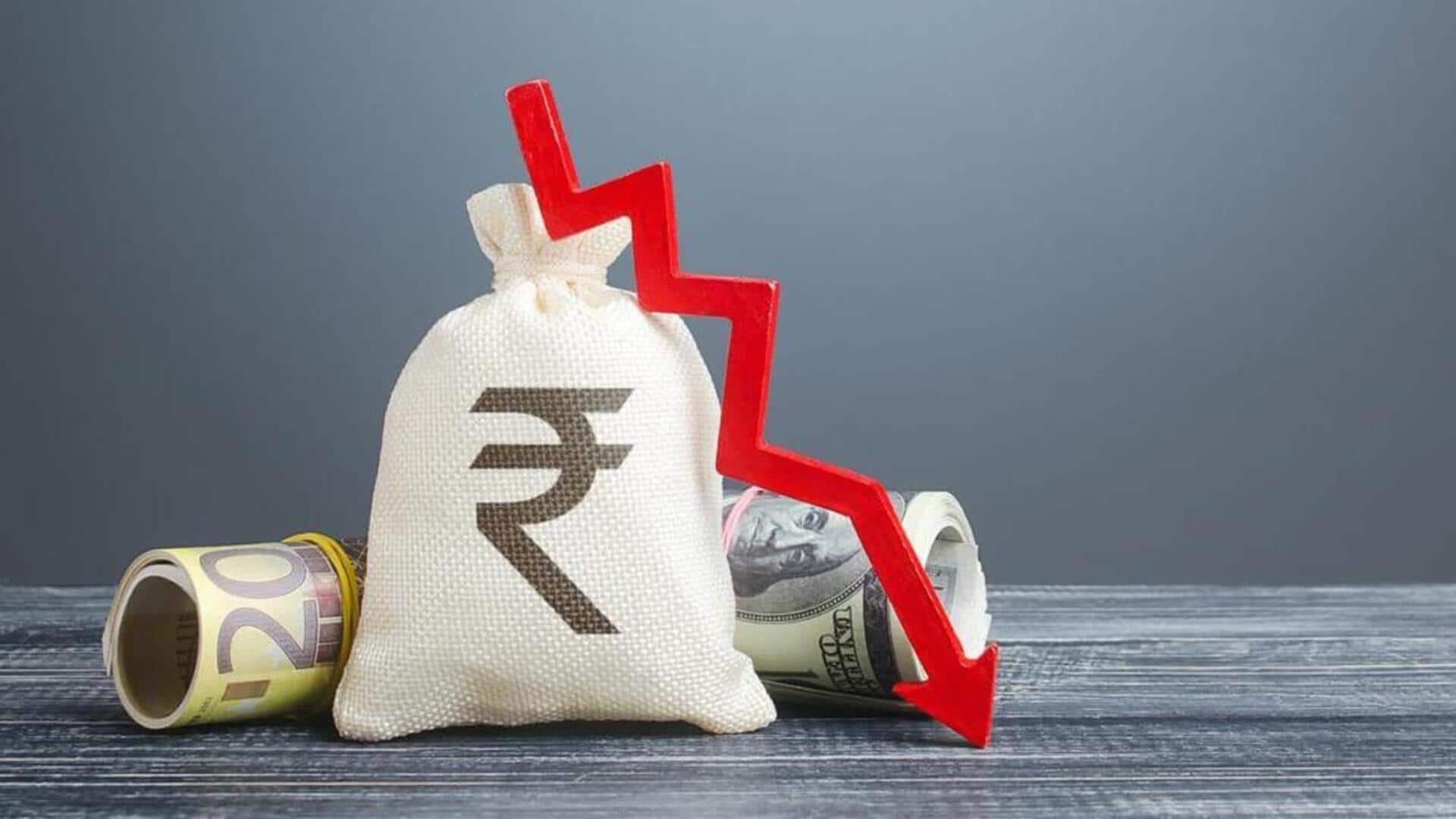
Indian rupee crashes past 95/dollar for first time
What's the story
The Indian rupee hit a record low today, breaching the key psychological level of 95 against the US dollar. The currency fell to as low as 95.14 per dollar during intraday trading, before settling around the 94.95-95.05 range later in the day. This is the first time in history that it has crossed this level, reflecting a combination of high global oil prices and foreign investor sell-offs.
Market dynamics
INR depreciation also attributed to FPI sell-off
The surge in crude oil prices has significantly increased India's import bill and led to a decline in the stock market.
The rupee's depreciation is also attributed to foreign institutional investors selling their stocks and bonds.
The government has responded by slashing excise duties on petrol and diesel amid this massive stock sell-off.
Foreign investors have been selling off Indian stocks at an unprecedented rate, with net sales worth $11.7 billion through March 25.
Economic impact
Mitsubishi's $4.4B deal may support rupee
The rupee's depreciation is expected to make imports more expensive, potentially pushing up inflation levels.
India imports nearly 88% of its crude oil, meaning every $1 increase in oil prices could cost the government hundreds of millions of dollars in monthly import costs.
Analysts expect support in the coming days from a major foreign investment deal worth around $4.4 billion from Mitsubishi in Shriram Finance.
Regulatory measures
INR has depreciated nearly 10% against USD
In light of the rupee's depreciation, the Reserve Bank of India (RBI) has been closely monitoring market conditions.
So far, it has allowed the Indian Rupee to be determined by supply and demand dynamics in the forex market.
The currency has depreciated nearly 10% against the dollar so far in this fiscal year, reflecting both global dollar strength and domestic pressures.