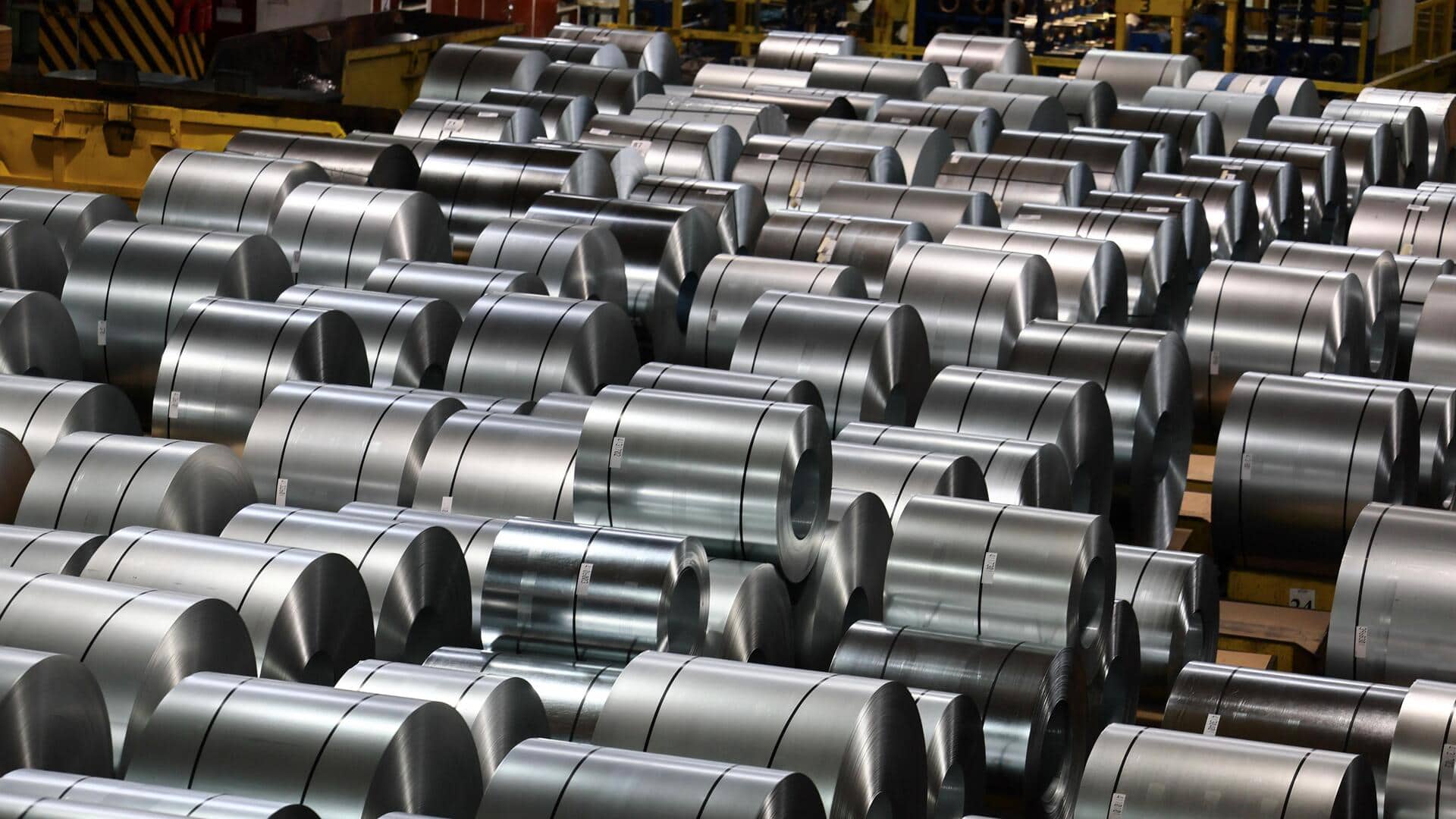
India aims to boost steel-production capacity to 604MMT by 2047
What's the story
India has unveiled a draft steel policy, aiming to ramp up the country's steel production capacity from the current 220 million metric tons (MMT) to an ambitious 604 MMT by 2047. The proposed policy, which is now open for public consultation, also outlines strategies for reducing emissions and ensuring access to iron ore and coking coal, two essential raw materials needed for steel production.
Emission reduction
Steel sector's emissions to be cut
The draft policy seeks to cut the steel sector's average carbon-emission intensity from the current 2.54 tons of CO2 per ton of crude steel to about 1.54 tons by 2047.
This nearly 39% reduction is in line with India's commitment to achieving net-zero emissions by 2070.
The ambitious target would also require a significant increase in raw material supplies, especially iron ore and coking coal.
Raw material supply
Plans to secure access to high-grade reserves
The steel ministry anticipates that iron ore demand will reach 772 MMT.
To meet this requirement, the government plans to secure access to high-grade reserves through overseas investments and joint ventures.
Similarly, coking coal demand is expected to hit 236 MMT. To mitigate supply risks, the government intends to diversify sourcing through "strategic global outreach" and acquisition of overseas assets.
Implementation challenges
Major challenges for the steel industry
The proposed expansion comes as India looks to strengthen its industrial base and meet the steel needs of infrastructure development, construction, and manufacturing.
However, increasing capacity while reducing emissions is a major challenge for an industry that relies heavily on coal-based production.
The success of this policy will depend on investments in new steelmaking facilities, access to reliable raw materials, and the adoption of cleaner production technologies.