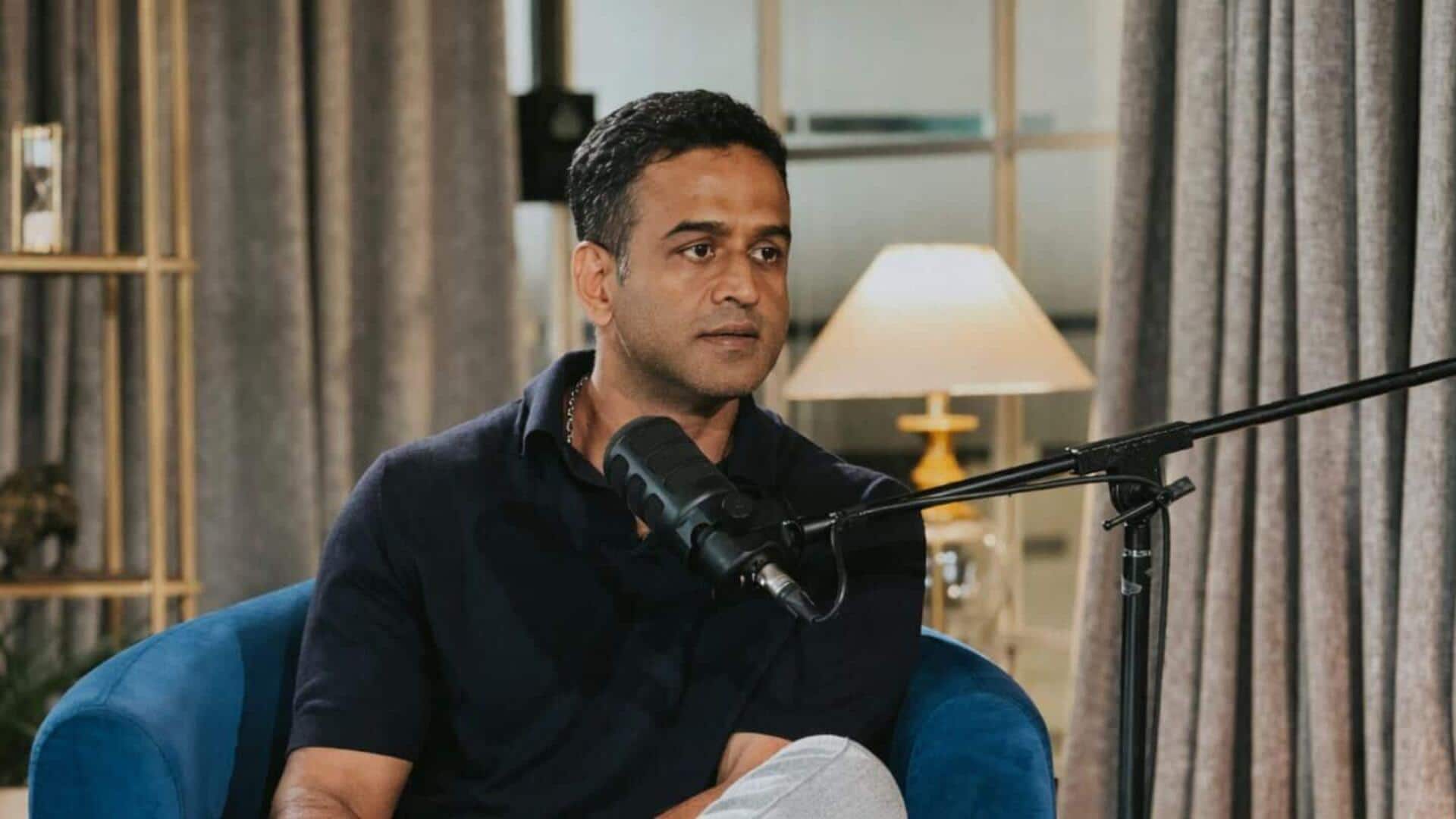
Nithin Kamath says UPI MDR could raise costs for brokers
What's the story
Zerodha co-founder Nithin Kamath has raised concerns over the proposed Merchant Discount Rate (MDR) on Unified Payments Interface (UPI) transactions. He believes that the new structure could lead to major expenses for stockbrokers, even when customers don't execute trades. Kamath has called for a more reasonable transaction charge with a lower cap specifically tailored for the broking industry.
MDR support
Kamath suggests alternative rates for broking
While he supports the introduction of MDR on UPI, Kamath thinks the proposed structure doesn't consider how customers use UPI to transfer funds to broking accounts.
He said, "I think having an MDR is okay." However, he suggested a more reasonable rate of 0.02% with a cap of ₹5 or ₹10 per transaction for broking instead of a cap as high as ₹300.
Framework details
NPCI's new framework and its implications
The National Payments Corporation of India (NPCI) has announced a new framework, effective from October 15, 2026.
Under this, UPI merchant transactions over ₹2,000 will attract an MDR of 0.4%, capped at ₹300 per transaction.
Kamath believes this could be particularly difficult for brokers as there's no guarantee that a fund transfer would lead to a trade.
Cost implications
Potential costs for brokers under the new structure
Kamath illustrated the potential impact of the proposed MDR by saying 10,000 customers could make 50 UPI transfers of ₹2 lakh each in a month without executing any trades.
At the proposed MDR, this could cost a broker around ₹2 crore without generating any business.
He also flagged quarterly settlement requirements where brokers have to return unused client funds which are often transferred back to their broking accounts through UPI.
Brokerage policy
Concerns over financial viability for stockbrokers
Currently, Zerodha doesn't charge brokerage on equity delivery trades as its business model allows it to offer this service for free.
However, Kamath said absorbing an extra UPI cost on every transfer regardless of whether a customer trades or not may not be sustainable in the long run.
This highlights the potential financial burden that the proposed MDR could place on stockbrokers like Zerodha.