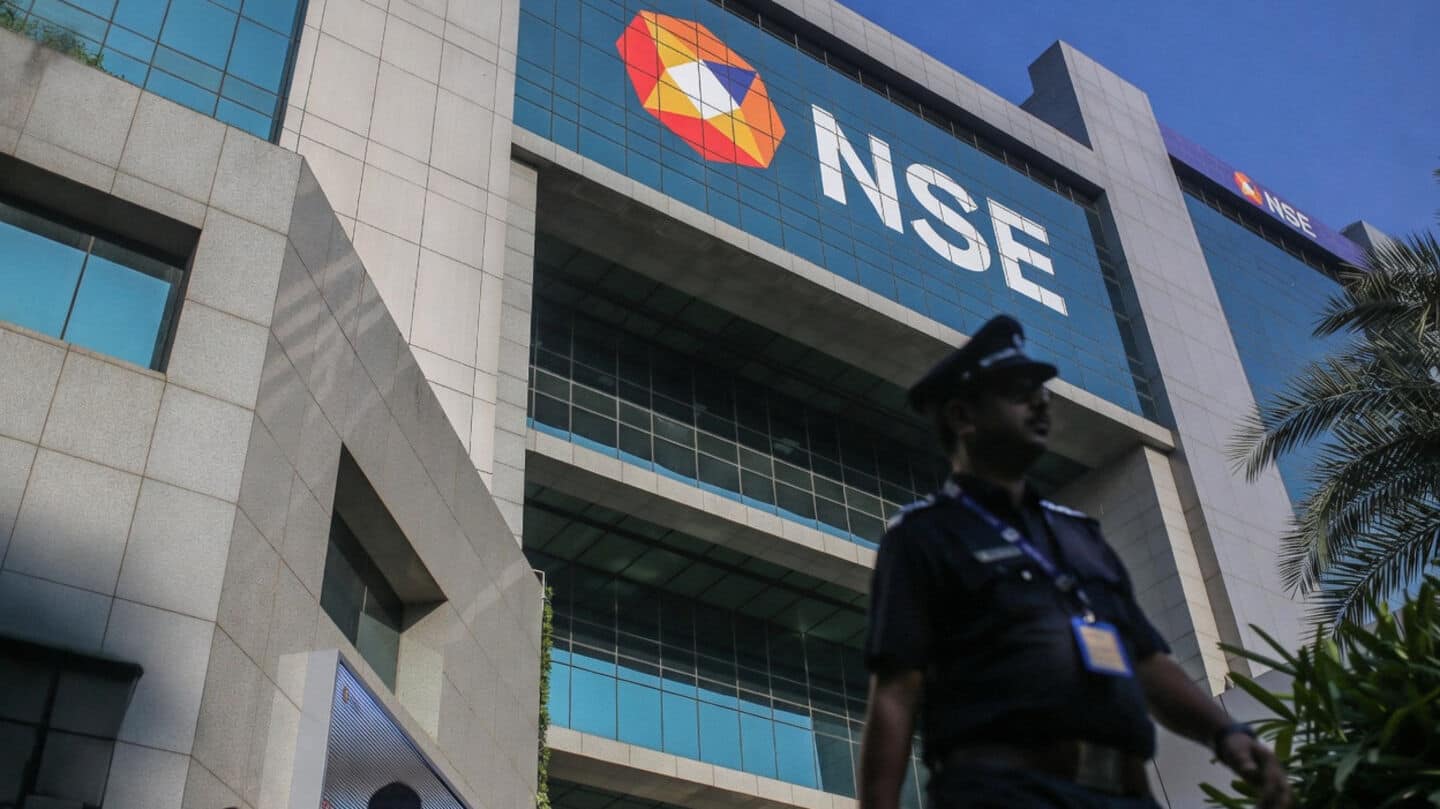
NSE set to kick off $3B IPO marketing next week
What's the story
The National Stock Exchange of India (NSE), the world's largest derivatives exchange by trading volume, is gearing up for a major milestone. According to Bloomberg, the NSE will start formal marketing for its initial public offering (IPO) as early as next week. This move marks a significant step toward what could be one of India's biggest public issues ever.
Marketing strategy
IPO details subject to change
As part of its marketing campaign, the NSE plans to hold investor roadshows in the US, London, Singapore, Hong Kong, the Middle East, and India.
The exchange is eyeing a September listing and is currently working with investment banks on its final marketing strategy.
However, these plans are still under discussion and details such as the size of the IPO, valuation and timeline could change.
Market valuation
Potentially India's largest IPO
The NSE is currently valued at over ₹5.25 trillion (approximately $55.1 billion) in the gray market, according to data from unlisted-stock trading platform UnlistedZone.com.
At this valuation, the proposed stake sale could raise nearly ₹306 billion, potentially surpassing Hyundai Motor India's 2024 listing of ₹278.7 billion, the largest IPO in India so far.
Banking partners
Investment banks on board for share sale
The NSE has appointed around 20 investment banks to manage its share sale. These include Kotak Mahindra Capital, JM Financial, Morgan Stanley, HSBC Holdings and Citigroup.
The exchange is expected to raise up to $3 billion through this IPO.
This comes as part of a series of high-profile listings in India, including Reliance Industries's Jio Platforms and SBI's mutual fund business.
Investor interest
NSE's offering differs from Jio Platforms's IPO
Unlike Jio Platforms's upcoming IPO, which will include a fresh issue of shares with some proceeds going toward debt repayment, the NSE's offering will be an offer-for-sale (OFS) only.
This means the money will go to existing shareholders instead of the exchange itself.
Both offerings are likely to draw strong domestic investor interest due to their dominant market positions but differ in their structures.