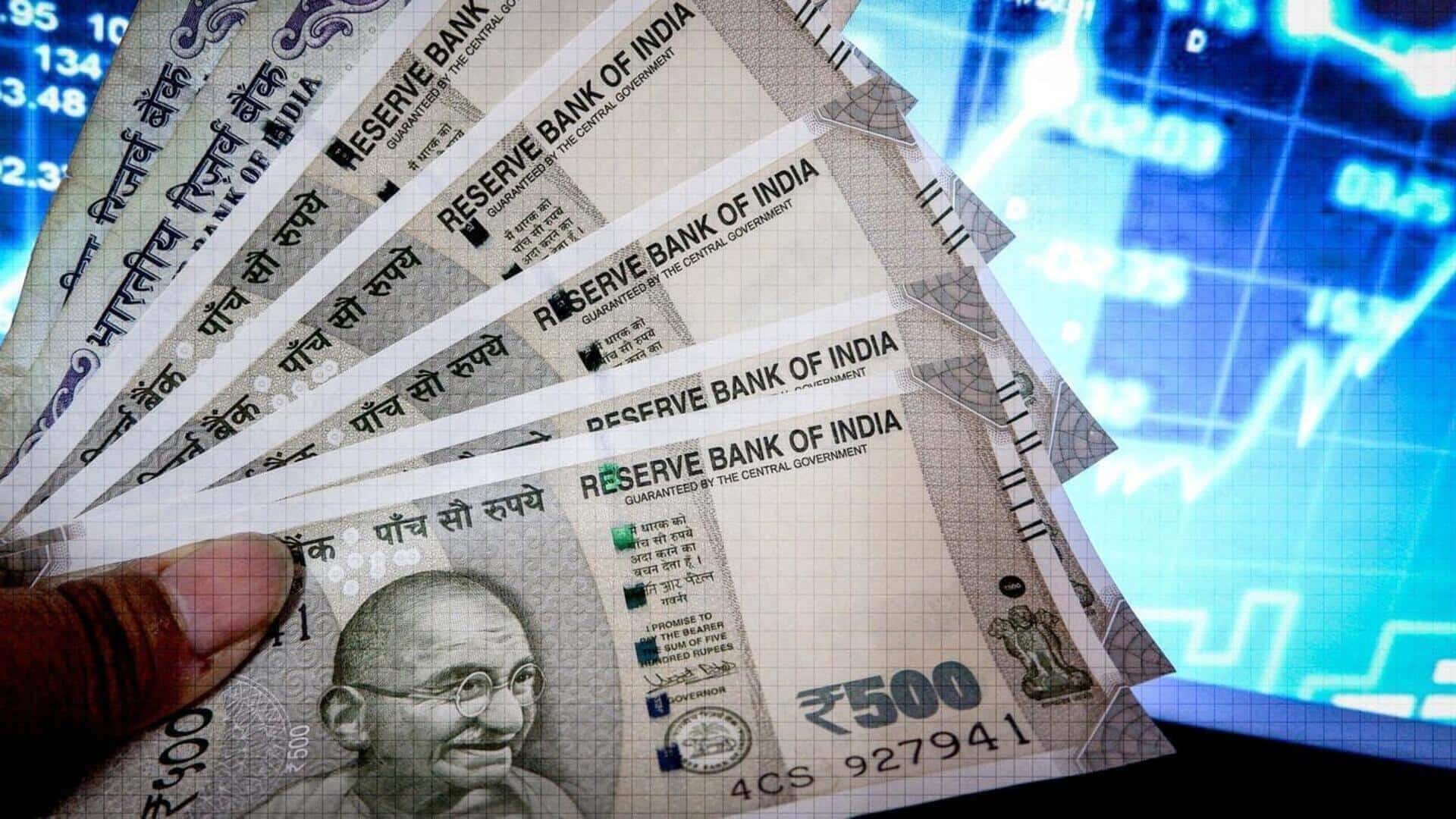
Rupee at record low boosts UAE dirham remittances to India
What's the story
The Indian rupee has hit a new low against the UAE dirham, prompting a surge in remittances from Indian expatriates in the Gulf region. The currency fell to nearly 97 per US dollar earlier in the week, pushing the UAE dirham to an all-time high of ₹26.29. This has created one of the most favorable remittance windows for Indians working in the UAE in years.
Financial impact
Increased transaction volumes at exchange houses
The depreciation of the rupee has resulted in a higher value for every dirham earned abroad.
For instance, a transfer of Dh5,000 now translates to over ₹1.31 lakh, a significant increase from earlier this year.
This has led to an increase in transaction volumes at exchange houses across the UAE as workers and professionals are sending money back home for household support, education, loan repayments and investments in India.
Investment trends
Expatriates investing in Indian fixed deposits, real estate, equity markets
Many expatriates are also capitalizing on the favorable exchange rates by investing in Indian fixed deposits, real estate, and equity markets.
This is a common trend seen whenever the rupee depreciates sharply.
The rupee has depreciated by 6-7% against the US dollar in 2026, falling from nearly 89 at the beginning of the year to around 97 now.
Market factors
Geopolitical tensions and rising global crude oil prices
The rupee's fall has been exacerbated by geopolitical tensions in West Asia, which have pushed global crude oil prices higher.
India imports over 80% of its crude oil, making it highly vulnerable to energy price shocks.
Higher oil prices widen the import bill, increase dollar demand and strain the current account deficit.
Economic pressures
Foreign portfolio outflows and strong global dollar demand
Analysts have also flagged persistent foreign portfolio outflows and strong global dollar demand as key pressure points for the rupee.
Institutional investors have pulled out ₹2.65 lakh crore from Indian equities in 2026, nearly matching last year's total outflows.
Bank of America Securities has warned that India's current account deficit could widen beyond 2% of GDP this fiscal year—the highest since 2012-13.
Regulatory response
RBI intervenes to curb volatility
The Reserve Bank of India (RBI) has intervened by selling dollars through state-run banks to curb volatility in the rupee's value.
However, traders say these moves have only smoothed fluctuations rather than reversing the trend.
Prime Minister Narendra Modi has also called for reduced dependence on dollar-intensive imports, including lower gold purchases and overseas travel.