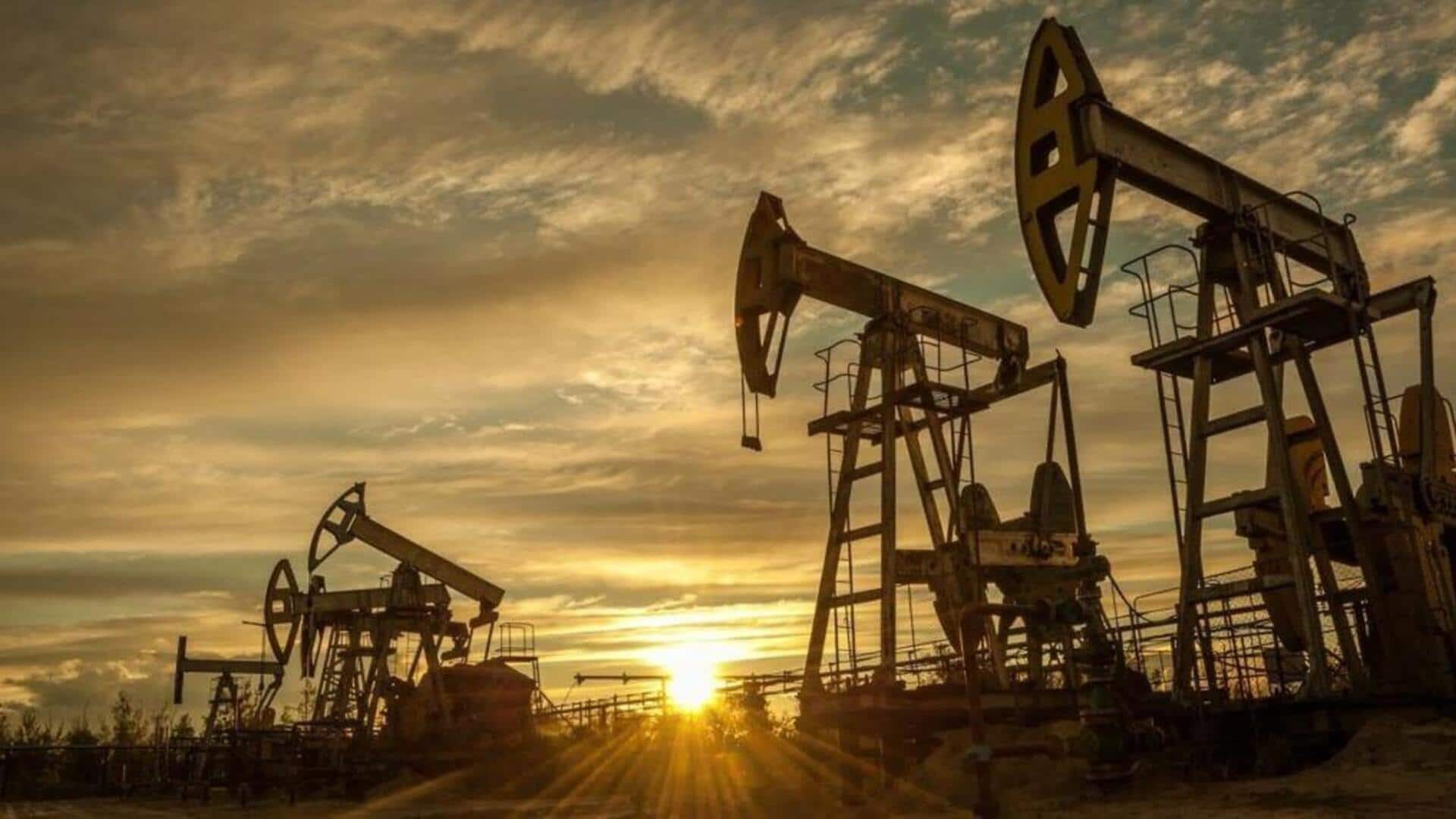
This Saudi pipeline is pumping 7M oil barrels per day
What's the story
Saudi Arabia is now using its East-West pipeline to pump crude oil at full capacity, Bloomberg reported on Saturday. The move comes as a response to the ongoing conflict in the Gulf region and the effective closure of the Strait of Hormuz by Iran. The pipeline, which runs across Saudi Arabia to the Red Sea, can carry up to seven million barrels per day (bpd) of crude oil.
Export strategy
Crude shipments from Yanbu touch 5M bpd
The East-West pipeline has become a key part of Saudi Arabia's strategy to keep its oil exports flowing.
Tankers are now redirecting to Yanbu, where they load crude for international markets. This is particularly important as the main route through the Strait of Hormuz remains blocked.
According to Bloomberg, crude shipments from Yanbu have reached around five million bpd.
Dual function
Pipeline supplies domestic refineries 2M bpd
The East-West pipeline not only exports crude oil but also supplies domestic refineries. Of the total volume transported via this route, around two million bpd is sent to these refineries.
However, even at full capacity, the pipeline does not fully replace the volumes previously shipped through Hormuz.
Before the war, Hormuz handled about 15 million barrels a day of oil shipments.
New threats
Red Sea concerns after Houthis announcement
With the situation in Hormuz, market concerns are now shifting toward the Red Sea. This comes after Yemen's Houthis said they are entering the war.
While there are no indications of plans to target vessels passing through this region or Bab El-Mandeb strait, past threats against shipping using drones and missiles remain a concern.
Measures
Saudi's contingency plan
Saudi Arabia had long prepared for a possible closure of the Strait of Hormuz.
Its contingency plan was activated within hours of the first US and Israeli strikes on Iran, with flows along the East-West pipeline steadily increasing since then.
The over 1,000km-long pipeline was built after risks highlighted during the 1980s Iran-Iraq war, when tanker attacks disrupted movement through this strait.