'Rules are very clear': SEBI chief issues warning to finfluencers
What's the story
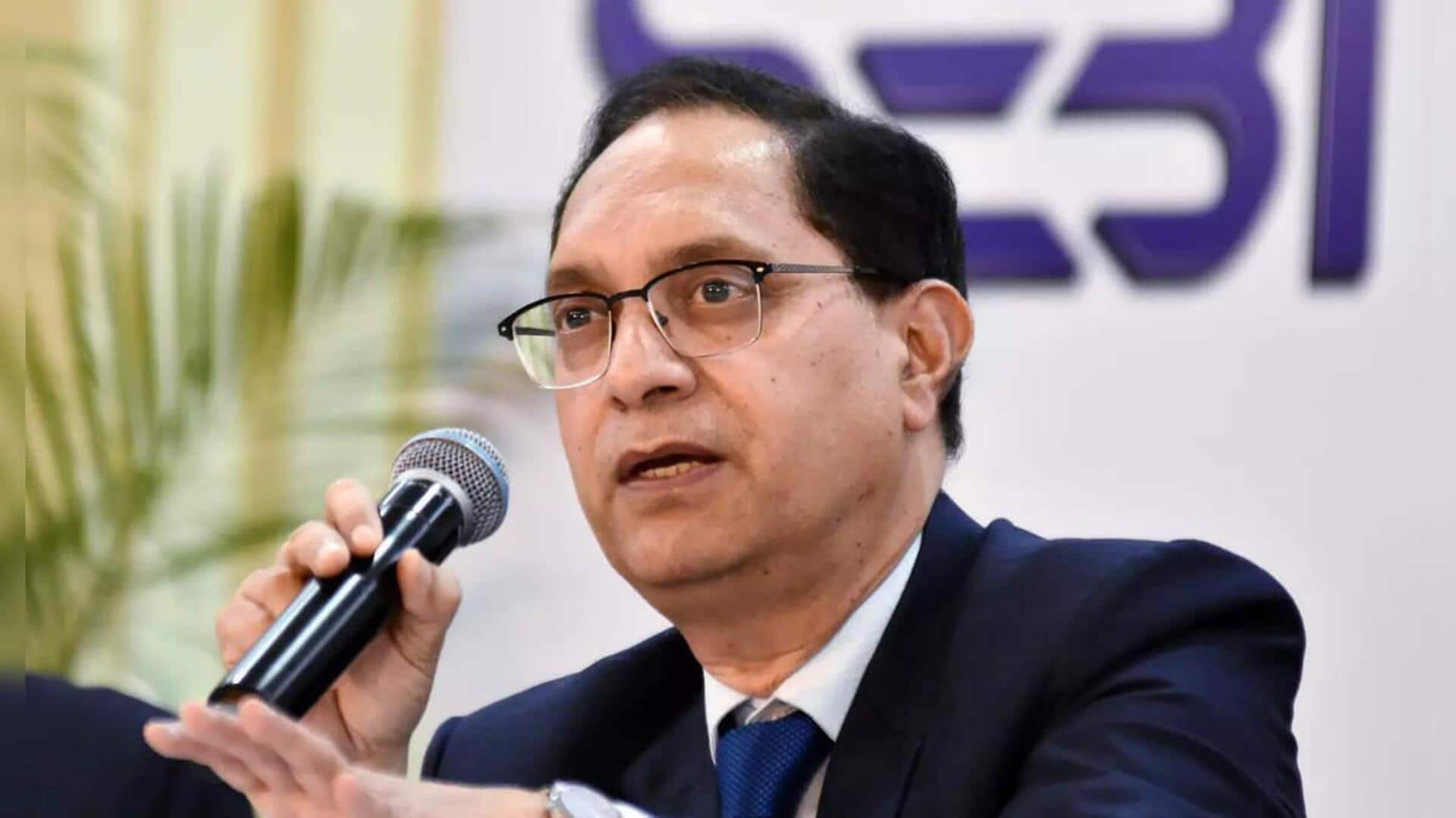
Securities and Exchange Board of India (SEBI) Chairperson Tuhin Kanta Pandey has issued a stern warning to financial influencers, or 'finfluencers.' He said that the regulator's rules regarding finfluencers are "very clear." Pandey was speaking at the 18th Mint BFSI Summit 2025 when he emphasized the need for balance between fundamental freedoms and risks of misinformation on social media.
Measures
SEBI's recent action against a finfluencer
SEBI recently took a major step against finfluencer Avadhut Sathe and his trading academy.
The regulator barred them from the securities market and seized ₹546.16 crore in alleged illegal gains.
This was for offering unregistered investment advisory and research services under the pretext of stock-market education.
Pandey said that there is no ambiguity in defining what constitutes investment advice, adding that finfluencers were involved in several pump-and-dump cases.
Regulatory clarity
SEBI's approach to misinformation and fraud
When asked if SEBI is drafting new rules to tackle misinformation and fraud by finfluencers, Pandey said the existing framework already offers clarity.
He stressed on the need for constant measures against social media-related issues.
"Social media is such an area that (there is need for) continuous surveillance and removal," he said.
Information access
Balancing freedom of expression and fundamental rights
Pandey acknowledged the people's right to access any information online.
He said there is a thin line between education and freedom of expression.
"Freedom of expression and people's fundamental rights have to be respected," he said, adding that tools are increasingly available to distinguish where these lines are being crossed.
Regulatory philosophy
Philosophy of 'optimum regulations'
At the summit, Pandey also discussed SEBI's philosophy of "optimum regulations."
He said regulation is for a purpose and not an end in itself. There should be review and sunset clauses for contextual rules and reactions so that they don't burden the entire ecosystem.
"This is endemic in India and several jurisdictions," he added, stressing on the need to work with industry stakeholders to address these issues.