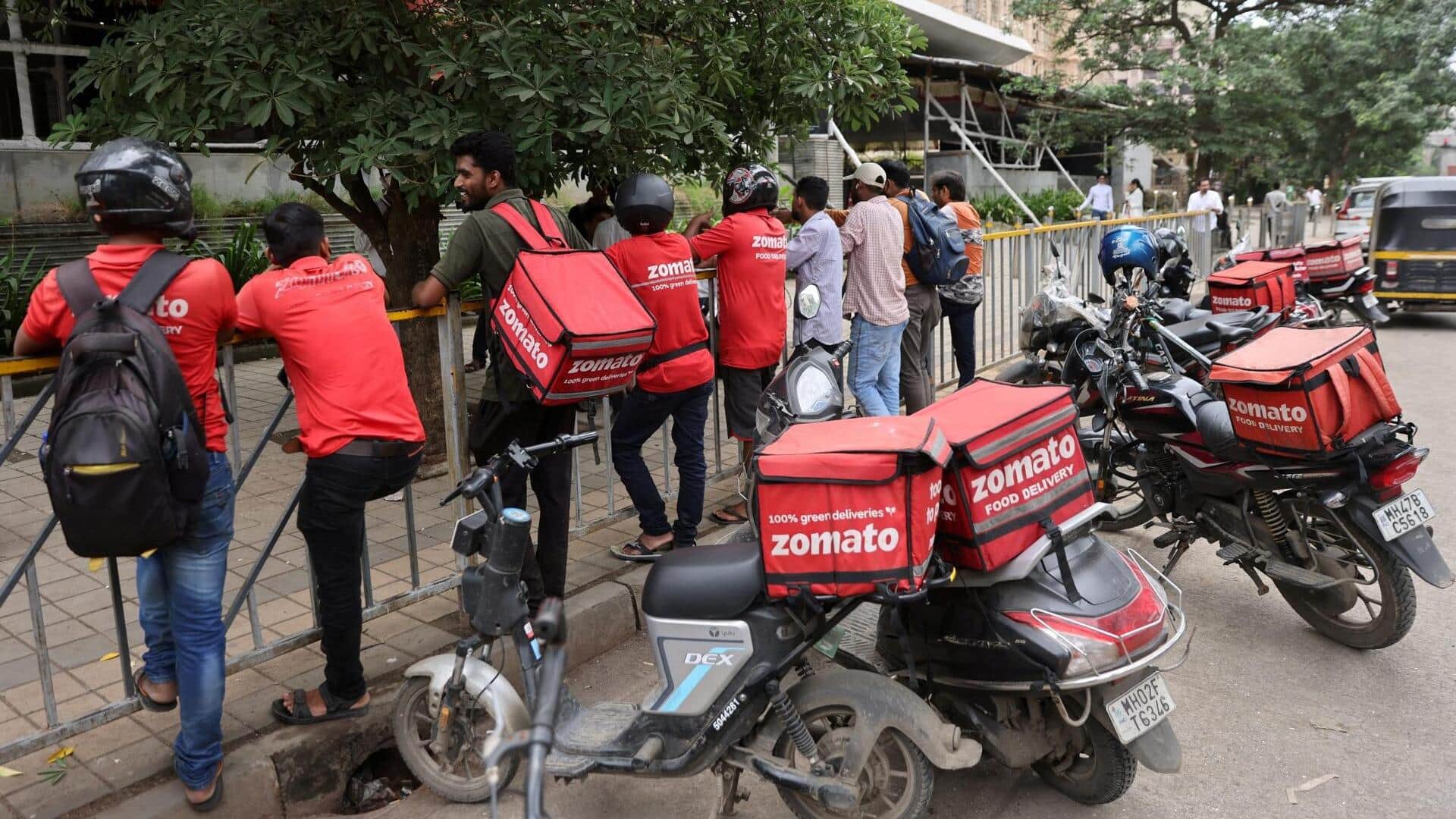
UN adopts historic convention to protect gig economy workers
What's the story
The United Nations' International Labour Organization (ILO) has adopted a historic convention to protect gig economy workers. The agreement, which is the first of its kind, seeks to provide labor protections to millions of people working in sectors such as food delivery and ride-hailing. The convention covers all platform workers, regardless of their employment status, according to the ILO members' text.
Agreement
Rapid changes in work dynamics
The convention comes as labor practices struggle to keep pace with the rapid changes in work dynamics.
The World Bank estimated there were up to 435 million online gig workers globally in 2023, who have largely been outside regular labor protections.
These companies control gig work through algorithms that assign tasks, determine pay, assess performance, and even terminate workers.
Worker classification
Major step forward for platform workers
Despite controlling tasks and pay, platforms often classify workers as independent contractors instead of employees.
This allows them to bypass minimum wage requirements, workplace safety standards, and access to social security in many cases.
The new convention is seen as a major step forward for platform workers globally by rights groups such as Human Rights Watch and trade unions.
Opposition voices
Opposition from US and New Zealand
The convention was backed by 406 members, including China, Japan, Germany, France and South Africa.
However, it faced opposition from eight members including the US and New Zealand.
A total of 36 members including UK and India abstained from voting on the agreement.
US representative Lorenzo Riboni said his country did not support a prescriptive binding convention in fast-evolving areas of the economy like platform economy.
Implementation challenges
Landmark moment for platform workers worldwide
Amanda Brown, Vice Chair of the ILO's Workers' Group, hailed the deal as landmark moment for platform workers.
She stressed that for the first time in international law history, those who drive our cities will be recognized and protected by a binding international standard.
The convention also mandates platforms disclose how automated systems affect workers.
Lena Simet from Human Rights Watch warned that while this is a breakthrough, governments still need to ratify it and ensure correct classification of workers.