US, China extend trade truce until January 10
What's the story
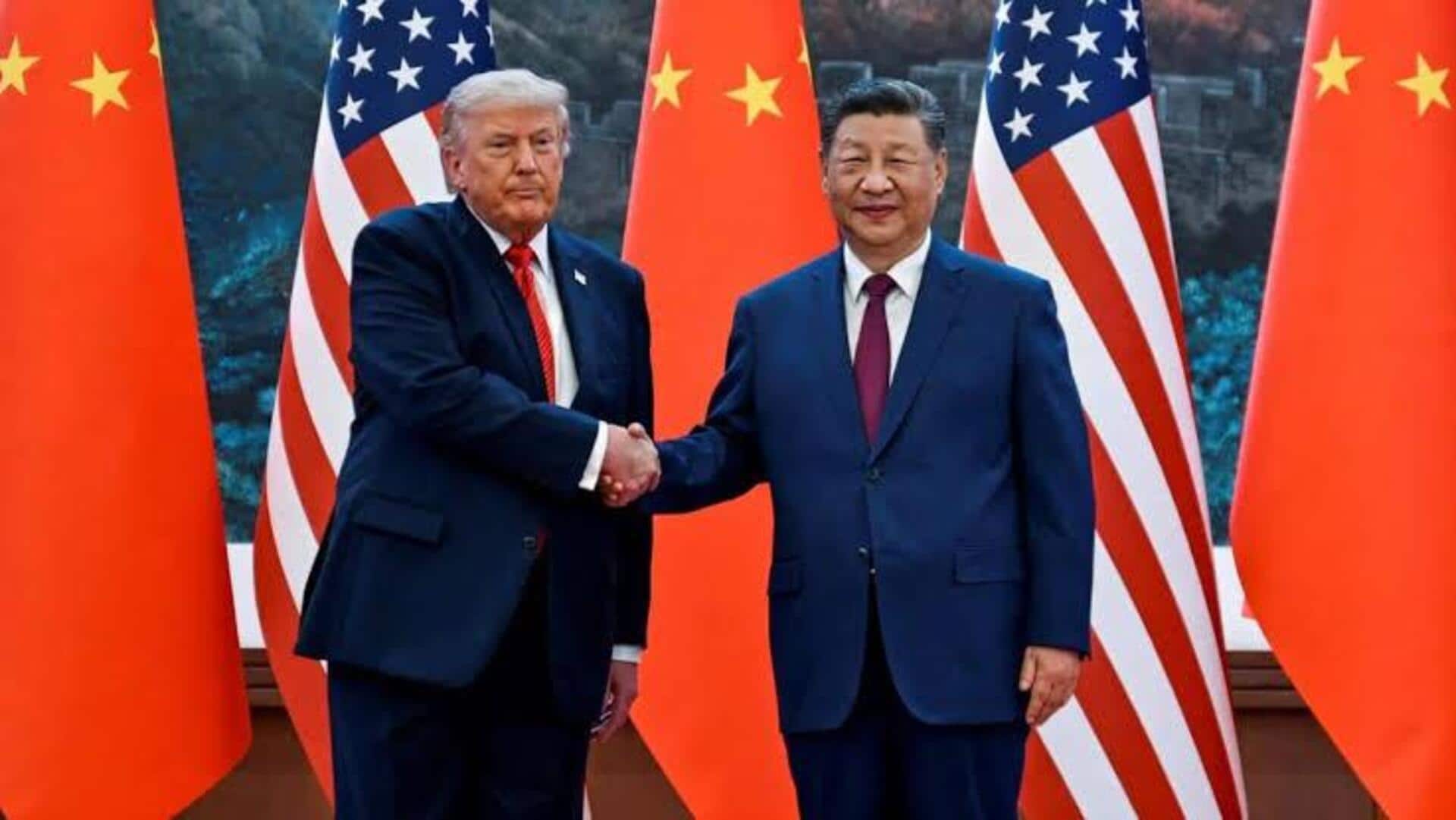
The United States and China have agreed to extend their trade truce until January 10, US Treasury Secretary Scott Bessent announced. The extension comes as Chinese President Xi Jinping arrives in Washington, DC for a state visit through Friday. The original one-year deal was reached during a meeting between President Donald Trump and Xi in South Korea last October. It was set to expire in November but will now continue into next year.
Commitment evaluation
'Busan Agreement' extension to evaluate Chinese commitments
Bessent said the extension of the trade truce, dubbed the "Busan Agreement," would give both sides time to determine if China is fulfilling its commitments.
He noted that some Chinese promises, especially those related to rare-earth exports, haven't been fully met.
The extra time will allow Washington to evaluate progress on these issues.
The extension also comes amid talks of a broader trade agreement between the two nations.
Future plans
AI dialogue and bilateral trade body agreed upon earlier
During their previous discussions, the US and China had already agreed to start an artificial intelligence (AI) dialogue and set up a bilateral trade body. The extension of the truce also comes after these agreements were made.
Bessent met with Chinese Vice Premier He Lifeng before Xi's arrival in Washington, DC. They discussed establishing an alert system for AI incidents during their meeting.
Safety measures
Narrower agreements expected as immediate outcome
Bessent said Washington and Beijing are working to define risks such as uncontrolled AI agents and non-state actors using AI for cyber operations or biological threats.
A further meeting on AI safety is expected in Shenzhen in about two months.
The immediate outcome of these meetings is more likely to be a series of narrower agreements that keep the relationship stable while leaving deeper disputes over trade, technology, Taiwan, and Iran unresolved.