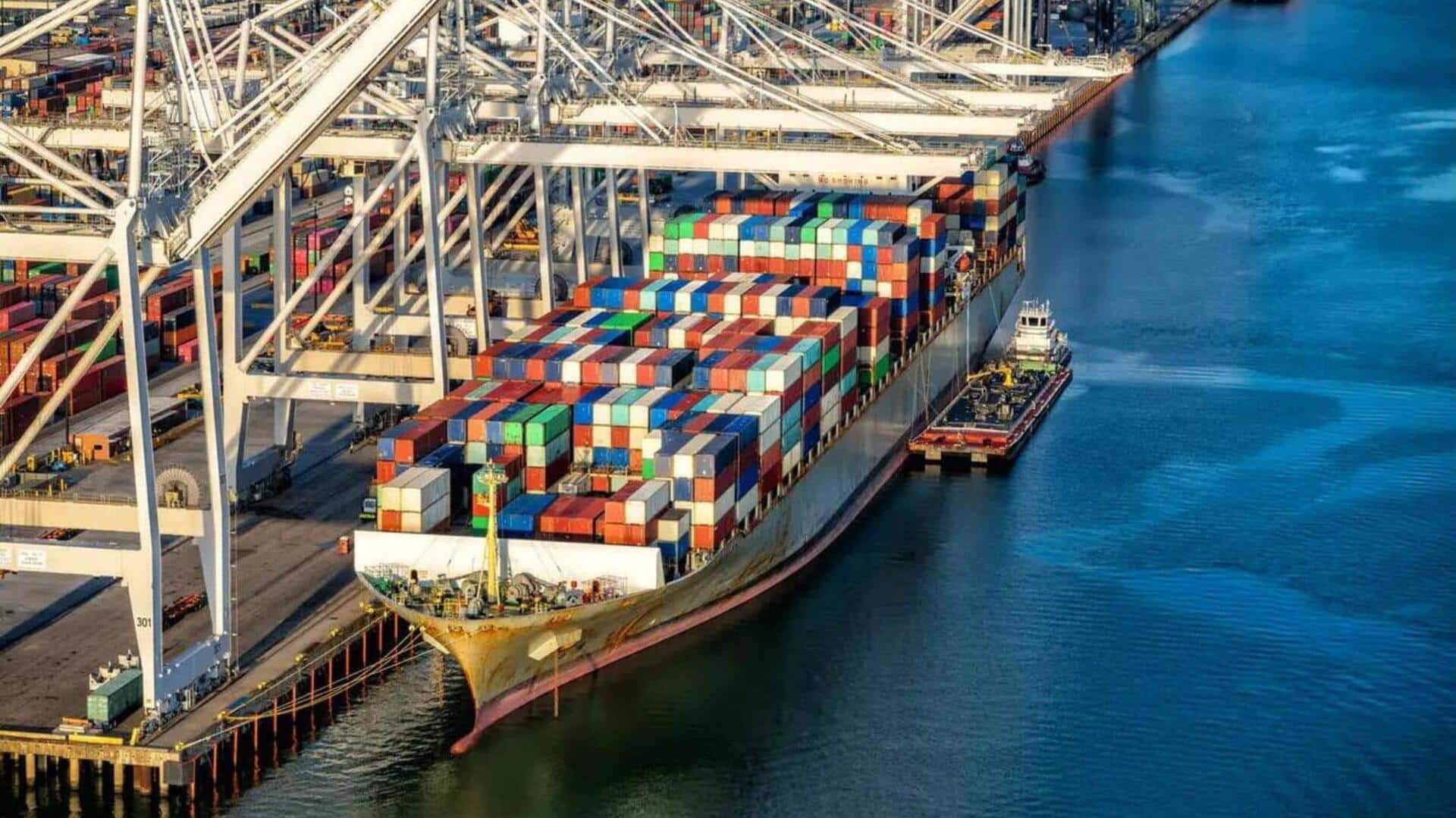
Why India's shipping costs are rising despite falling oil prices
What's the story
Despite a decline in oil prices, India's shipping industry is still facing high freight costs. The reason? Vessels are avoiding conflict-hit routes, taking longer sea lanes, and paying higher insurance premiums. The situation has been made worse by the recent attacks on Saudi Arabia's oil infrastructure and maritime blockade against Saudi exports by Iran-aligned Houthis.
Trade impact
Attacks on Saudi oil infrastructure impact maritime traffic
The attacks have significantly affected two major maritime corridors for global trade and energy flows: the Strait of Hormuz and the Bab el-Mandeb.
On Sunday, only 11 commodity vessels crossed the Bab el-Mandeb, a sharp decline from previous months.
Traffic through the Strait of Hormuz was also weak with less than 10 commodity vessels passing daily over the weekend.
Cost factors
Longer routes, higher costs
Even with Brent crude falling over 5% today, shipping markets are responding to a different calculation: safety, commercial viability, and insurability of sending a vessel through the region.
A longer route means more fuel consumption, higher crew and operating costs, longer transit times, and fewer available ships.
This can push up freight rates even when oil prices are declining.
Port congestion
Indian ports already feeling the heat
The disruption in maritime routes has already started affecting Indian ports.
Shipping freight rates are likely to rise by as much as 50% on some routes, especially those connecting India with West Asia.
The Federation of Indian Export Organisations has approached the government over port congestion, surcharges imposed by shipping lines, and the wider disruption caused by ongoing geopolitical tensions.
Freight benchmarks
Freight rates haven't normalized yet
The Drewry World Container Index stood at $4,374 per 40-foot container on July 23.
While it was 3.8% lower than a week earlier, it was still 130% above its level on February 26, before the war began.
This indicates that a weekly fall in freight rates doesn't mean shipping costs have normalized as disrupted routes and congestion continue to keep costs high for Indian exporters and importers.
Congestion issues
Port congestion and inventory challenges for exporters
The diversion of vessels from conflict-hit routes has led to increased congestion at Indian ports.
More ships are now calling at these ports and using them as transshipment hubs, leading to longer unloading times.
This could push inventory levels up to 1.5 times normal levels and result in higher storage and inventory costs for exporters, potentially disrupting production schedules and delivery commitments.
Export impact
Disproportionate impact on MSMEs
The rise in freight charges and potential delays are likely to have a disproportionate impact on smaller exporters.
Micro, small, and medium enterprises account for nearly 49% of India's exports.
Many of these businesses export products with relatively low value compared to their weight and rely heavily on maritime transport.
A delay or increase in freight charges can significantly affect their margins.