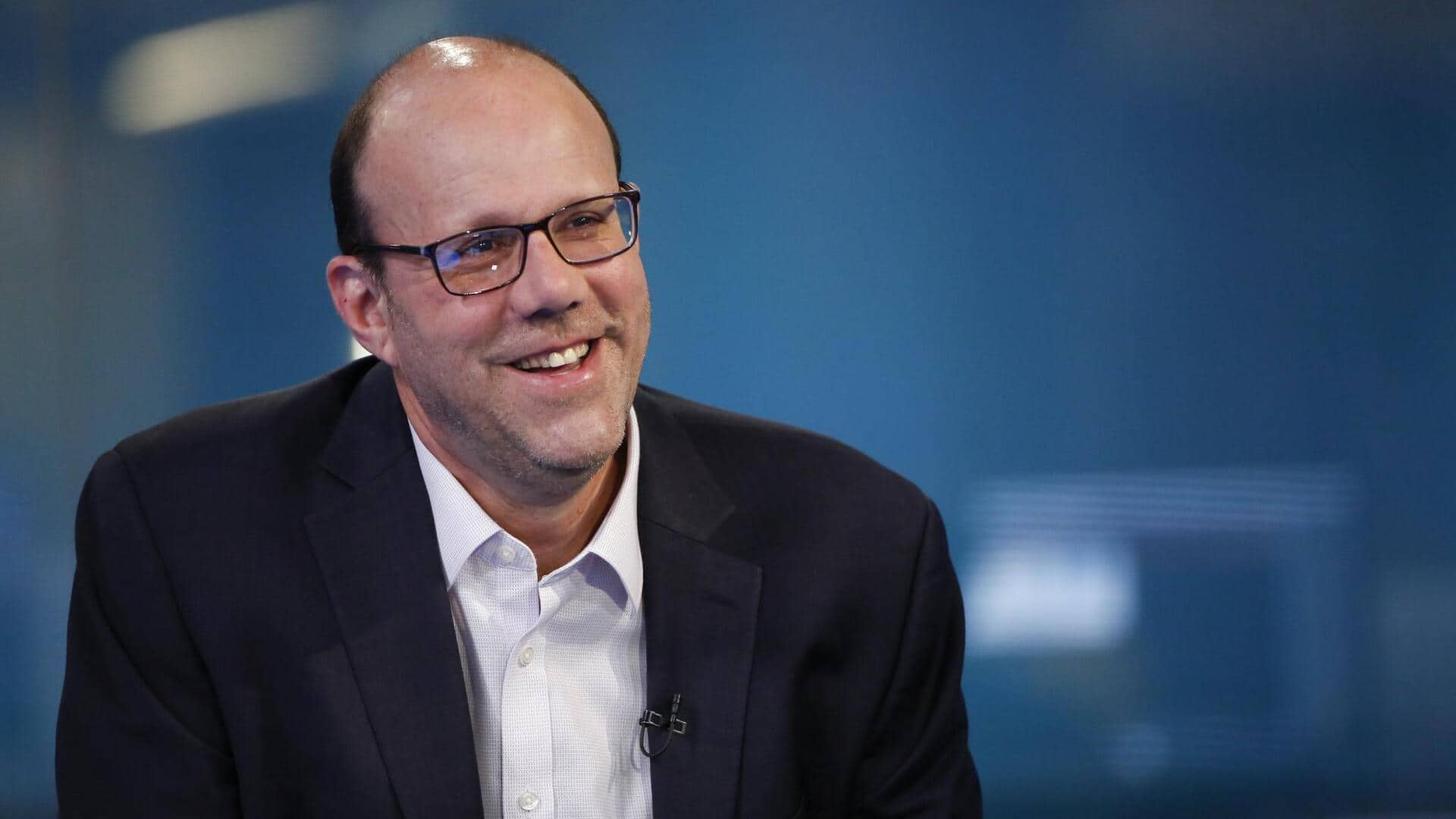
Nobel laureate Michael Kremer becomes World Bank's chief economist
What's the story
The World Bank has appointed Nobel laureate Michael Kremer as its new chief economist. He will take over from Indermit Gill, who retired last month. Kremer, a professor at the University of Chicago, won the Nobel Prize in Economic Sciences in 2019 for his innovative approach to reducing global poverty. He has also taught economics at Harvard University.
Research impact
Kremer's new role to start on October 1
Kremer's new role will start on October 1, ahead of the annual meetings of the World Bank and International Monetary Fund in Bangkok, Thailand.
He is known for using rigorous research to create innovative solutions to real-world problems.
His work has led to programs that have helped small farmers and provided millions with access to vaccines and school health programs.
Leadership endorsement
World Bank President praises Kremer's appointment
World Bank President Ajay Banga praised Kremer's appointment, saying, "Michael has spent his career not just identifying what works in development, but proving it at scale, and that is exactly the kind of thinking we need."
He added that Kremer joins the bank at a time when bold solutions are needed to tackle urgent development challenges.
Academic journey
Kremer's extensive experience in development and innovation
Before his appointment, Kremer was the Director of the Development Innovation Lab at the University of Chicago.
His research there focused on innovation in education, health, water, finance, and agriculture in developing countries.
He has also served as a professor of economics at Harvard University and co-founded Development Innovation Ventures.
Solution strategies
Kremer's groundbreaking research and innovations
Kremer has pioneered the use of Advance Market Commitments, contracts by donors to incentivize pharmaceutical companies to research and produce drugs for low-income countries.
His research on deworming school children led to a significant decrease in absenteeism, resulting in governments in Africa and South Asia providing two billion treatments since 2014.
He has also worked on AI-based agricultural weather forecasting and co-founded Precision Development, which uses digital technology to improve productivity and incomes for small farmers.