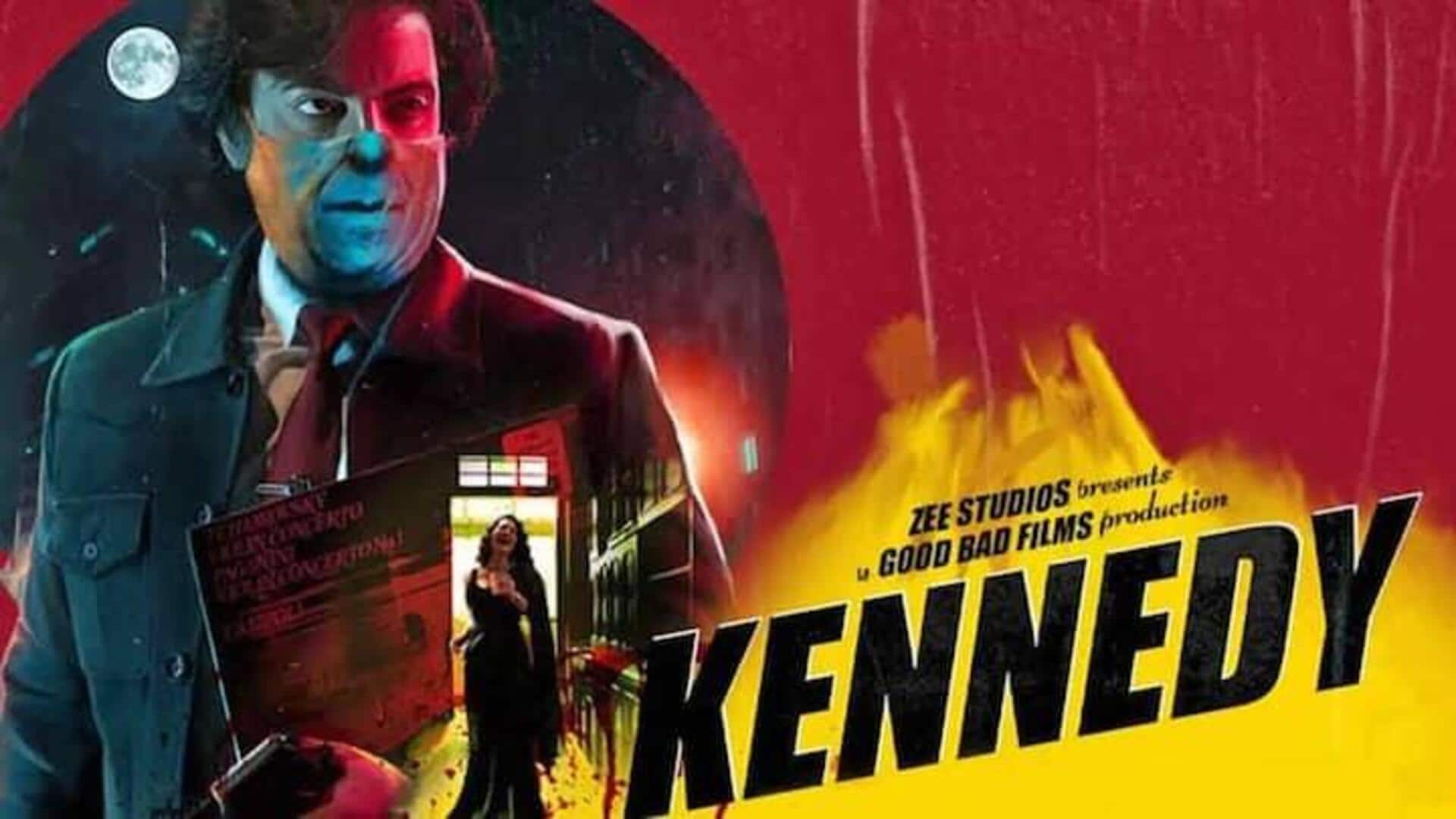
Anurag Kashyap explains why 'Kennedy' Cannes premiere went wrong
What's the story
Filmmaker Anurag Kashyap has called the premiere of his film Kennedy at the Cannes Film Festival three years ago one of his "lowest points." Despite receiving a standing ovation, he felt something was technically wrong with the screening. Speaking to Creative Stew, he revealed that he was the first person to walk out of the screening.
Screening details
Why was Kashyap worried about 'Kennedy's screening?
Kashyap explained that Kennedy was part of the Midnight Screenings section at Cannes, which typically attracts a more enthusiastic audience.
"Whatever the video might say about the standing ovation, which is a regular thing at Cannes. Every film gets it. Some films get it more, some films get it less."
However, his main concern was the film's sound quality in the theater, as he described Kennedy as being structured like an opera and immediately sensed something was off.
Technical issues
The movie needed to be remixed
Kashyap recalled, "So the first person to walk out of the screening in Cannes was me. I stepped out because I needed to go to the washroom and just wash my face, and I was dealing with it."
His colleague Kunal then suggested they needed to remix the film.
Audience perception
Audience expectations also played a role
Kashyap also felt that Kennedy's placement as a midnight title meant many viewers came expecting a more conventional genre film.
He said, "They thought we were making a John Wick, an Indian John Wick. They had no political reference point for the film."
"So that was very heartbreaking," he added.
The movie starred Rahul Bhat in the lead role.
Director's accountability
He took responsibility for the screening
Despite the challenges, Kashyap took responsibility for how the premiere played out.
"The lowest point was the premiere screening. And it was not anybody's mistake. It's our mistake," he said.
He also missed having a post-screening Q&A, which is common at other festivals and allows filmmakers to explain their films' political context directly to viewers.