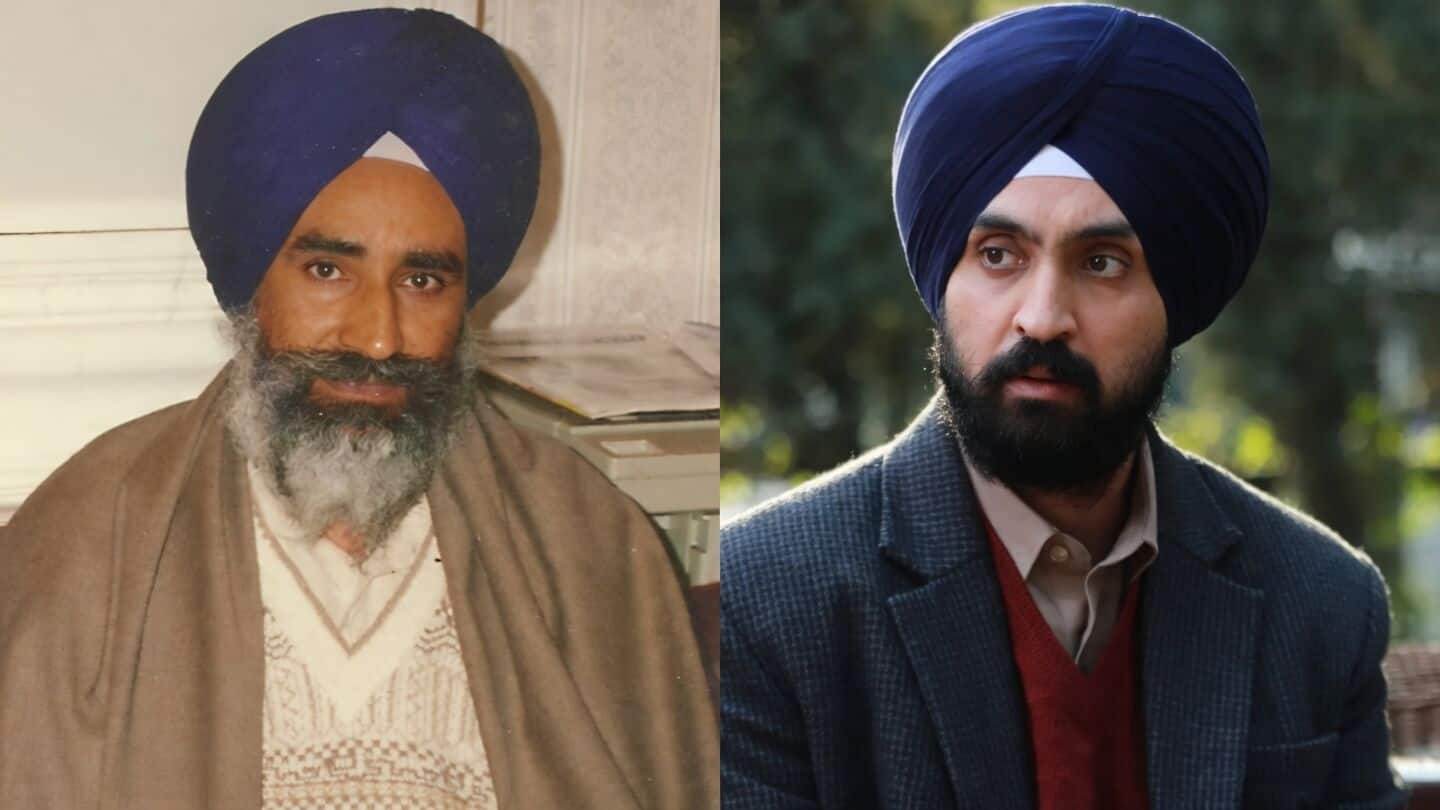
Diljit's 'Satluj' ignites storm: Who was Jaswant Singh Khalra?
What's the story
Diljit Dosanjh's latest film, Satluj, has brought renewed attention to the life of human rights activist Jaswant Singh Khalra. The movie is based on Khalra's investigations into the alleged illegal cremation of thousands of unidentified bodies during Punjab's militancy era in the 1980s and 1990s. After its sudden release on ZEE5 in India on July 3, the platform removed the film within 48 hours. Dosanjh addressed its removal in a post on Instagram, quoting a dialogue: "I challenge the darkness."
Background
Who was Khalra?
Khalra was born in 1952 in Khalra village, Amritsar district. He worked at a bank in the 1980s before dedicating his life to human rights activism.
His journey into this field began in a Punjab which saw events such as Operation Blue Star, Indira Gandhi's assassination, and the 1984 anti-Sikh riots in close succession.
Many Sikh families reported that their relatives had disappeared after being detained by Punjab Police on suspicion of militant links during this time.
Discovery
His work and investigations
Khalra was troubled by the increasing number of disappearances around him. He started gathering evidence, which led him to municipal records in Amritsar.
There, he reportedly found documents containing the names, ages, and addresses of thousands of people who were allegedly killed and secretly cremated by the police without informing their families.
This revelation attracted national and international attention, making Khalra one of Punjab's most prominent human rights activists.
He directly questioned the powers enabling such crime.
Tragic fate
His abduction and murder
In a tragic turn of events, Khalra disappeared in 1995 while washing his car outside his home. He was reportedly abducted by Punjab Police officers.
A year later, the Central Bureau of Investigation (CBI) found that he had been illegally detained at a police station in Tarn Taran before being killed. His body was never found.
The agency recommended criminal charges against nine Punjab Police personnel for his abduction and murder.
Enduring impact
Khalra's legacy and film's status
Khalra's case took years to conclude. In 2005, four Punjab Police personnel were convicted for his abduction and murder and sentenced to seven years. On October 16, 2007, a division bench of the Punjab and Haryana High Court extended this sentence to life imprisonment.
Khalra is survived by his wife, Paramjit Kaur Khalra, and their two children.
Meanwhile, ZEE5 has confirmed the film's removal from its platform but promised to bring it back as soon as possible.