Amid 'judicial corruption' row, data shows 8,600 complaint against judges
What's the story
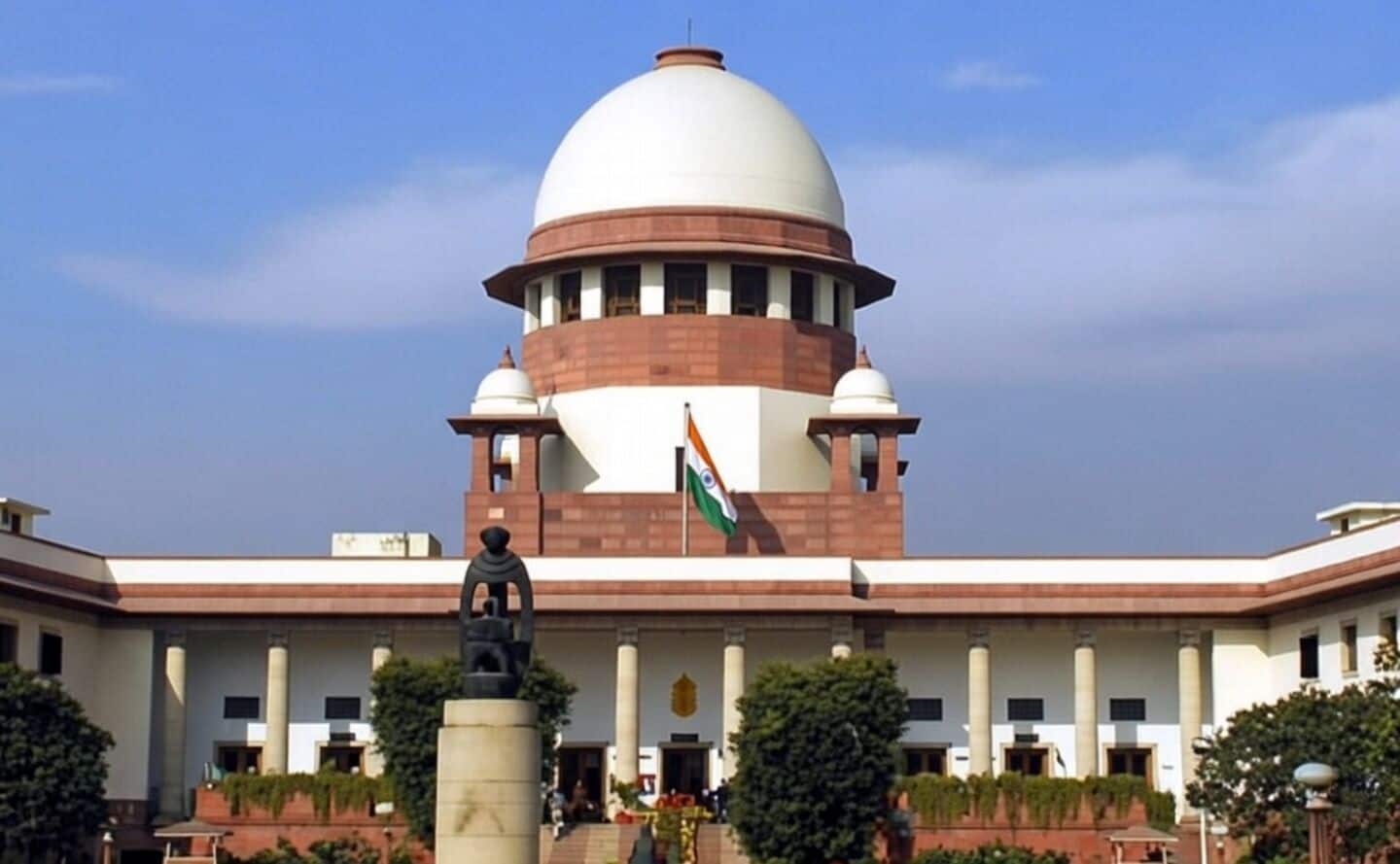
The Supreme Court on Thursday took strong objection to the National Council of Educational Research and Training (NCERT)'s now-withdrawn Class 8 textbook, which carried a section on "corruption in the judiciary." Calling it an outcome of a "deep-rooted conspiracy," CJI Surya Kant said, "We would like to have a deeper probe. We need to find who is responsible and we will see who are there. Heads must roll! We will not close the case."
Judicial complaints
Over 8,600 complaints against judges in last decade
The court subsequently issued a complete ban on the publication, re-printing and digital dissemination of the book containing the controversial content.
Ironically, the row comes just days after the Lok Sabha revealed that the CJI's office received over 8,600 complaints against sitting judges from 2016-2025.
Among the cases that made headlines was the one against Justice Yashwant Varma of the Delhi High Court, who faced impeachment proceedings after a large sum of money was found at his residence last year.
Complaint
Lowest number of complaints was recorded in 2020
Data tabled in the Lok Sabha in February shows that the highest number of complaints was recorded in 2024 with 1,170 cases.
This was followed by 1,102 cases in 2025. Other years with over a thousand complaints include 2019 with 1,037 and 2022 with 1,012.
The lowest number of complaints, 518, was recorded in 2020.
Complaint process
Complaints against judges: Who investigates?
The Chief Justice of India is authorized to receive complaints against judges assigned to the Supreme Court and the chief justice of any high court.
Complaints against high court judges are handled by their respective court's chief justice.
Under Article 235 of the Constitution, disciplinary control over district and subordinate courts lies with the relevant High Court.
If a complaint is received, the concerned Chief Justice first seeks a reply from the judge in question.
Investigation process
Noteworthy cases of corruption in judiciary
If the chief justice is not satisfied with the response or feels an investigation is warranted, an internal committee is formed.
If alleged misconduct is deemed "grave," the committee can recommend the judge's removal.
Notable cases of judicial corruption include Justice Varma's case and Justice Sharad Kumar Sharma, who recused himself from hearing an insolvency matter last August after he was approached by "one of the most revered members of the higher judiciary" seeking an order favoring a particular party.
Past controversies
Government-judiciary tensions over issues
In 2018, tribunal judge RK Mittal was linked to fraudulent withdrawals of compensation funds. He was later sacked after an Enforcement Directorate investigation.
In 2011, Soumitra Sen became the first judge in independent India to be impeached by the Rajya Sabha over misappropriation of funds, although he resigned before Lok Sabha could impeach him.
The government-judiciary tensions have also flared over issues like the National Judicial Appointment Commission Act and comments on "judicial overreach" by then Vice President Jagdeep Dhankhar.