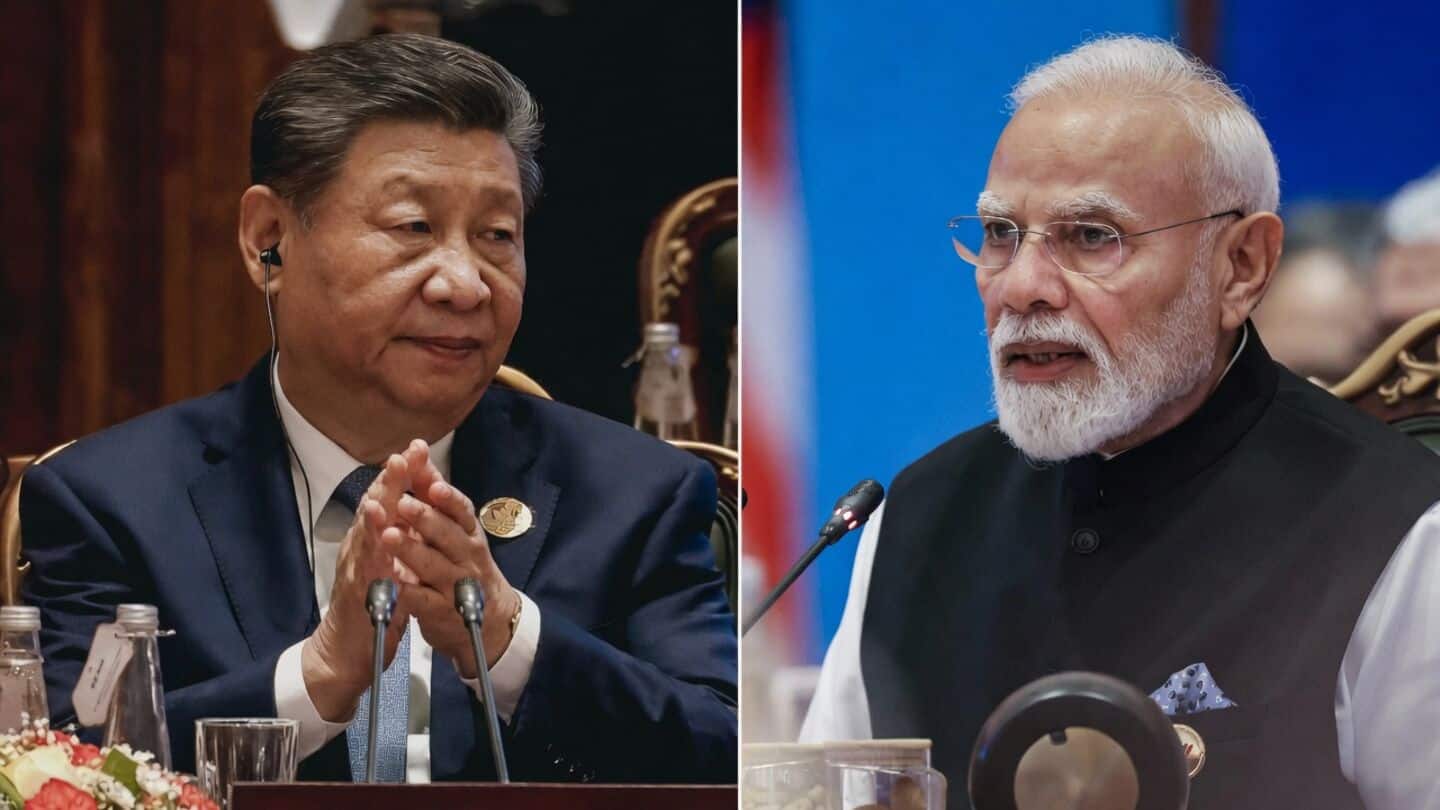
India-China border dispute: Modi-Xi meeting yields conflicting statements
What's the story
After the recent meeting between Prime Minister Narendra Modi and Chinese President Xi Jinping, the two countries have issued conflicting statements regarding their border dispute. The Chinese statement called for "parallel, mutually reinforcing progress" on bilateral relations and the boundary question. It also emphasized maintaining peace and tranquility in border areas. In contrast, India's statement stressed that peace along the border is an "essential basis" for further developing bilateral ties.
Peace priority
India's position on border dispute
India's readout stressed the need for both nations to adhere to existing agreements on border issues.
It also highlighted a commitment to a "fair, reasonable, and mutually acceptable" resolution of the boundary question.
This difference in wording indicates India's position that peace along the border must be prioritized before any other developments in bilateral relations can take place.
Divergent perspectives
China's stance on broader relationship dynamics
On the other hand, China's statement leaves room for progress in bilateral ties even if the boundary question remains unresolved.
This is significantly different from India's position that emerged after the 2020 Galwan clash, which had severely impacted bilateral ties.
Since then, India has maintained that the state of the border cannot be separated from broader relationship dynamics.
Ongoing dispute
Ongoing border talks and tensions
The border situation continues to be a key point of contention between India and China.
Both countries have held talks to resolve the issue, but no permanent solution has been reached yet.
The differing statements after the Modi-Xi meeting indicate that while both leaders are committed to resolving this issue, their approaches differ significantly.