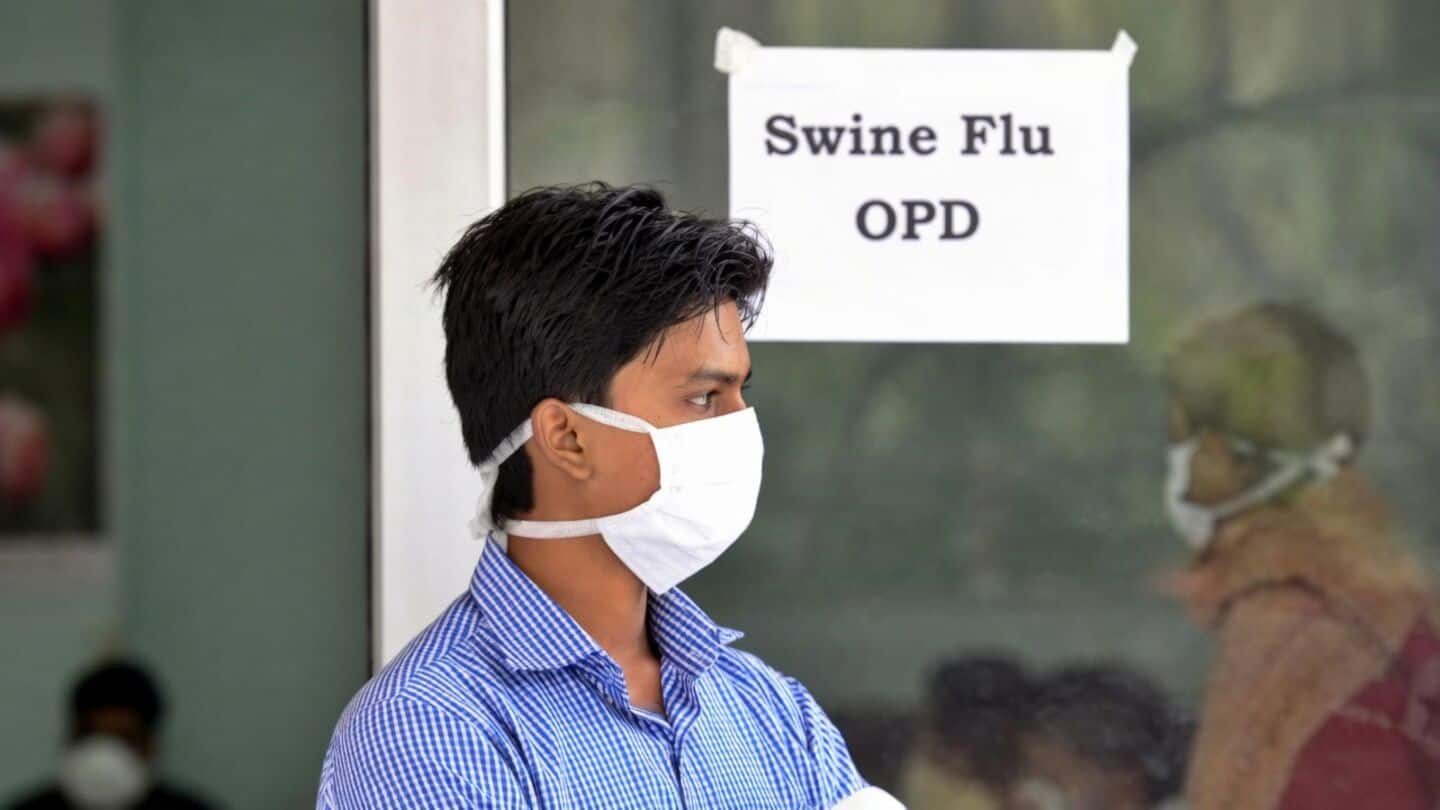
Government issues advisory as swine flu cases rise in Delhi-NCR
What's the story
The Ministry of Health has advised people to seek medical attention if they show any symptoms of H1N1 after the National Capital Territory of Delhi and surrounding areas witnessed a spike in Influenza A (H1N1) cases, popularly known as swine flu. In its advisory, the ministry said H1N1 can show up through symptoms such as fever, cough, sore throat, headache, runny nose, body aches and fatigue. Delhi reported 1,777 H1N1 cases till August 20.
Twitter Post
Recognize the signs early, the ministry said
Swine flu (H1N1) can show up through symptoms such as fever, cough, sore throat, headache, runny nose, body aches and fatigue.
— Ministry of Health (@MoHFW_INDIA) August 22, 2026
Recognise the signs early and don’t ignore persistent symptoms. If you experience these symptoms, seek medical advice at your nearest healthcare centre.… pic.twitter.com/9ephVereZ5
Healthcare readiness
Hospitals fully prepared to tackle seasonal spike in infections
Delhi Health Minister Pankaj Kumar Singh assured that the city is fully prepared to tackle the seasonal spike in infections.
He said there is no shortage of beds, doctors, medicines, or essential medical equipment.
Hospitals such as RML and Safdarjung have also stepped up their preparedness as monsoon humidity fuels respiratory infections.
Case surge
H1N1 cases 6 times higher this year
Dr. Neetu Jain, Senior Consultant, Department of Pulmonary, Critical Care, and Sleep Medicine at PSRI Hospital, said that H1N1 cases are particularly high this year, with numbers being six times more than previous years.
She attributed the spike to weather conditions such as high temperatures and humidity.
Dr. Randeep Guleria, Chairman, Internal Medicine, Respiratory & Sleep Medicine, Medanta Gurugram, noted that while most cases present mild symptoms, some patients particularly elderly people and those in high-risk groups, may require hospitalization.
Health advisory
Government advises people to maintain hand hygiene and wear masks
The government has also advised people to maintain hand hygiene and wear masks in crowded indoor spaces to limit transmission.
Arjun Dang, CEO of Dr. Dang's Lab, stressed the importance of home-collection services and molecular testing systems for faster detection and timely clinical intervention.
High-risk individuals such as immunocompromised persons or those with comorbidities should be particularly vigilant and seek medical advice if they develop symptoms.
Treatment options
Ministry of Health's advisory stresses early recognition of symptoms
Dr. Jain said antiviral medicines may be given to help improve the chances of a quicker recovery while supportive care may also be required.
He said while most cases resolve on their own, some patients particularly elderly people and those in high-risk groups, may require hospitalization.
H1N1 is a subtype of influenza A that can cause respiratory illness. Symptoms include fever or chills, cough, sore throat, runny or blocked nose, headache, tiredness and body aches.