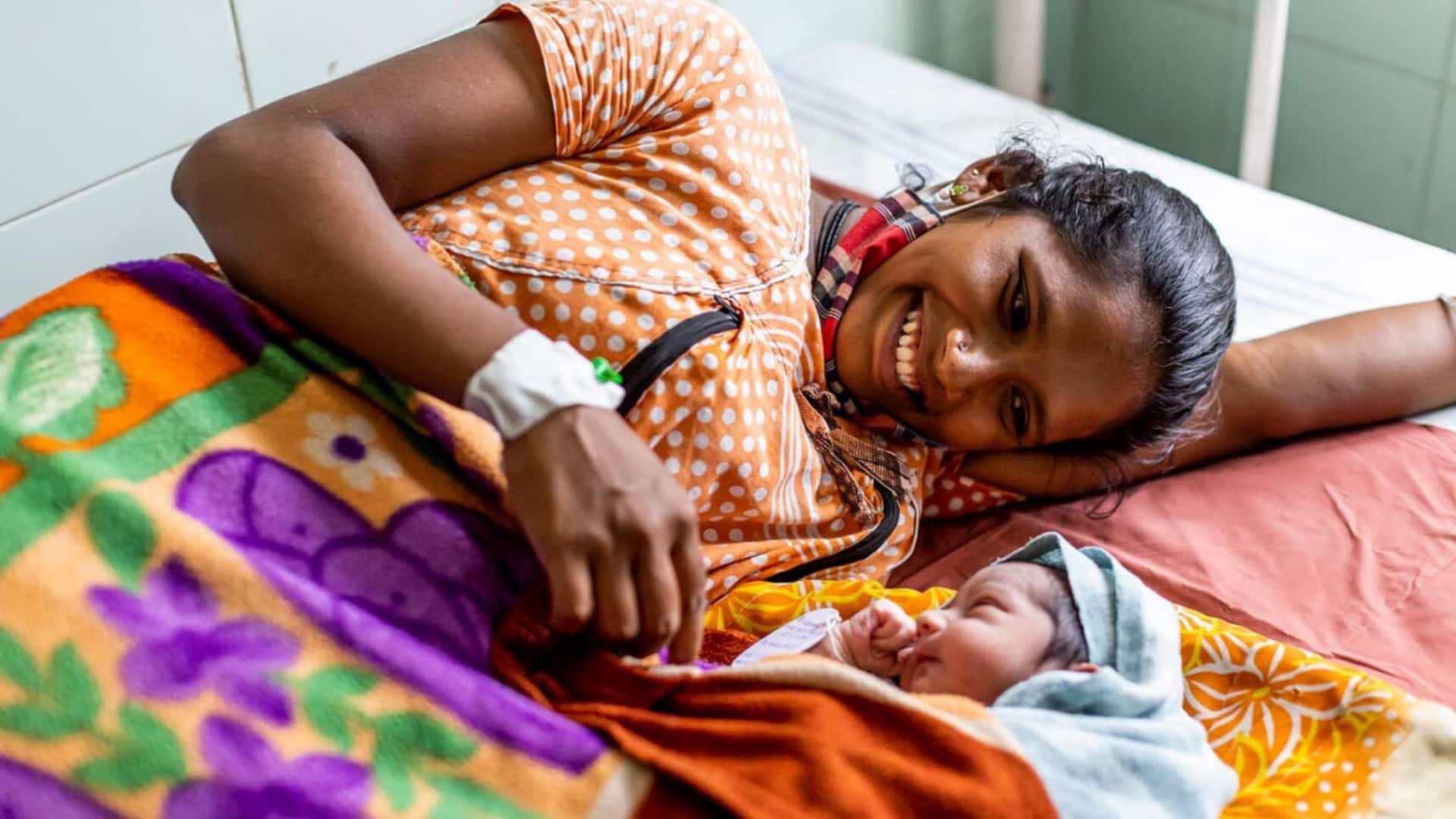
India cuts maternal mortality by nearly 80% since 1990: Study
What's the story
India has made significant progress in reducing maternal mortality, a new global study published in The Lancet Obstetrics, Gynaecology and Women's Health journal has revealed. The country's maternal mortality ratio (MMR) has dropped from 508 to 116 per one lakh livebirths between 1990 and 2023. This is a nearly 80% reduction and is better than the global average.
Global comparison
India 24,700 maternal deaths, Pakistan 10,300
In 2023, India recorded 24,700 maternal deaths, translating to an MMR of 116 per one lakh livebirths.
In comparison, Pakistan had an estimated 10,300 maternal deaths the same year.
Ethiopia and Nigeria had higher numbers with 11,900 and 32,900 maternal deaths, respectively.
Despite the decline in global maternal deaths over the past three decades, progress has slowed down recently and remains uneven across countries.
Global recognition
Health Ministry cites UN-MMEIG 86% reduction
A source from the Union Health Ministry said that India's progress in maternal health is globally recognized.
"Our progress in maternal health is globally recognized, and according to the latest United Nations Maternal Mortality Estimation Inter-Agency Group (UN-MMEIG) Report, India has achieved an 86% reduction in MMR since 1990, which far exceeds the global average of 48%," they said.
The source added that this achievement shows India's commitment to meeting the Sustainable Development Goals benchmark of reducing MMR below 70 by 2030.
Unmet targets
Global MMR 190.5 per 1L
Globally, there were an estimated 2.4 lakh maternal deaths in 2023, giving a global MMR of 190.5 per one lakh livebirths.
This is a more than one-third decline from the 321 maternal deaths per one lakh livebirths recorded in 1990.
However, over half of countries and territories still do not meet the Sustainable Development Goal target of under 70 maternal deaths per one lakh livebirths.
Leading causes
Hemorrhage and hypertensive disorders largest causes
The leading causes of maternal deaths differ by region, but globally, maternal hemorrhage and hypertensive disorders of pregnancy account for the largest share.
Improved access to antenatal care, safe delivery services, emergency obstetric care, and post-partum follow-up could greatly reduce mortality rates in high-burden countries.
The COVID-19 pandemic also temporarily increased maternal mortality in some regions before widespread vaccination was achieved during 2020-2021.