'Weaponization of technology, critical minerals can reverse global progress': Modi
What's the story
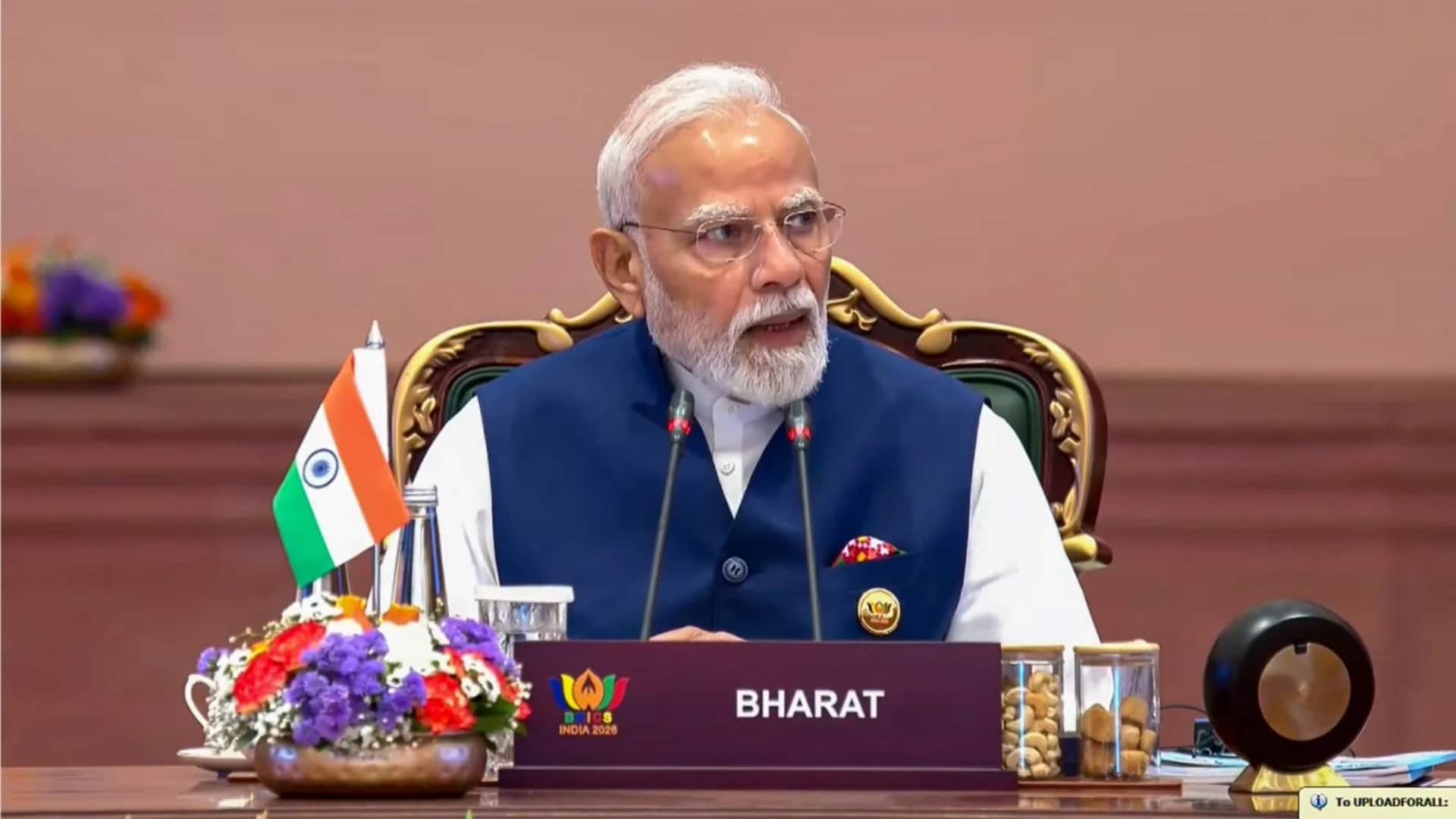
Prime Minister Narendra Modi on Sunday cautioned against the "weaponization of technology and critical minerals" during the BRICS Summit in New Delhi. He said such actions could reverse global progress toward shared prosperity. Chinese President Xi Jinping was present during PM Modi's address on the second day of the summit. "The world is witnessing increasing tensions, having a significant negative impact on the lives of ordinary people...in today's interconnected world, no crisis remains confined to a single region," he said.
Global impact
'Pandemics, climate disasters proof no crisis confined to single region'
PM Modi said, "Pandemics, climate disasters and supply chain disruptions have demonstrated that in today's interconnected world, no crisis remains confined to a single region."
His comments come amid global energy supply disruptions due to the US-Iran conflict. He also referred to the COVID-19 pandemic, which started in China's Wuhan but spread worldwide.
"We have placed special emphasis on enhancing resilience within the BRICS group," he said.
Health preparedness
BRICS leaders reach consensus on integrated early warning system
PM Modi said the BRICS leaders have reached a consensus on an integrated early warning system for infectious diseases. This is part of their efforts to enhance resilience within the group.
Other leaders at the summit included Russian President Vladimir Putin, Iranian President Masoud Pezeshkian, Malaysian Prime Minister Anwar Ibrahim, and Indonesian President Prabowo Subianto.
Summit agenda
BRICS has focused on 4 pillars under India's presidency: Modi
Under India's presidency, PM Modi said BRICS has focused on four pillars: resilience, innovation, cooperation, and sustainability. He thanked other leaders for their cooperation in making the summit a success.
Before his address at Bharat Mandapam in central Delhi, all leaders posed for a group photo.
Later, PM Modi will hold bilateral meetings with leaders from South Africa, Kazakhstan, the Philippines, Egypt, Burundi, Uganda, and Nigeria.
Declaration details
BRICS declaration calls for maximum restraint in Middle East
The New Delhi Declaration issued on Saturday expressed concern over escalating tensions in the Middle East. It called for maximum restraint and avoiding actions that could worsen the situation.
The declaration also reiterated BRICS' support for a two-state solution to the Israeli-Palestinian conflict. It called for deeper international institutional support for Palestine and reaffirmed Israel's obligation to provide humanitarian aid in Gaza.