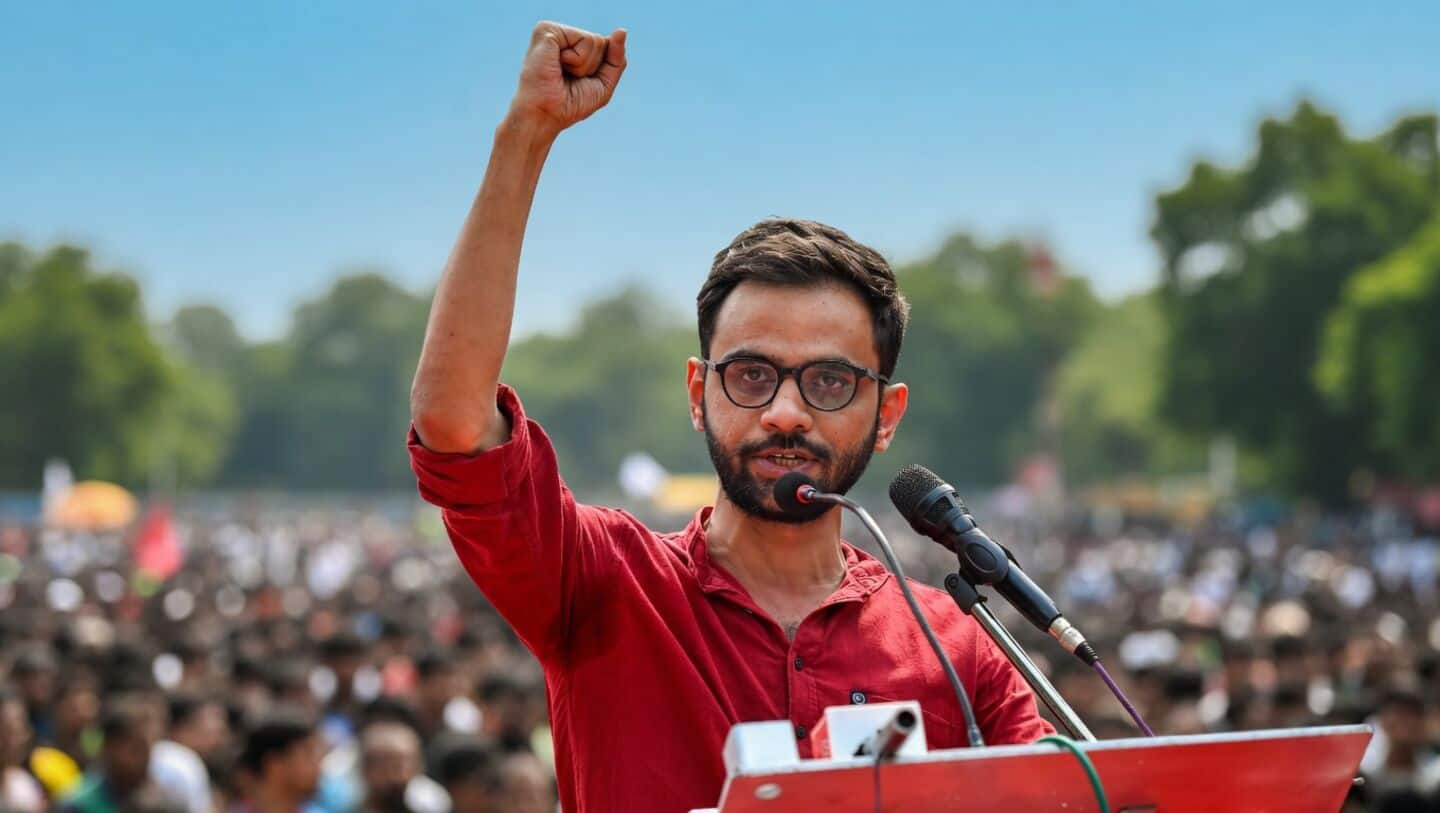
Supreme Court larger bench to reconsider Umar Khalid's bail denial
What's the story
The Supreme Court has agreed to reconsider its earlier order denying bail to Umar Khalid in the Delhi riots conspiracy case. The decision was taken after a two-judge bench recommended referring the matter to a larger bench due to conflicting judgments on bail under the Unlawful Activities (Prevention) Act (UAPA). The development comes after apparent contradictions in recent Supreme Court orders regarding bail in UAPA cases.
Legal discrepancies
Contradictions in Supreme Court's bail orders
The conflicting judgments in question are from two different two-judge benches of the Supreme Court. One bench denied bail to Khalid and Sharjeel Imam, saying their charges were prima facie true and a prolonged delay in trial was not a valid reason for bail. However, another bench granted bail to Syed Iftikhar Andrabi in a UAPA case, citing trial delay and emphasizing that "bail is the rule and jail is the exception."
Legal resolution
Conflict referred to larger bench for resolution
The conflict between these two judgments has now been referred to a larger bench for resolution. This came after the Justice BV Nagarathna and Justice Ujjal Bhuyan Bench questioned the correctness of the January ruling while granting bail to Andrabi. The bench opined that "bail is the rule and jail is the exception," indicating that prolonged delays in trial could justify bail under UAPA despite its stringent conditions.
Legal argument
ASG argues against uniform application of 'bail, not jail' principle
Additional Solicitor General SV Raju argued against the uniform application of the "bail, not jail" principle for all accused under UAPA. He contended that stringent bail standards under UAPA do not violate Article 21 of the Constitution. The matter will now be heard by a larger bench to settle these legal questions raised by conflicting judgments on bail under UAPA.