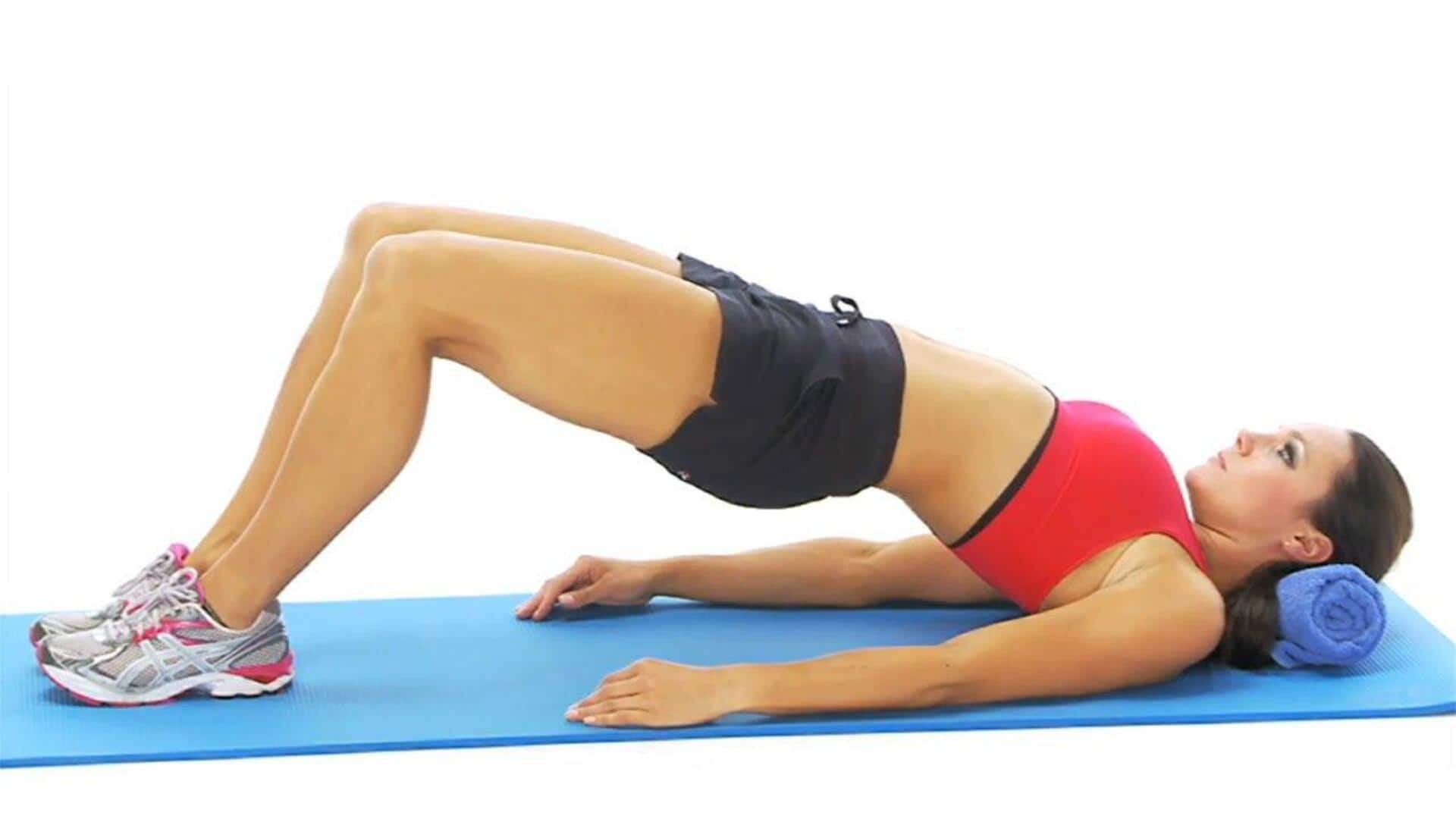
Why fitness enthusiasts vouch for hip bridges
What's the story
Hip bridges are a simple yet effective exercise that can be performed anywhere. They target the glutes, hamstrings, and core muscles, providing a range of benefits beyond just improving strength. Including hip bridges in your routine can improve posture, enhance athletic performance, and even relieve lower back pain. Here are five surprising benefits of this versatile exercise that may encourage you to add it to your fitness regimen.
Core Power
Strengthening core muscles
Hip bridges also engage the core muscles, which help stabilize the body. By regularly performing this exercise, you can improve your core strength and stability. A stronger core aids in maintaining proper posture and reduces the risk of injury during other physical activities. It also supports daily movements like bending and lifting, making it a functional exercise for overall fitness.
Athletic boost
Enhancing athletic performance
For athletes, hip bridges are a great way to improve performance. By strengthening the glutes and hamstrings, they contribute to better power output and speed. This is especially useful for sports where explosive movements are required, such as running or cycling. Including hip bridges in training regimens can lead to improved endurance and agility on the field or court.
Pain relief
Reducing lower back pain
If you have lower back pain, hip bridges can help relieve it by strengthening the muscles that support the spine. By improving muscle balance around the hips and lower back, this exercise can reduce strain on the spine itself. Over time, this may lead to decreased discomfort and improved mobility for those suffering from chronic pain issues.
Posture correction
Improving posture
Regularly performing hip bridges helps in aligning and stabilizing the pelvis, which is crucial for good posture. This exercise counteracts the effects of prolonged sitting by strengthening the muscles that hold the spine in an upright position. With better pelvic alignment, you are more likely to maintain an erect posture throughout the day, reducing the likelihood of slumping or hunching.
Flexibility gain
Increasing flexibility in hips
Hip bridges also promote flexibility in hip flexors by stretching them as you lift your hips towards the ceiling. Increased flexibility in these muscles can improve your range of motion during other exercises or activities like yoga or dancing. This enhanced flexibility contributes to overall mobility and can help prevent injuries caused by tight muscles.