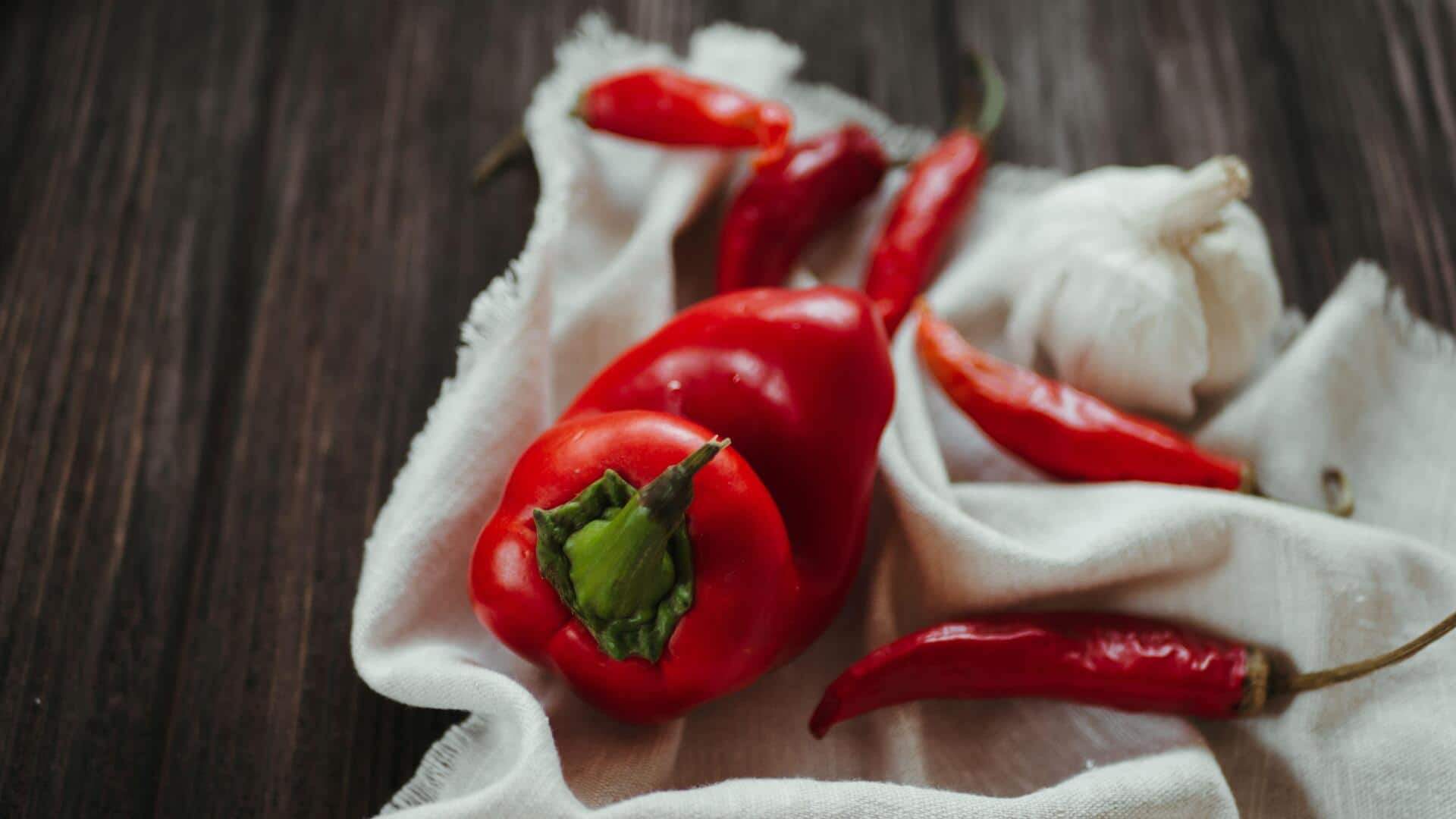
Eat these 5 red vegetables for better health
What's the story
Red vegetables are a must-have in a vegetarian diet, thanks to their nutritional benefits and vibrant color. These veggies are loaded with vitamins, minerals, and antioxidants that promote good health. Adding them to your meals can improve your well-being and add color to your plate. Here are five red vegetables that every vegetarian must include in their diet for optimal nutrition.
#1
Tomatoes: A versatile staple
Tomatoes are a staple in vegetarian diets, thanks to their versatility and rich nutrient profile.
They are high in vitamin C, potassium, and lycopene, an antioxidant that may reduce the risk of certain diseases.
Tomatoes can be eaten raw in salads or cooked into sauces and soups.
Their natural sweetness makes them a great addition to many dishes without the need for added sugars.
#2
Red bell peppers: Sweet and nutritious
Red bell peppers are another great source of vitamin A, vitamin C, and folate.
They add a sweet crunch to salads or can be roasted for a deeper flavor.
The high vitamin C content helps with iron absorption from plant-based foods, making them an excellent choice for vegetarians looking to boost their iron intake.
#3
Beets: Earthy flavor with health benefits
Beets have an earthy flavor that goes well with many recipes.
They are loaded with fiber, folate, manganese, and nitrates that may improve blood flow and lower blood pressure.
Beets can be roasted or boiled and added to salads or blended into smoothies for a nutritional boost without overpowering other flavors.
#4
Radishes: Spicy crunch enhancer
Radishes add a spicy crunch to any dish with their peppery flavor profile.
They are rich in vitamin C, potassium, and antioxidants that may help fight inflammation.
Radishes can be eaten raw in salads or pickled as a tangy side dish option.
Their low-calorie count makes them an ideal snack choice for those watching their weight.
#5
Red cabbage: Colorful nutrient powerhouse
Red cabbage is not just colorful but also packed with nutrients like vitamin K, vitamin C, fiber, and anthocyanins, which are linked to heart health benefits.
It can be eaten raw as part of coleslaw or cooked as part of stir-fries, providing versatility along with its health benefits.