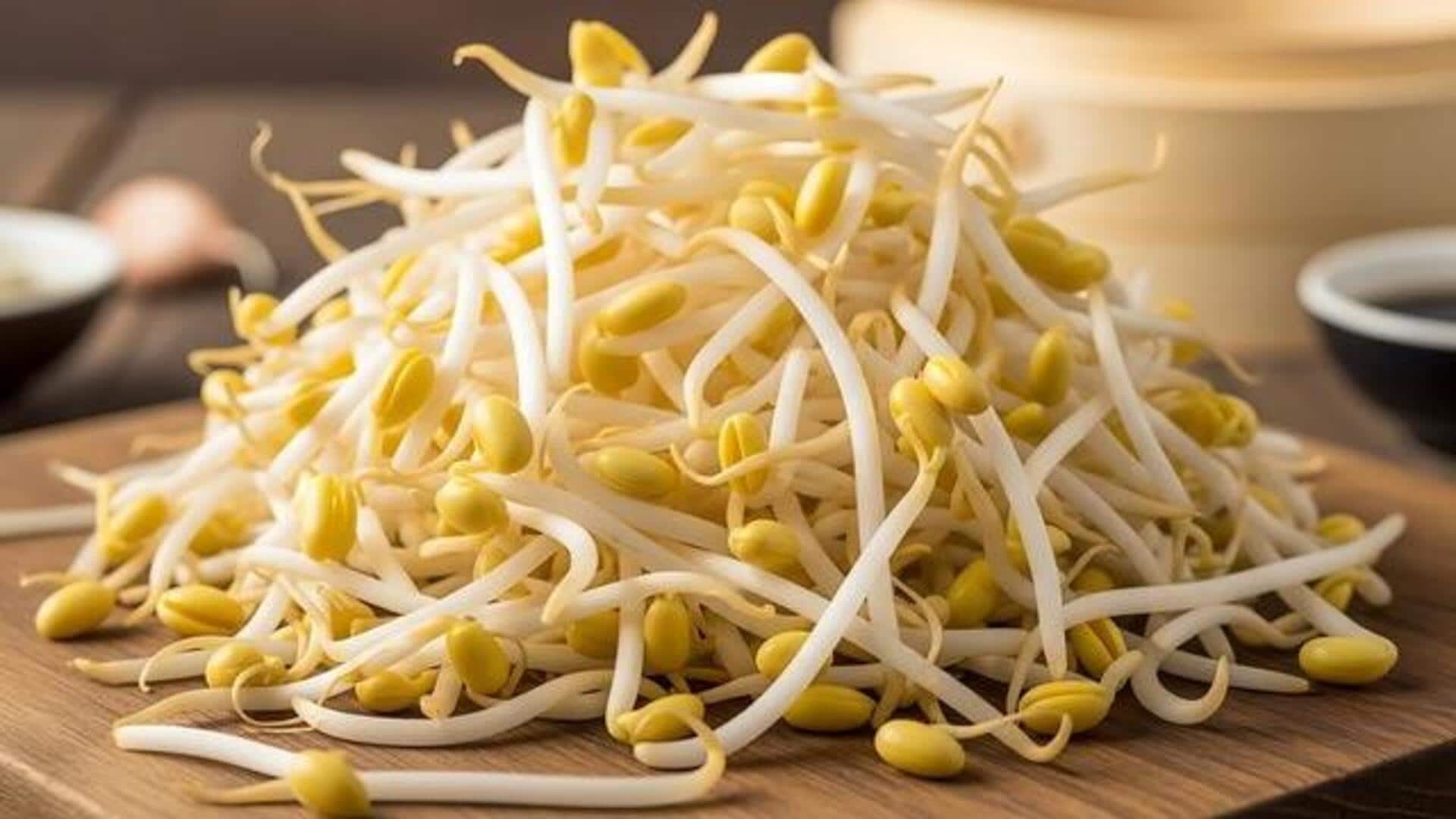
5 seeds that make the best sprouts
What's the story
Sprouting seeds is an easy way to add fresh, nutritious greens to your meals. The practice boosts the nutritional value of seeds, making them richer in vitamins and minerals. Here, we look at five seeds that sprout easily and make a great addition to your diet. Each of them comes with its own unique flavor and nutritional profile, making them versatile for various dishes.
Tip 1
Alfalfa seeds: A nutrient powerhouse
Alfalfa seeds are popular for sprouting because they are packed with vitamins A, C, E, and K. They also contain calcium, potassium, and iron.
These tiny sprouts have a mild flavor that goes well with salads, sandwiches, and wraps.
Sprouting alfalfa seeds increases their nutrient absorption capacity by up to 30%. This makes them an excellent choice for anyone looking to boost their nutrient intake.
Tip 2
Broccoli seeds: Rich in sulforaphane
Broccoli sprouts are famous for their high sulforaphane content, a compound known for its antioxidant properties.
These sprouts are also rich in vitamins C and K, as well as fiber.
The slightly peppery taste of broccoli sprouts makes them a great addition to salads or as a topping on soups.
Sprouting broccoli seeds can increase sulforaphane levels by up to 50%, making them an excellent choice for health enthusiasts.
Tip 3
Lentil seeds: Protein-packed option
Lentil seeds are an excellent plant-based protein source with about 26% protein content by weight.
They also provide essential amino acids, such as lysine and leucine.
When sprouted, lentils become easier to digest while also enhancing their nutritional value by increasing vitamin B content by up to 20%.
Their nutty flavor makes them perfect for adding to soups or using as a base in veggie burgers.
Tip 4
Radish seeds: Spicy addition
Radish seeds give spicy-flavored sprouts that can add a kick to any dish.
They are rich in vitamin C, folate, and antioxidants like anthocyanins, which promote health benefits such as reducing inflammation.
Sprouting radish seeds increases the availability of these nutrients while reducing anti-nutrients like phytic acid by almost 30%.
Use these zesty sprouts in salads or as garnishes on your favorite dishes.
Tip 5
Sunflower seeds: Versatile choice
Sunflower seed sprouts provide healthy fats, along with vitamins B1 (thiamine) and B6 (pyridoxine).
They also contain minerals like magnesium, phosphorus, copper, manganese, selenium, zinc, iron, potassium, and protein (approximately 25% by weight).
These make them a versatile choice for any meal plan.
They can be added to smoothies, salads, sandwiches, and wraps, or eaten alone as a snack food option.