How to monitor your pulse without special equipment
What's the story
Monitoring your pulse is a simple yet effective way to keep a tab on your heart health. For beginners, knowing how to check their pulse accurately can be the first step toward better cardiovascular awareness. Whether you're doing it for fitness tracking or general health, knowing the basics can make it easier. Here, we look at five easy ways to monitor your pulse, without any fancy equipment or complicated techniques.
Tip 1
Use your fingertips
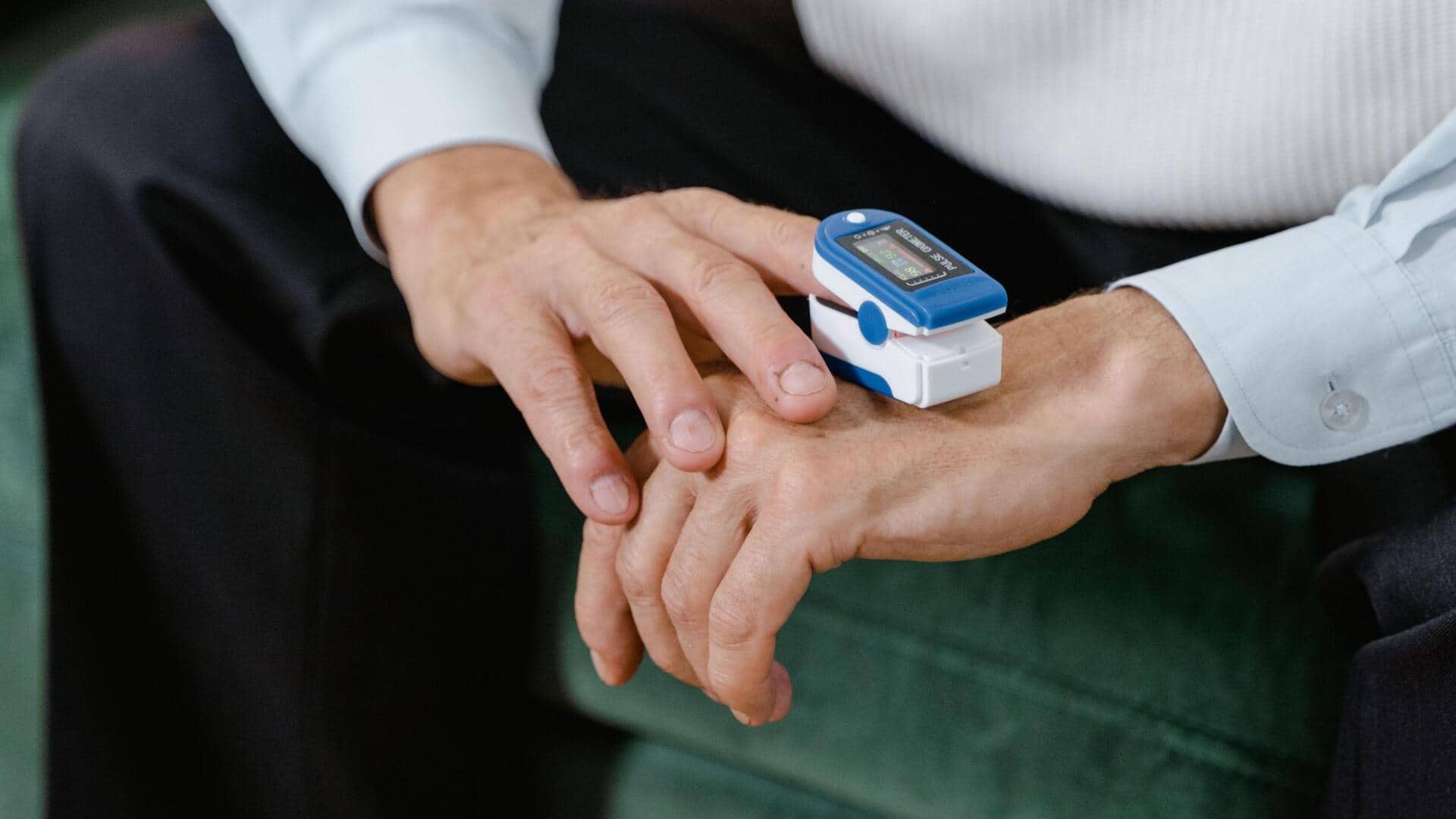
Using your fingertips is one of the easiest ways to check your pulse.
Place your index and middle fingers on the wrist of the opposite hand, just below the base of the thumb.
Press gently until you feel a heartbeat.
This method gives you a direct way to feel your pulse without any tools, making it ideal for beginners.
Tip 2
Count beats manually
Once you've located your pulse with your fingertips, count the number of beats for 15 seconds and multiply by four to get your heart rate per minute (BPM).
This manual counting method gives you an accurate reading of how fast your heart is beating at that moment.
It's simple and effective for anyone wanting to monitor their pulse regularly.
Tip 3
Use a smartwatch or fitness tracker
Smartwatches and fitness trackers come with built-in sensors that can monitor your pulse continuously throughout the day.
These devices give you real-time data on your heart rate, and can even alert you if there are any irregularities.
For those who prefer technology over manual methods, these gadgets offer a convenient way to keep track of their cardiovascular health.
Tip 4
Try smartphone apps
Several smartphone apps use camera sensors to detect changes in blood flow under your fingertip, calculating your heart rate accurately.
Just place your finger over the camera lens and follow the app's instructions for an easy way to monitor your pulse without any extra hardware.
Tip 5
Practice breathing exercises
Breathing exercises not only help in relaxation but also make it easier to monitor your pulse by focusing on slow, deep breaths.
This way, you can feel your heartbeat more clearly when checking manually or with devices like smartwatches or smartphone apps.
Regular practice of breathing exercises can improve your cardiovascular health and well-being.