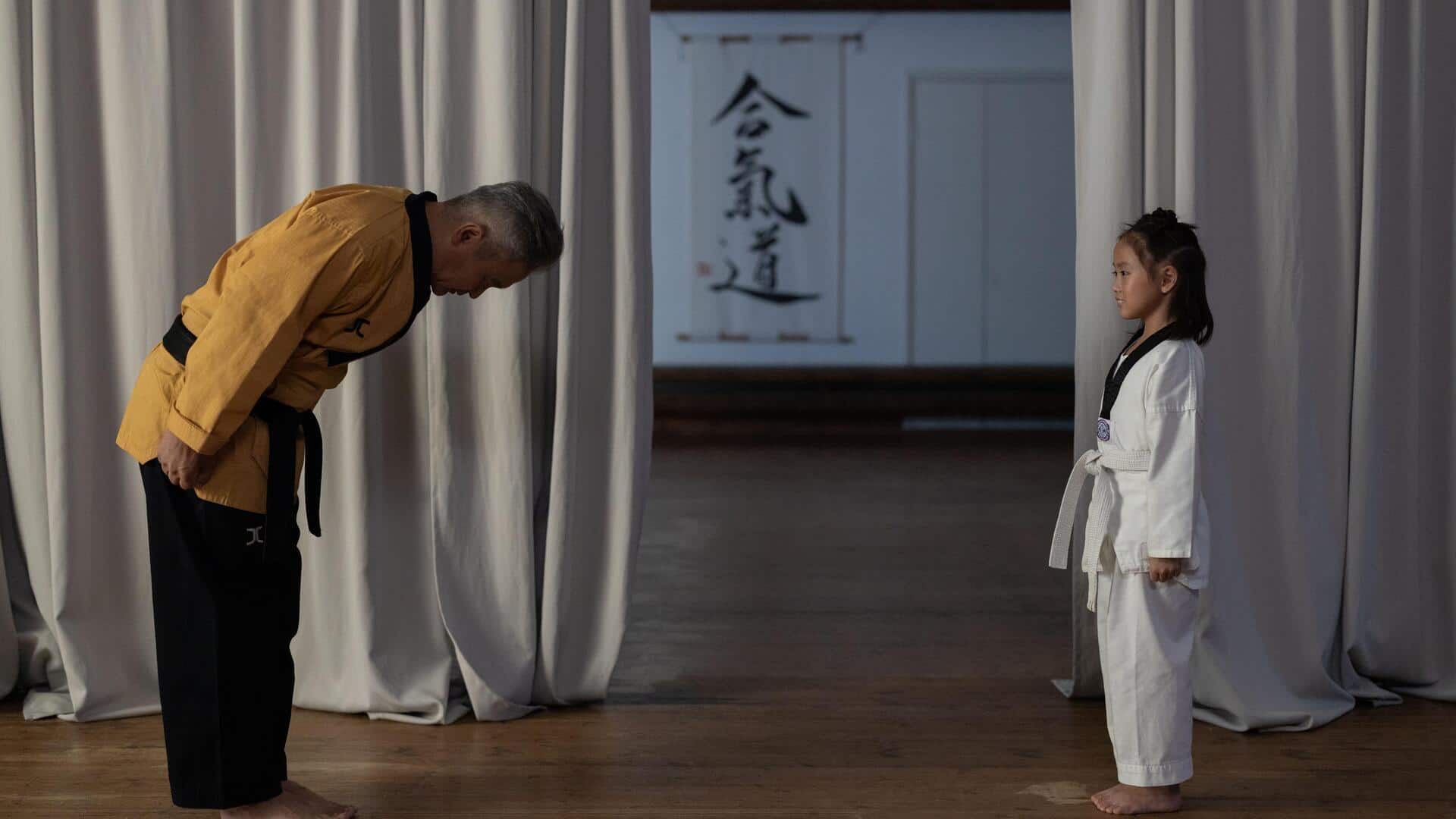
How to bow the right way in South Korea
What's the story
In South Korea, bowing is an important part of etiquette and culture. It is a gesture of respect, greeting, gratitude, and apology. Unlike Western cultures where a handshake is common, bowing is deeply rooted in Korean traditions. Knowing the different types of bows can help you understand social interactions and cultural nuances in South Korea. Here are five important bowing traditions that define Korean etiquette.
#1
The deep bow: A sign of respect
The deep bow is performed by bending at the waist at an angle of 90 degrees. It is usually reserved for formal occasions and is a sign of deep respect.
You may see this bowing when greeting elders or during ceremonies. It shows humility and acknowledges the other person's status or position.
#2
The medium bow: Commonly used greeting
The medium bow is performed by bending at the waist at an angle of about 45 degrees.
This bow is used in daily interactions as a polite greeting or expression of gratitude.
It strikes a balance between formality and informality, making it suitable for most social situations.
#3
The slight bow: Casual acknowledgment
The slight bow is performed by a subtle nod of the head without bending the torso much.
This gesture is commonly used among friends or acquaintances in casual settings. It serves as a quick acknowledgment or greeting without being overly formal.
#4
Bowing while introducing yourself: A cultural norm
In South Korea, bowing while introducing yourself is a cultural norm. It shows respect and politeness toward the person you are meeting for the first time.
The practice is deeply rooted in Korean traditions and is an essential part of social interactions.
By bowing during introductions, you acknowledge the other person's presence and show your willingness to engage with them respectfully.
#5
Bowing during conversations: A sign of attentiveness
Bowing during conversations in South Korea is a sign of attentiveness and engagement. It shows that you are listening and respecting the person speaking.
This practice is especially important when talking to elders or people in authority. It makes the conversation more respectful and polite.