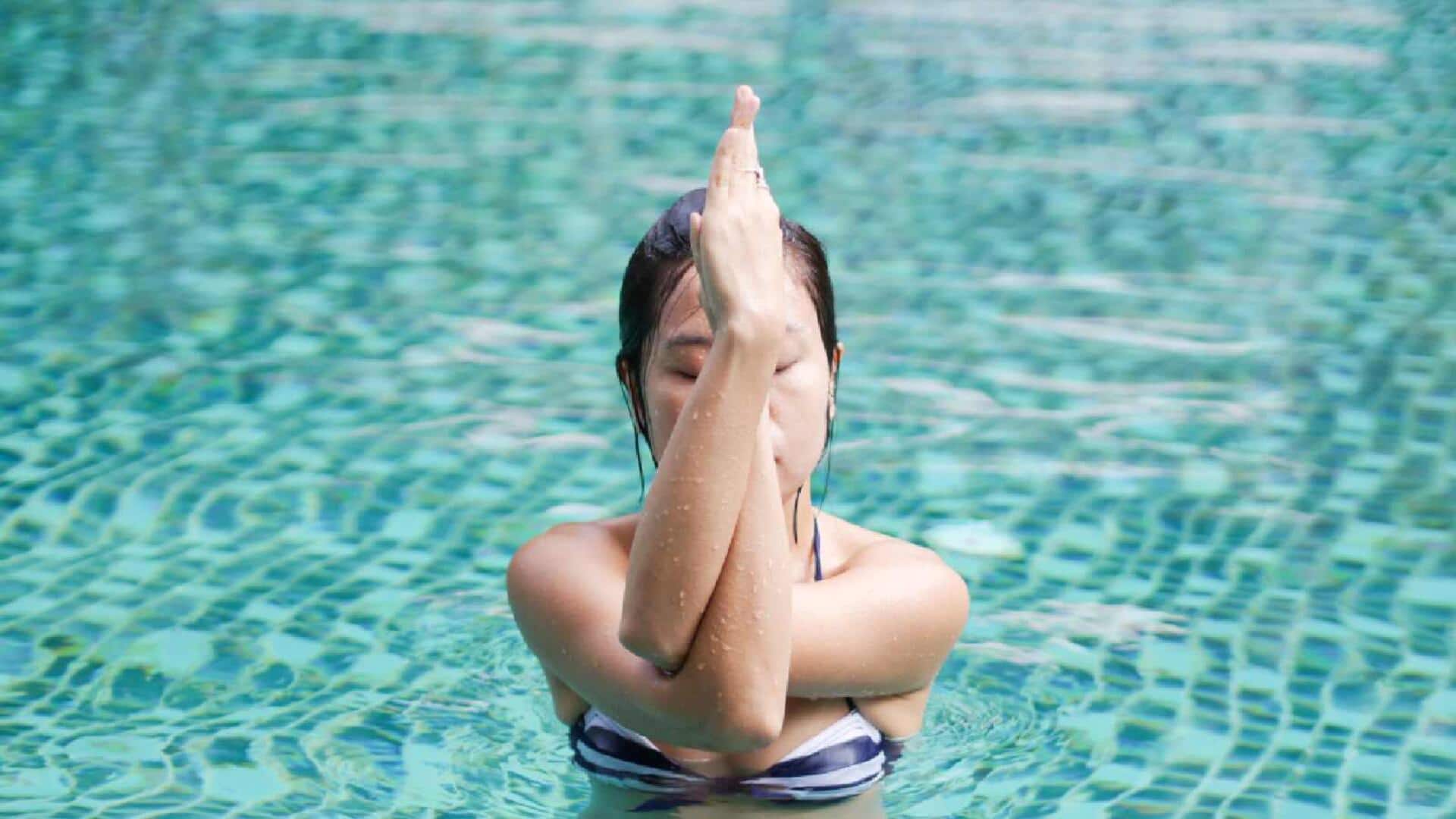
What is aquatic yoga?
What's the story
Aquatic yoga is a unique blend of yoga and water, giving practitioners a whole new experience. The practice takes place in a pool or any body of water, using the buoyancy to improve flexibility, strength, and relaxation. The gentle resistance of water makes it an ideal choice for anyone looking to improve their yoga practice without putting too much stress on their joints. Here are five ways to enhance your aquatic yoga experience.
Tip 1
Embrace the buoyancy
Buoyancy is the most important aspect of aquatic yoga. It helps you perform poses with less strain on your joints and muscles.
By embracing buoyancy, you can focus more on your breathing and alignment rather than balancing.
This allows you to deepen your stretches and improve your flexibility without the fear of falling or injury.
Tip 2
Focus on breath control
In aquatic yoga, controlling your breath is essential. The resistance of water makes it even more important to focus on your breathing patterns.
Deep inhalations and exhalations help you relax and maintain focus throughout the session.
Practicing breath control not only enhances your concentration but also improves oxygen flow to the muscles, aiding in better performance.
Tip 3
Utilize floating props
Floating props like noodles or mats can be extremely useful in aquatic yoga sessions. They provide additional support for various poses while enhancing stability in the water.
These props allow practitioners to explore new movements safely by offering extra buoyancy or resistance as needed.
Tip 4
Experiment with temperature variations
The temperature of the water can have a huge impact on your aquatic yoga experience.
Warmer water relaxes muscles and makes it easier to stretch, while cooler water can energize and invigorate you.
Trying out different temperature settings lets you customize your practice according to what you want to achieve during each session.
Tip 5
Incorporate mindfulness techniques
Mindfulness is key to getting the most out of aquatic yoga.
Practicing mindfulness means being present in every moment of your practice, from the way you breathe to how you move through poses.
This technique helps clear your mind of distractions and improves your mental clarity, while making your body more aware of itself in the water.