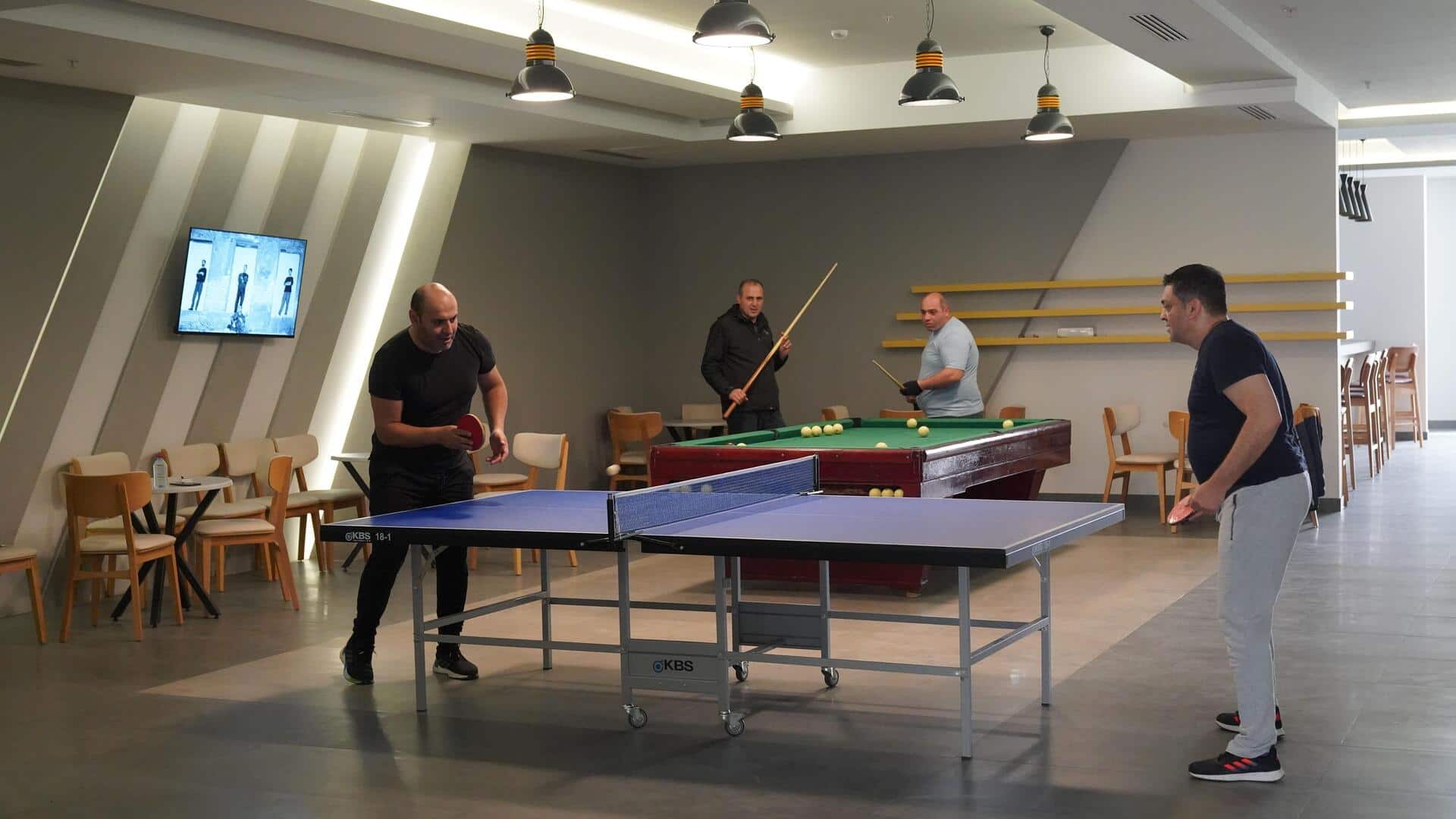
Want faster reflexes? Try badminton or table tennis
What's the story
Badminton and table tennis are two fast-paced racquet sports that require quick reflexes and agility. Both games are popular worldwide and offer unique physical and mental challenges. While both sports can improve reflexes, they do so in different ways. This article explores how playing badminton or table tennis can enhance your reflexes, providing insights into the dynamics of each game and its impact on your reaction time.
#1
Speed of play in badminton
Badminton is famous for its fast-paced nature, with shuttlecocks traveling at high speeds.
Players need to react quickly to incoming shots, which improves hand-eye coordination and reflexes.
The need to anticipate opponents' moves also sharpens mental agility.
The constant movement on the court keeps players alert and ready to respond instantly to changing situations.
#2
Quick reactions in table tennis
Table tennis is all about quick exchanges and rapid-fire rallies.
The small size of the table and lightweight ball means players have milliseconds to react to shots.
This demands lightning-fast reflexes and precise timing.
The sport also emphasizes short bursts of intense focus, which can significantly enhance one's ability to process visual information quickly.
#3
Footwork dynamics in badminton
Footwork is an integral part of badminton, as players have to move quickly across the court to get to the shuttlecock.
The constant changes in direction and speed require quick foot movements that improve overall agility and coordination.
Practicing footwork drills regularly can help improve reflexes by training muscles to respond faster during play.
#4
Hand-eye coordination in table tennis
Table tennis emphasizes hand-eye coordination since players must hit a small ball with precision while making quick adjustments based on their opponent's actions.
This constant practice of tracking fast-moving objects with precision improves neural connections related to reflexive actions.
Over time, this leads to better reaction times not just in sports but also in daily activities requiring quick decision-making skills.