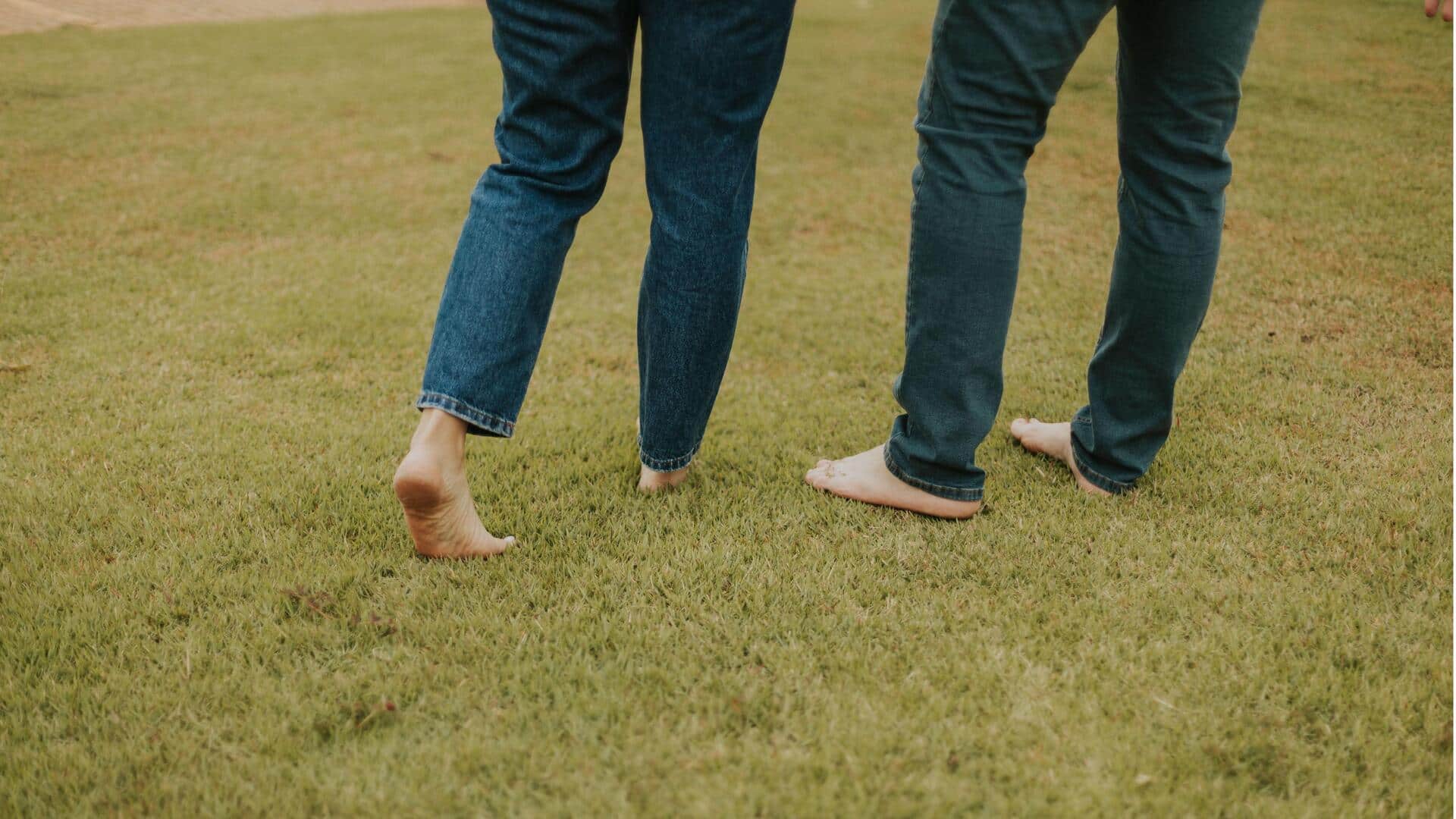
Why so many people walk barefoot around the world
What's the story
Walking barefoot is a common practice in many cultures, often rooted in tradition, spirituality, and health. From ancient rituals to modern wellness trends, going barefoot has been embraced for various reasons across the globe. Here are five fascinating barefoot traditions that highlight the cultural significance and diverse practices associated with this simple yet profound act.
#1
Barefoot walking in Japan's Zen gardens
In Japan, walking barefoot in Zen gardens is a meditative practice. The tradition encourages mindfulness and connection with nature.
Practitioners walk on gravel paths, focusing on each step to clear their minds and achieve inner peace.
This practice is rooted in Zen Buddhism and emphasizes simplicity and tranquility.
#2
Indian barefoot yoga practices
In India, yoga is often practiced barefoot, allowing for better balance and grounding during poses.
It is believed that going barefoot helps connect practitioners with the earth's energy, enhancing their spiritual experience.
The tradition is deeply rooted in Indian culture, where it is common to perform yoga outdoors or in open spaces.
#3
Native American earth walking rituals
Native American tribes have earth walking rituals that involve going barefoot as a way to connect with the land.
These rituals are often performed during ceremonies or spiritual gatherings, where participants walk on natural surfaces to feel the earth's energy and honor their connection to nature.
#4
Brazilian capoeira's barefoot tradition
Capoeira, a Brazilian martial art, is performed barefoot as a part of its tradition.
The practice requires agility and balance, which is better when the feet are in direct contact with the ground.
This tradition not only highlights cultural heritage but also emphasizes physical fitness and gracefulness in movement.
#5
Italian barefoot walking festivals
In Italy, some regions host festivals that celebrate barefoot walking as an act of cultural pride and health promotion.
Participants walk on various terrains without shoes as a part of communal activities aimed at fostering community bonds, while promoting awareness about foot health benefits associated with going shoeless occasionally.