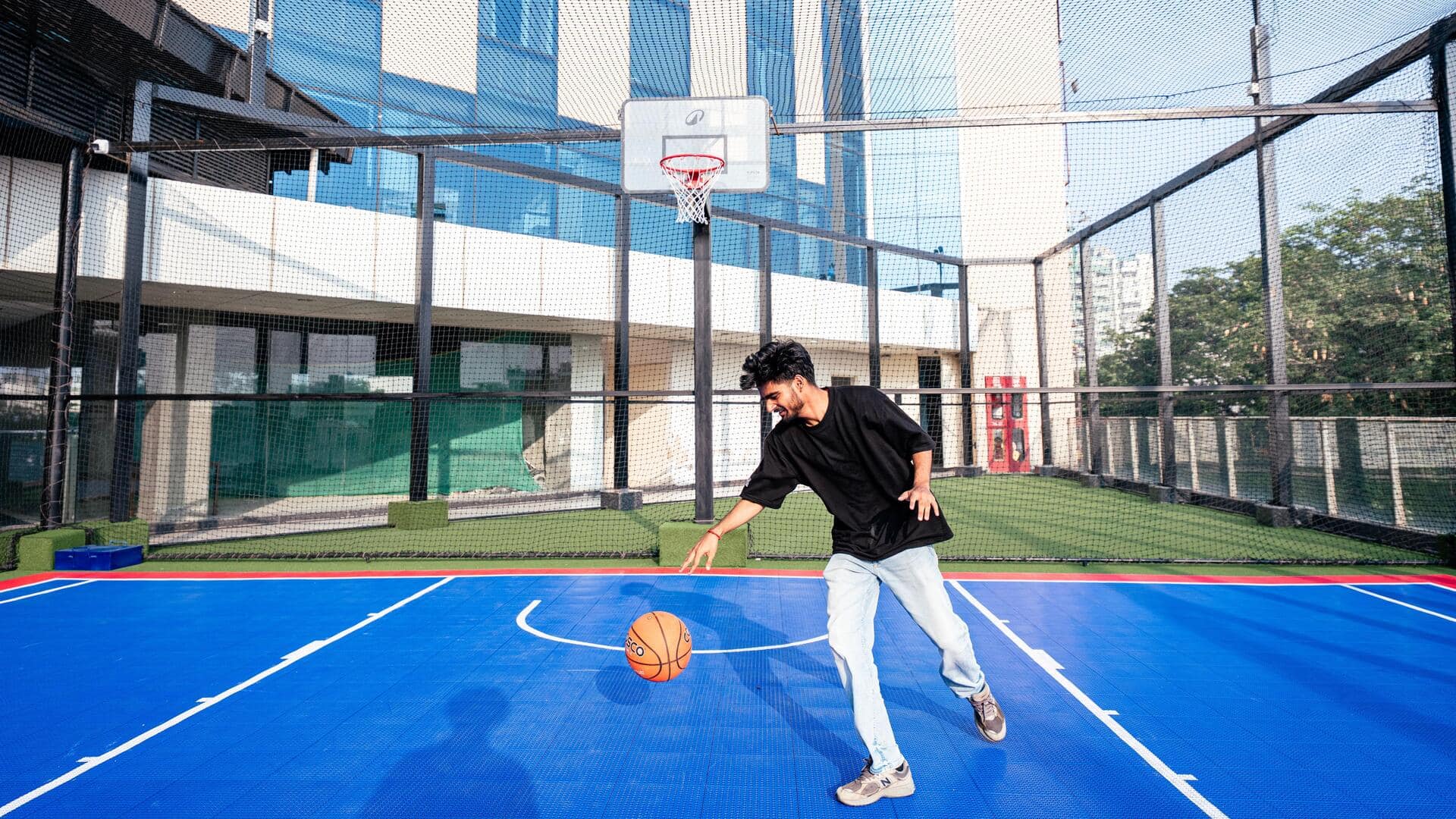
How playing basketball and badminton sharpens hand-eye coordination
What's the story
Basketball and badminton are two of the most popular sports, both of which require excellent hand-eye coordination. While both games have their own set of skills and techniques, they also offer unique challenges to players looking to improve their coordination. In this article, we take a look at how each sport contributes to enhancing hand-eye coordination by exploring the key aspects that make them effective.
#1
Fast-paced action in basketball
Basketball is all about quick movements and rapid decision-making.
Players need to constantly track the ball, teammates, and opponents while dribbling or shooting.
This constant need to process visual information quickly helps develop sharp hand-eye coordination skills.
The need to make split-second decisions while navigating through defenders or passing accurately adds another layer of complexity, further honing these abilities.
#2
Precision and focus in badminton
Badminton is all about precision and focus.
Players have to keep a close watch on the shuttlecock's trajectory and speed as it travels at high speeds across the court.
The need to time their swings perfectly for accurate shots helps develop fine motor skills and enhances hand-eye coordination.
The one-on-one nature of badminton also allows players to concentrate on anticipating their opponent's moves, further improving these skills.
#3
Footwork's role in coordination
Footwork is an integral part of both basketball and badminton, contributing to overall coordination.
In basketball, players need to move quickly between positions while maintaining balance during jumps or pivots.
In badminton, agile footwork allows players to reach different areas of the court swiftly, without losing control over their body movements.
Practicing footwork drills can improve agility and enhance hand-eye coordination in both sports.
#4
Mental agility through strategic play
Strategic play is an important part of both basketball and badminton, requiring mental agility along with physical skills.
Players have to anticipate opponents' actions and plan their own moves accordingly.
This mental exercise significantly contributes to improving hand-eye coordination by requiring constant adjustments based on changing game dynamics.