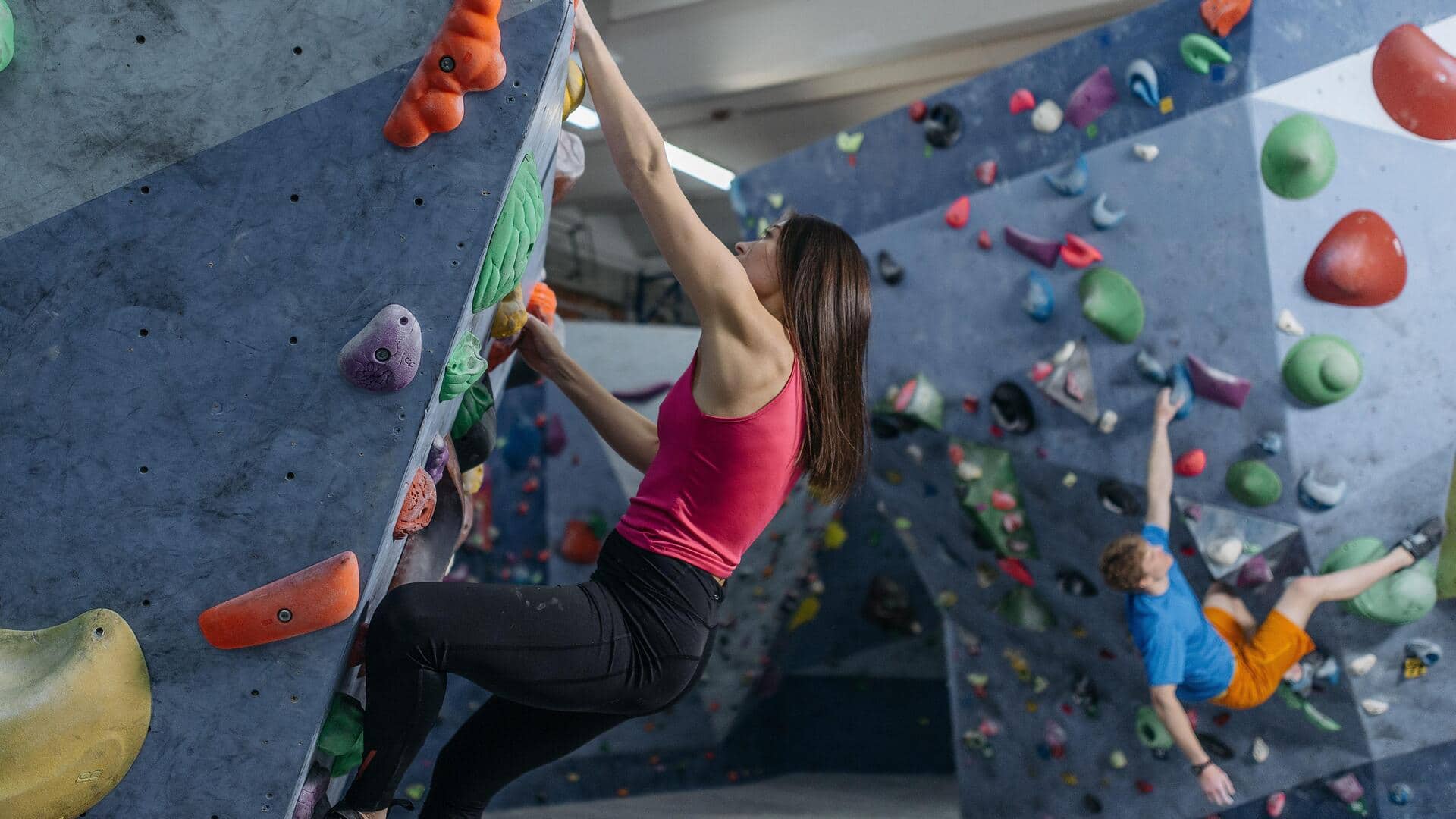
Bouldering: A fun way to boost your mental health
What's the story
Bouldering, a form of rock climbing without ropes or harnesses, has gained popularity as a fitness activity. While most people associate bouldering with physical benefits like improved strength and endurance, it also offers several unexpected mental health benefits. Engaging in this sport can enhance your mental well-being in ways you might not expect. Here are five surprising mental health benefits of bouldering sessions.
Tip 1
Boosts problem-solving skills
Bouldering is all about solving problems, as climbers have to figure out the best way to tackle a route or problem.
This cognitive challenge improves problem-solving skills by encouraging climbers to think critically and creatively under pressure.
The process of analyzing routes and making quick decisions helps sharpen these skills, which can be applied to everyday life situations.
Tip 2
Reduces stress levels
The focus required during bouldering sessions can be a great stress reliever.
As climbers concentrate on their movements and techniques, they enter a state of mindfulness that helps them forget about their daily stressors.
This mindful focus reduces cortisol levels, the hormone associated with stress, leaving climbers feeling calmer and more relaxed after their sessions.
Tip 3
Enhances mood through endorphin release
Just like any other physical activity, bouldering triggers the release of endorphins in the body.
These natural chemicals work as mood lifters and pain relievers, giving you a sense of happiness and well-being after a session.
The endorphin rush can be especially beneficial for those dealing with mild depression or anxiety, as it provides an instant mood boost.
Tip 4
Improves self-confidence
Completing challenging routes in bouldering not only boosts physical strength but also self-confidence.
Each achievement, big or small, reinforces a sense of accomplishment and belief in one's abilities.
This newfound confidence often transcends the climbing wall, positively influencing other areas of life by fostering a resilient mindset.
Tip 5
Encourages social interaction
Bouldering is often done in group settings or climbing gyms where people come together to share tips, techniques, and encouragement.
This social aspect fosters a sense of community and belonging, which is essential for mental health.
Interacting with fellow climbers builds friendships and support networks that provide emotional resilience during tough times.