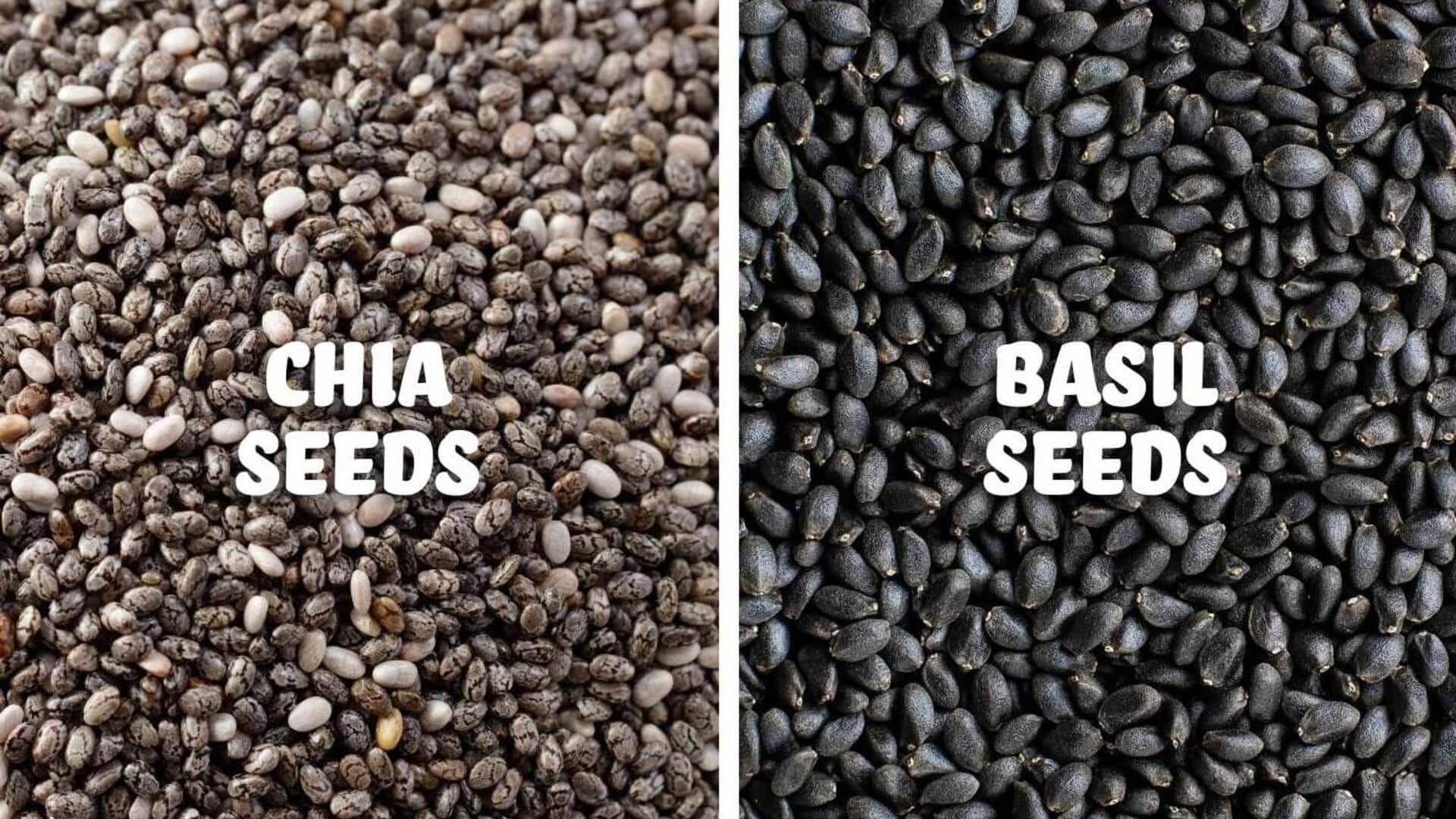
Chia seeds v/s basil seeds: Which superfood is better?
What's the story
Chia seeds and basil seeds are two popular superfoods that have taken the world by storm. Both tiny seeds are packed with nutrients and provide a range of health benefits. While chia seeds are well-known for their omega-3 fatty acids, basil seeds are famous for their fiber content. Here's a look at the nutritional profiles of these seeds and their health benefits.
#1
Omega-3 fatty acids in chia seeds
Chia seeds are rich in omega-3 fatty acids, which are essential for heart health. These fatty acids help reduce inflammation and improve cholesterol levels. Adding chia seeds to your diet can be an easy way to boost your intake of these beneficial fats without having to consume fish or other animal products.
#2
Fiber content in basil seeds
Basil seeds are also high in fiber, which helps with digestion and keeps you full. The soluble fiber in basil seeds helps regulate blood sugar levels by slowing down the absorption of sugar into the bloodstream. Adding basil seeds to your meals can help with weight management by keeping you full longer.
#3
Antioxidants present in both seeds
Both chia and basil seeds are rich in antioxidants, which protect the body from oxidative stress and free radicals. Antioxidants are important for keeping cells healthy and may lower the risk of chronic diseases such as heart disease and cancer. Adding either of the two seeds to your diet can help you get an antioxidant boost.
Tip 1
Versatility of chia and basil seeds
Chia and basil seeds are versatile ingredients that can be added to a number of dishes. Chia seeds can be added to smoothies, puddings, or used as a substitute in baking due to their gel-like consistency when soaked in liquid. Basil seeds can be added to drinks or desserts for texture or sprinkled over salads for an extra crunch.