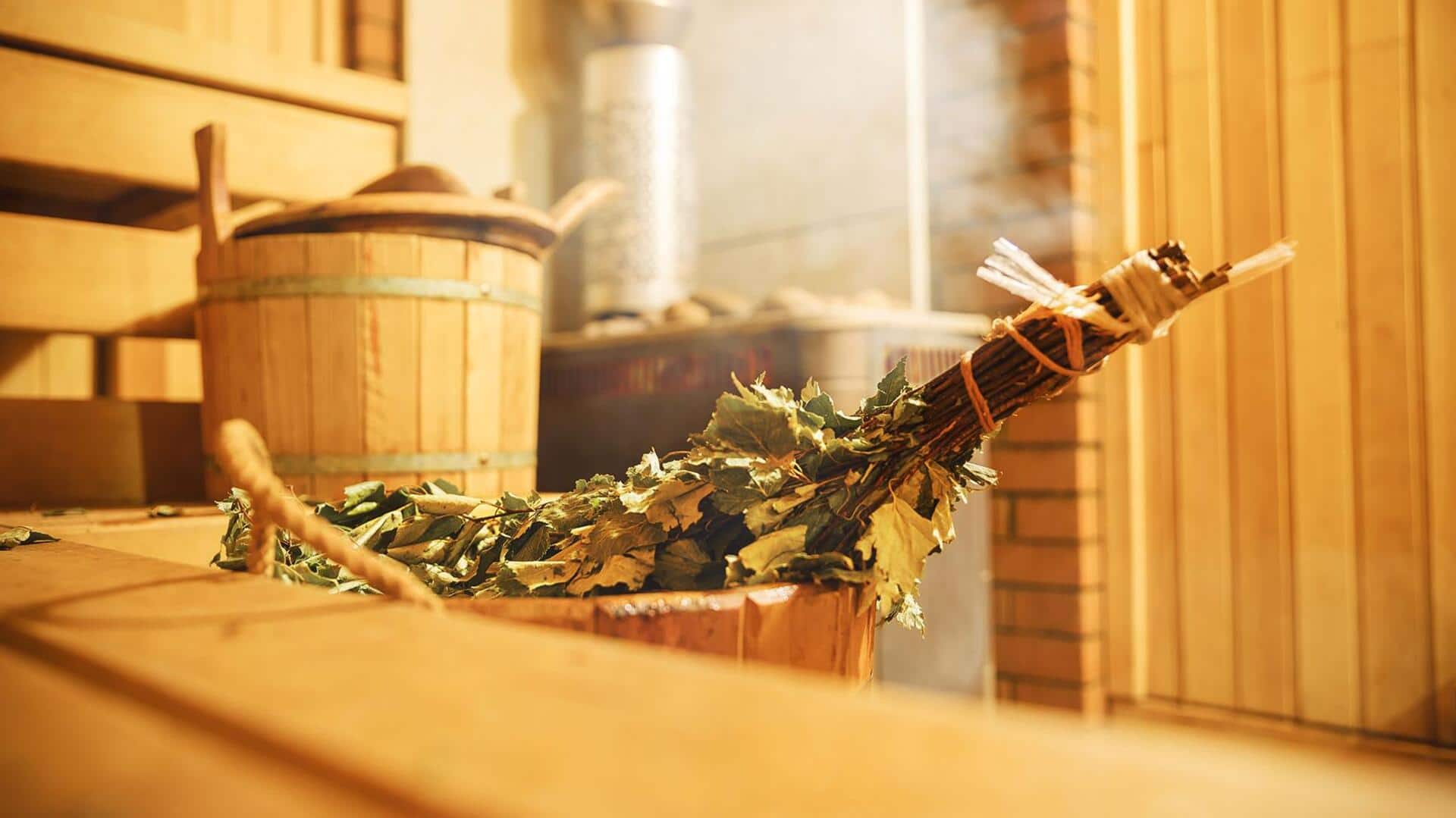
What is sauna aromatherapy?
What's the story
Creating a sauna aromatherapy experience at home can be a rejuvenating way to unwind and enhance your well-being. By combining the soothing heat of a sauna with the calming effects of essential oils, you can create a personal sanctuary for relaxation. This guide provides practical tips on setting up your own sauna aromatherapy session, focusing on essential elements that contribute to an effective and enjoyable experience.
Tip 1
Choosing the right essential oils
Selecting the right essential oils is key to an effective aromatherapy session.
Lavender is often chosen for its calming properties, while eucalyptus can help clear the mind. Peppermint may energize and invigorate you.
It's best to choose oils based on the mood or effect you wish to achieve during your session.
Tip 2
Setting up your home sauna
If you don't have a traditional sauna, you can create a similar environment using a steam room or even a bathroom with hot water running.
Ensure good ventilation by keeping windows slightly open or using an exhaust fan. This helps maintain air quality while allowing steam to circulate effectively.
Tip 3
Incorporating water with oils
To safely diffuse essential oils in your home sauna, mix them with water before adding them to any diffuser or directly onto heated surfaces.
This ensures even distribution of the oil's aroma without damaging equipment or surfaces.
A typical ratio is five drops of oil per cup of water, but you can adjust this based on personal preference and the size of your space.
Tip 4
Timing your sessions for maximum benefit
Timing is everything when it comes to maximizing the benefits of your sauna aromatherapy experience.
A 20-minute session is usually recommended for beginners, gradually increasing as you get comfortable with longer durations up to 45 minutes for seasoned users.
Always listen to your body and take breaks if you feel uncomfortable.
Tip 5
Maintaining safety precautions
Safety should always be a priority when indulging in sauna aromatherapy at home.
Make sure that all electrical appliances are in good condition and avoid overloading circuits by not using too many devices at once in one area.
Stay hydrated by drinking water before and after each session to prevent dehydration from prolonged exposure to heat.