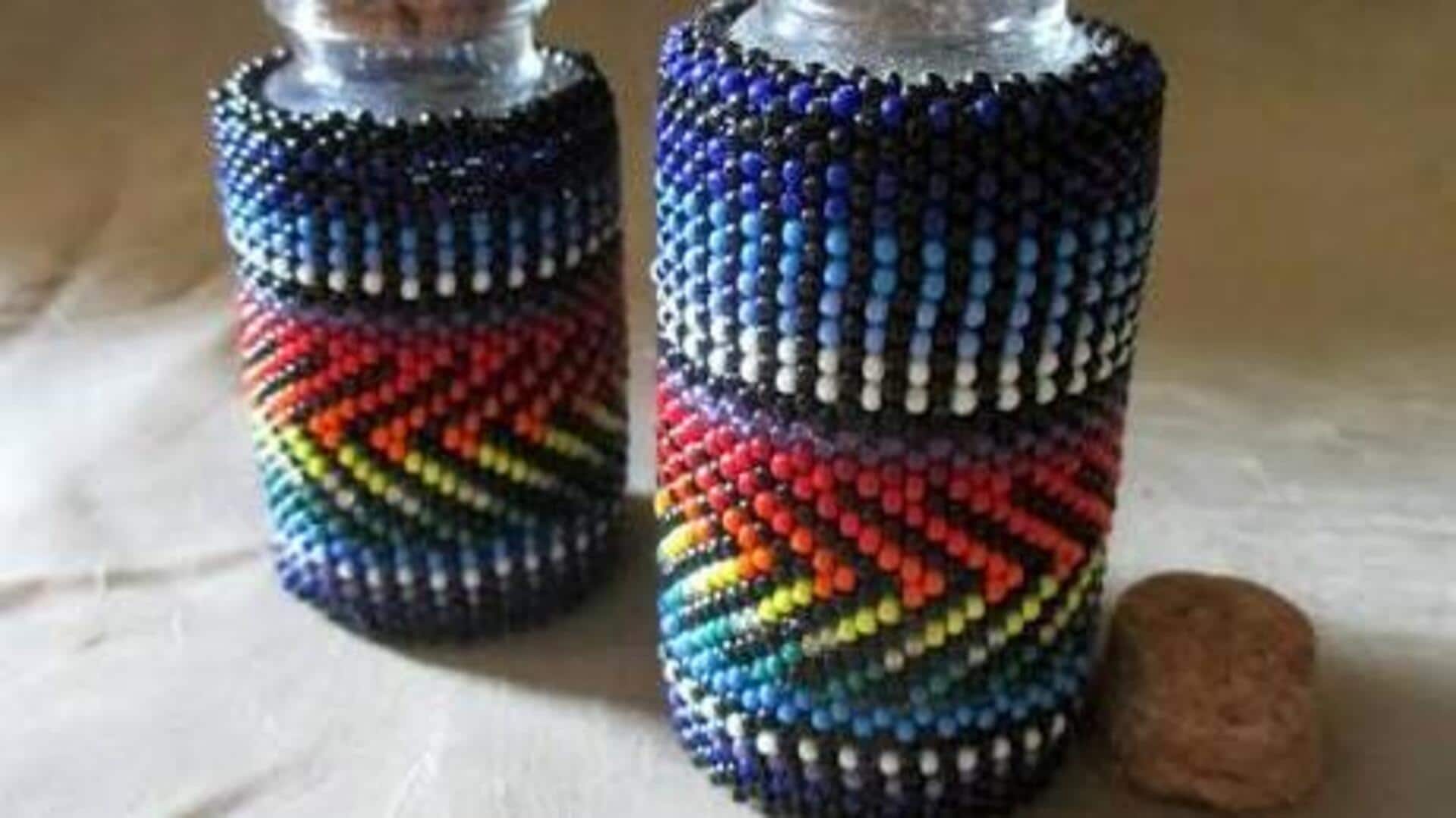
How to make beautiful beaded jars
What's the story
African beaded jars are a unique blend of tradition and creativity. These colorful jars are made using beads, which are an integral part of many African cultures. The process of making these jars involves a lot of skill and patience, resulting in beautiful pieces that can be used for decoration or storage. This article delves into the art of making African beaded jars, highlighting the materials, techniques, and cultural significance behind them.
Materials
Selecting the right materials
To make an authentic African beaded jar, one needs to choose the right materials.
Glass beads are commonly used because of their durability and vibrant colors. The base of the jar can be made from clay or glass, depending on the desired look.
It is important to select high-quality materials to ensure that the final product is both beautiful and long-lasting.
Patterns
Understanding traditional patterns
African beaded jars often feature traditional patterns that hold cultural significance.
These patterns can vary widely from region to region, each telling a different story or symbolizing different beliefs.
Before starting your project, it is helpful to research these patterns and understand their meanings.
This not only adds depth to your creation, but also pays homage to the rich cultural heritage behind these designs.
Techniques
Techniques for beading
Beading techniques are essential for creating intricate designs on jars.
The most common method is stringing beads onto wire or thread, and then attaching them securely onto the jar's surface.
Other techniques may involve weaving or embroidery-like methods with smaller beads for detailed patterns.
Practicing these techniques can help achieve precision in your work.
Personalization
Incorporating personal touches
While traditional patterns are important, adding personal touches can make your beaded jar even more special.
You could incorporate colors that hold personal significance, or mix in unique shapes of beads that reflect your style.
Personalization not only makes each piece unique, but also adds an emotional connection between you and your creation.