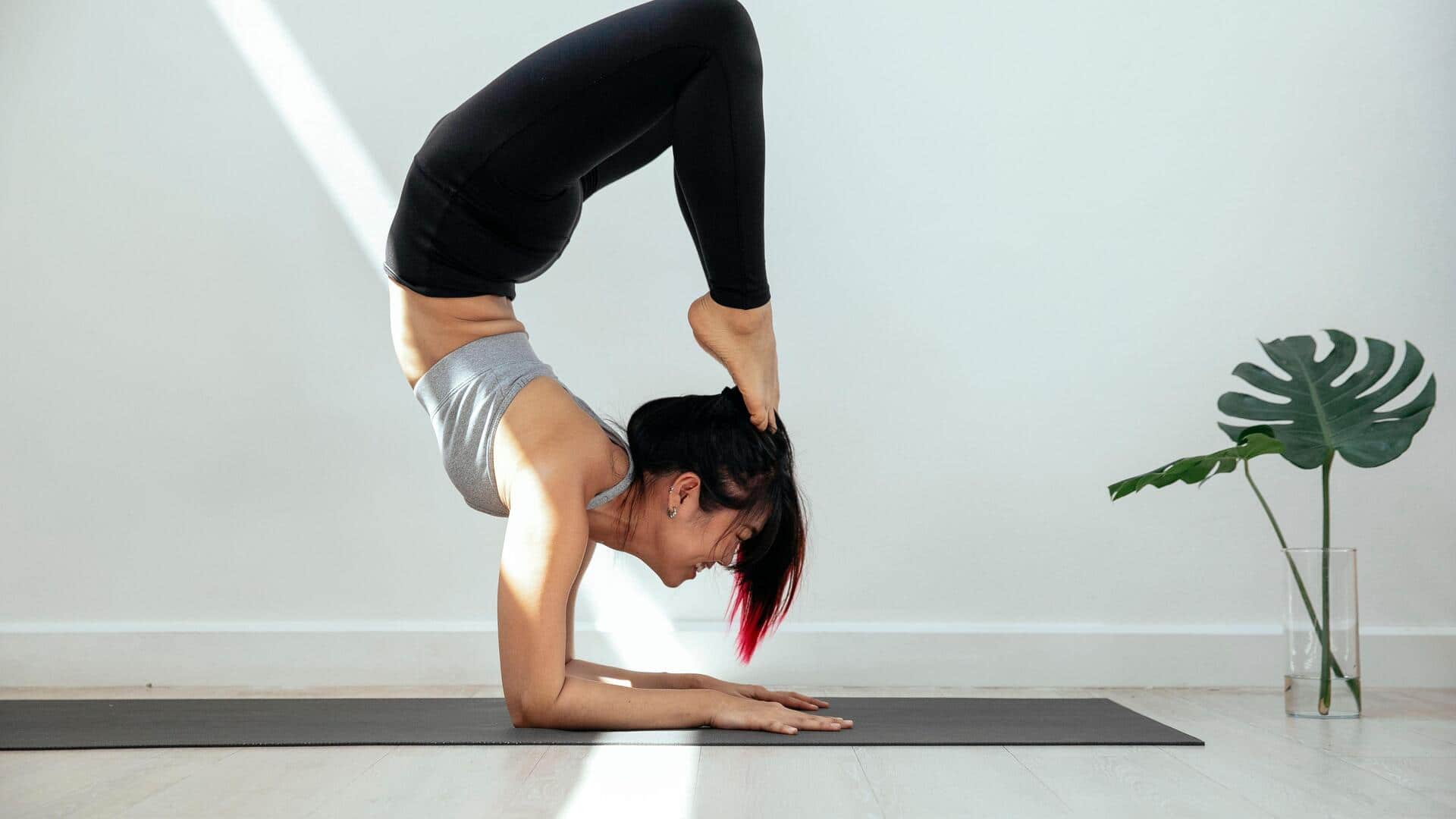
Dolphin pose: How to practice this inversion in yoga
What's the story
The dolphin pose is a popular yoga pose that strengthens the upper body. It builds endurance and flexibility in the shoulders, arms, and core. This pose is an excellent alternative to downward-facing dog, as it focuses on upper body strength. Practicing dolphin pose regularly can improve posture and relieve tension in the neck and shoulders.
#1
Proper alignment for maximum benefits
Proper alignment is key to getting the most out of dolphin pose.
Start on all fours with your forearms on the ground, elbows directly under shoulders.
Tuck your toes and lift your hips, forming an inverted V-shape.
Make sure your head is between your arms, not hanging or pushing forward.
This alignment ensures that the weight is evenly distributed across the upper body.
#2
Engaging core muscles effectively
Engaging core muscles is essential while practicing dolphin pose.
A strong core not only helps you maintain balance but also protects your lower back from strain.
To engage your core, pull your navel toward your spine while keeping a steady breath.
This engagement will help you hold the pose longer and with more stability.
#3
Avoiding common mistakes
Avoiding common mistakes is crucial to reap the benefits of dolphin pose.
One common mistake is letting the lower back sag or arch excessively, which can lead to discomfort or injury.
Keep a neutral spine by focusing on using your arms and shoulders to lift, rather than relying solely on hip height.
#4
Incorporating variations for progression
To progress in dolphin pose, you can try different variations that challenge your strength further.
One option is to lift one leg at a time while maintaining balance in the pose.
Another variation involves adding small pulses with your hips up and down, without losing form or alignment.
These variations not only keep your practice engaging, but also help you build endurance gradually.