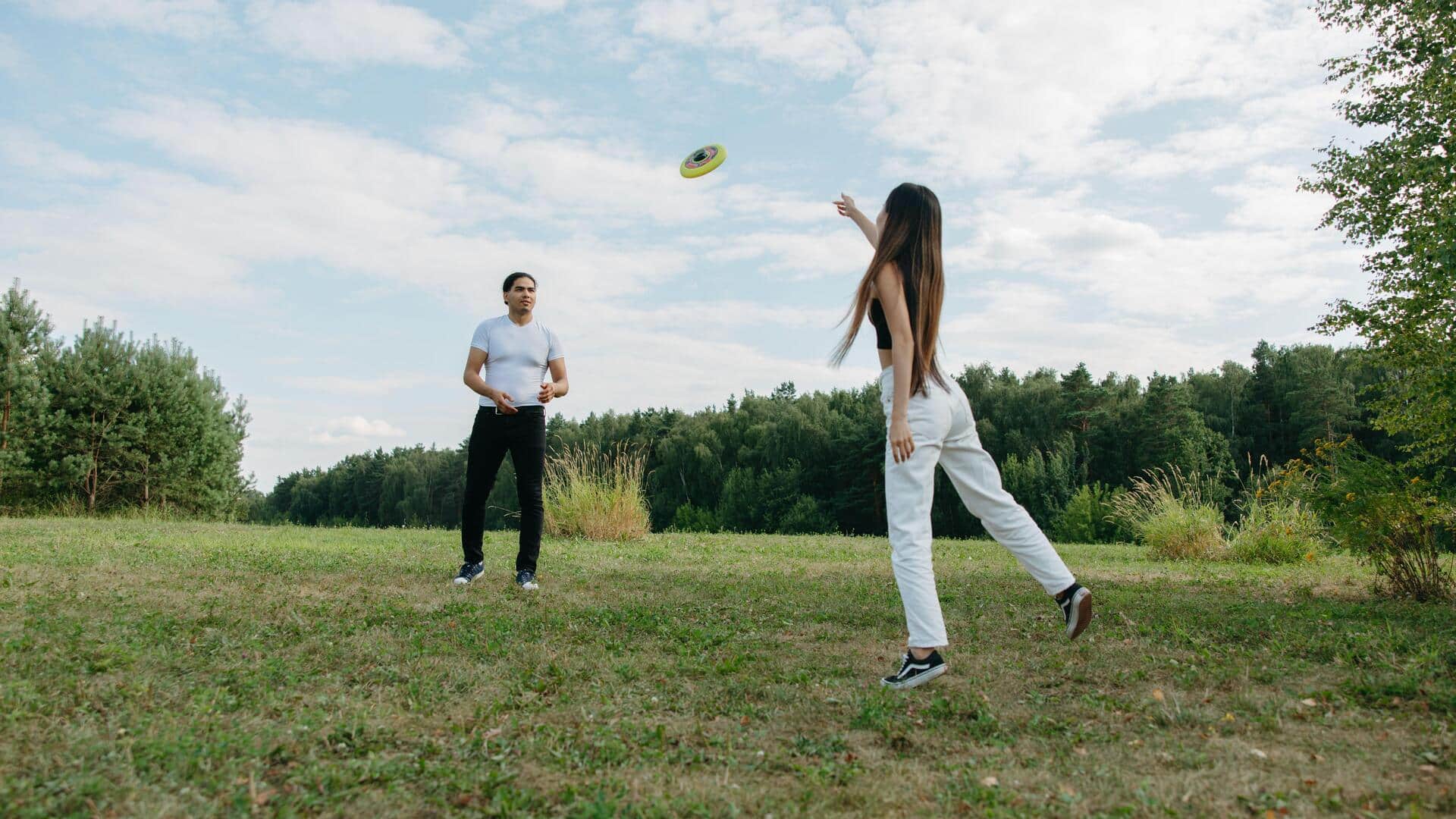
Frisbee or badminton? Which sport can improve your hand-eye coordination?
What's the story
Frisbee and badminton are two popular sports that promise to improve your coordination skills. Both games require quick reflexes, precise movements, and the ability to anticipate the actions of your opponent. While they may appear different in terms of equipment and playing style, both can be equally beneficial in improving your hand-eye coordination. Here's how each sport contributes to this important physical skill.
#1
Frisbee's dynamic play
Frisbee involves throwing and catching a flying disc, which requires constant movement and attention.
Players must quickly adjust their position based on the disc's trajectory, enhancing their ability to react swiftly.
The need for precise timing when catching or throwing the disc helps develop fine motor skills.
Additionally, playing Frisbee often involves running or jumping, further improving overall coordination by engaging multiple muscle groups simultaneously.
#2
Badminton's fast-paced action
Badminton is characterized by its fast-paced rallies, where players hit a shuttlecock back and forth with rackets.
The sport demands quick reflexes, as players must respond rapidly to their opponent's shots.
This constant back-and-forth action sharpens hand-eye coordination, as players focus on both the shuttlecock's speed and direction.
The need for precise footwork also contributes to improved balance and agility, making badminton an excellent choice for enhancing overall coordination.
#3
Mental focus in both sports
Both Frisbee and badminton require mental focus to anticipate moves and strategize accordingly.
In Frisbee, players need to predict where the disc will land while planning their next move.
In badminton, players must read their opponent's intentions while preparing counter-strategies on the fly.
This mental engagement further refines cognitive aspects of coordination, along with physical skills.
#4
Social interaction benefits
Playing these sports involves social interaction with teammates and opponents.
This helps develop communication and coordination skills through regular practice.
These interactions can lead to improved teamwork capabilities, further enhancing overall personal development beyond just improving hand-eye coordination alone.