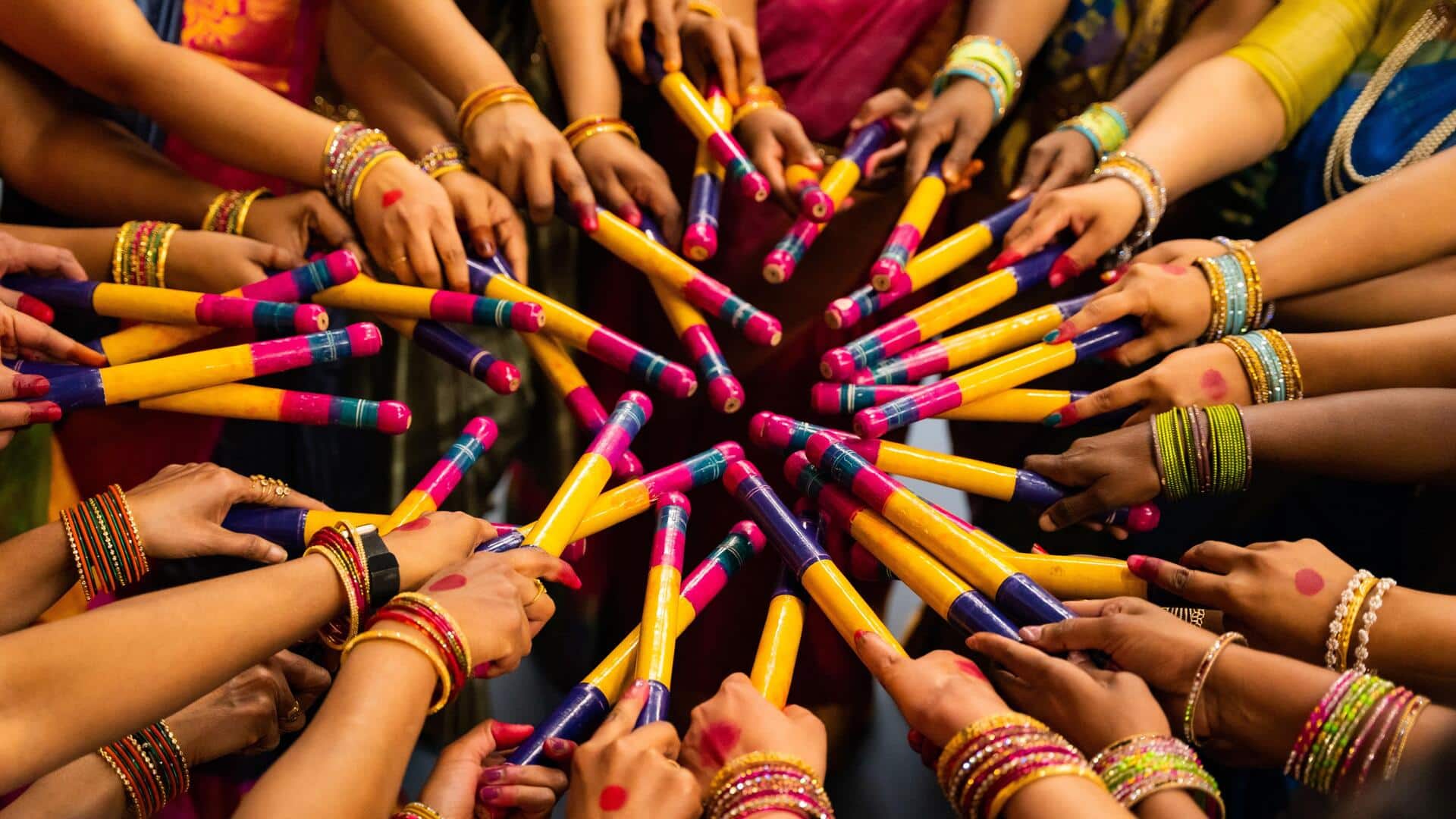
Garba: 4 things to know about Gujarat's famous dance
What's the story
Garba is a traditional dance form from Gujarat, India, which is performed in a circular formation. It is characterized by rhythmic clapping and footwork, and is usually performed during the nine nights of Navratri. The dance is a celebration of life and community, bringing people together in joyful expression. Garba has cultural significance, symbolizing unity and devotion, while also being a vibrant display of Gujarati heritage.
#1
Historical roots of Garba
Garba has its roots in ancient Gujarat, where it was performed as a form of worship.
The word "garba" comes from "garbha," meaning womb or inner sanctum, referring to the sacred space of the dance.
Initially, it was performed around a clay lantern called a garbha deep, symbolizing the universe. Over time, this evolved into the lively folk dance we see today.
#2
Cultural significance
Garba holds immense cultural importance in Gujarat. It is not just a form of entertainment but also a means to connect with one's roots and traditions.
The dance is performed during festivals like Navratri and is a way for people to come together irrespective of age or background.
It fosters community spirit and strengthens social bonds.
#3
Musical elements in garba
The music accompanying garba is essential for setting its rhythm and mood.
Traditionally, it was played using simple instruments like dholak and harmonium. In recent years, modern music has been incorporated while keeping the essence intact.
The beats are fast-paced, encouraging energetic movements that match the enthusiasm of participants.
#4
Modern adaptations
In recent years, garba has also gone global, with people from different cultures embracing it as part of multicultural events or celebrations outside India.
This global reach has led to adaptations that fuse traditional elements with contemporary styles without losing its essence as a symbol of unity within diversity.