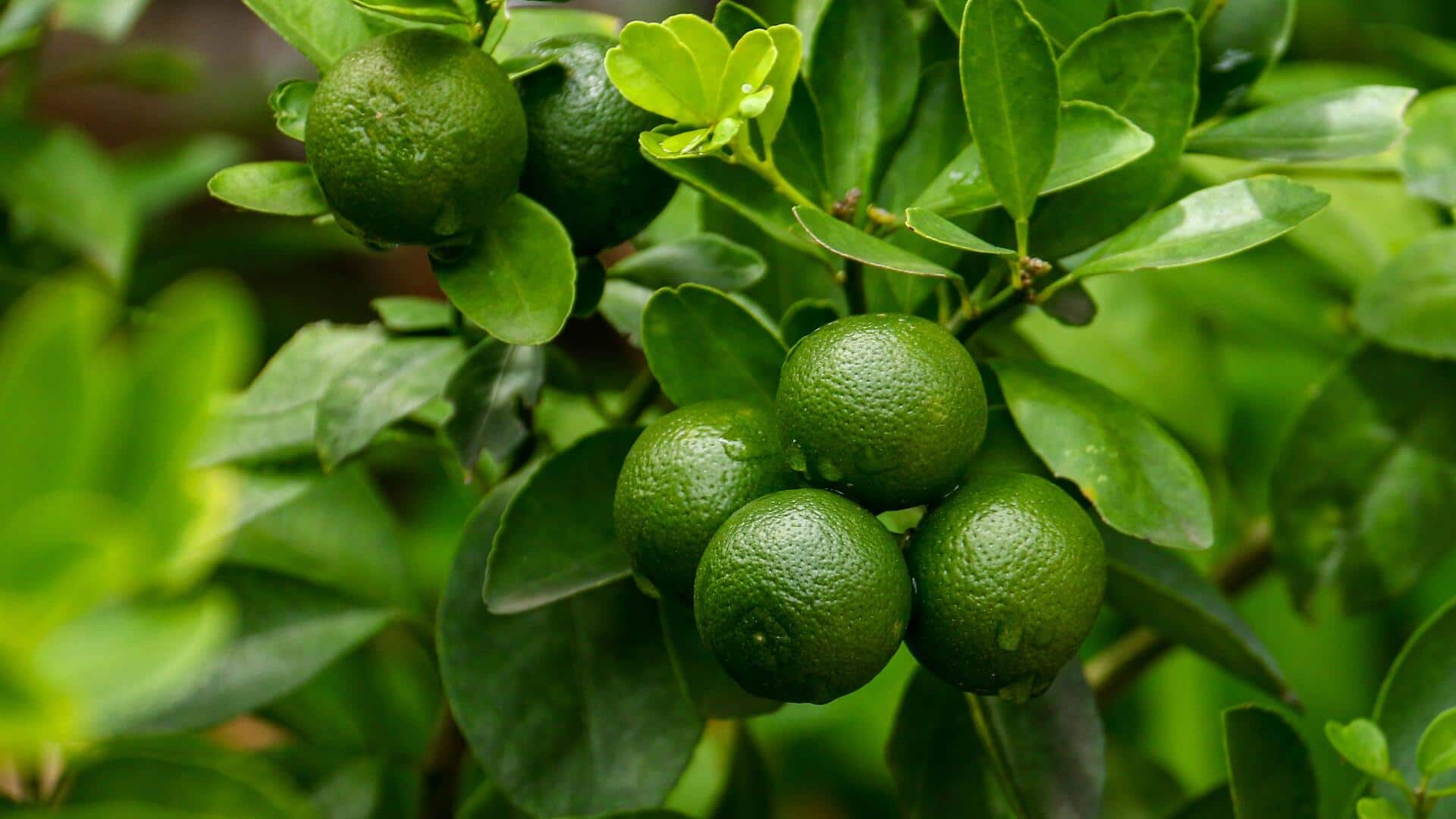
Grow fresh kaffir lime in your home garden
What's the story
Growing kaffir lime at home can be a rewarding experience, especially if you love the unique fragrance and culinary uses of the fruit. The plant is known for its aromatic leaves and can be grown indoors or outdoors, depending on your climate. With the right care and attention, you can have a healthy kaffir lime tree that thrives in your garden or kitchen. Here are some practical tips to help you grow kaffir lime at home.
Tip 1
Choosing the right location
Selecting an appropriate location is crucial for the growth of your kaffir lime tree. The plant prefers a warm climate with plenty of sunlight, so choose a spot that receives at least six hours of direct sunlight each day. If you're growing it indoors, place it near a south-facing window where it can get ample light. Make sure the area is well-drained to prevent waterlogging.
Tip 2
Soil preparation and planting
Kaffir limes thrive in well-draining soil with a slightly acidic pH level between five and six. You can prepare the soil by mixing regular potting mix with perlite or sand to improve drainage. When planting, make sure to dig a hole twice as wide as the root ball but not deeper than its height. This ensures that roots have enough space to spread without suffocating.
Tip 3
Watering and fertilizing techniques
Proper watering is key to keeping your kaffir lime tree healthy. Water it regularly but avoid overwatering, as it can cause root rot. Let the top inch of soil dry out before watering again. During the growing season, spring and summer, fertilize every four weeks with a balanced liquid fertilizer diluted to half strength to promote healthy growth without overloading nutrients.
Tip 4
Pruning for healthy growth
Pruning is essential to keep your kaffir lime tree in shape and healthy. Trim away any dead or damaged branches as soon as you spot them. This encourages new growth and improves air circulation within the canopy of leaves. Prune lightly in late winter or early spring before new growth starts, removing any crowded branches to prevent disease spread.