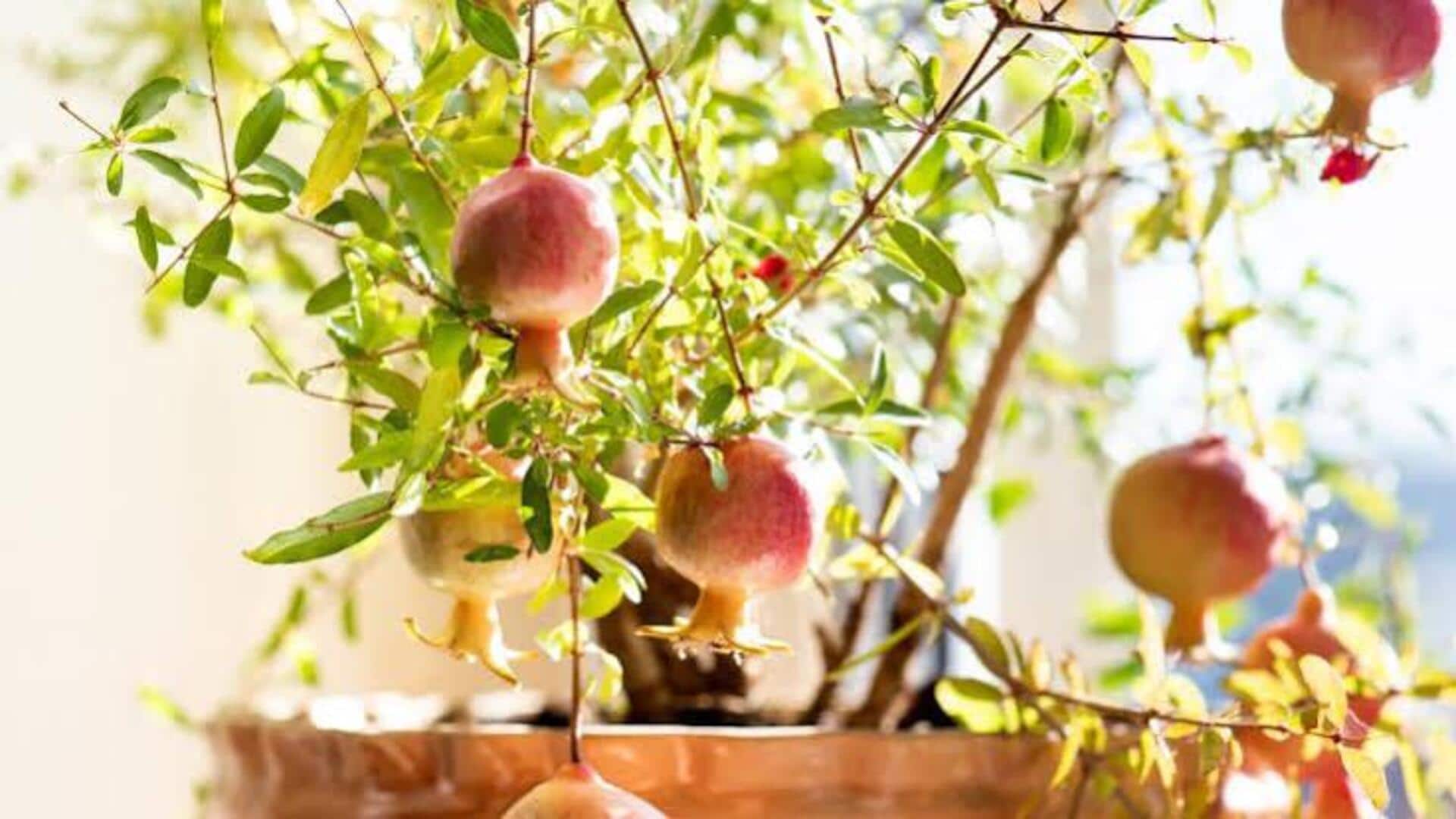
How to grow pomegranate indoors
What's the story
Growing pomegranates indoors can be a rewarding experience, giving you the chance to enjoy this exotic fruit even if you have limited outdoor space. With the right conditions and care, you can grow healthy pomegranate plants indoors. Here are some practical tips to help you successfully grow pomegranates indoors, from choosing the right pot to ensuring proper lighting, and watering.
Tip 1
Choosing the right pot
Selecting an appropriate pot is essential for indoor pomegranate cultivation.
Choose a container that is at least 12 inches deep, with drainage holes to prevent waterlogging.
A clay or terracotta pot is ideal, as it allows air flow to the roots.
Make sure the pot has enough space for root growth, as pomegranate trees can grow up to six feet tall if not pruned.
Tip 2
Providing adequate light
Pomegranates need plenty of sunlight to flourish indoors.
Place your plant near a south-facing window where it can soak up at least six hours of direct sunlight every day.
If natural light is insufficient, you can use grow lights as a substitute. Position the lights about 12 inches above the plant, and keep them on for 12 to 16 hours a day.
Tip 3
Watering techniques
Proper watering is key to keeping your indoor pomegranate healthy.
Water when the top inch of soil feels dry to touch, but avoid overwatering, which can lead to root rot.
Use well-draining soil mixed with sand or perlite for good drainage.
During summer months, you may need to increase watering frequency due to higher evaporation rates.
Tip 4
Fertilizing your plant
To ensure healthy growth and fruit production, fertilize your indoor pomegranate regularly.
Use a balanced liquid fertilizer diluted to half strength every four weeks during the growing season, from spring through early fall.
Avoid fertilizing during winter, when the plant goes dormant; this will prevent unnecessary stress on the roots.
Tip 5
Pruning for optimal growth
Pruning is essential for keeping your indoor pomegranate tree's shape and size in check. It encourages bushier growth and better air circulation.
Trim back any dead or overcrowded branches in late winter or early spring before new growth starts.
This way, you can maintain a healthy plant without it becoming too large for indoor spaces.