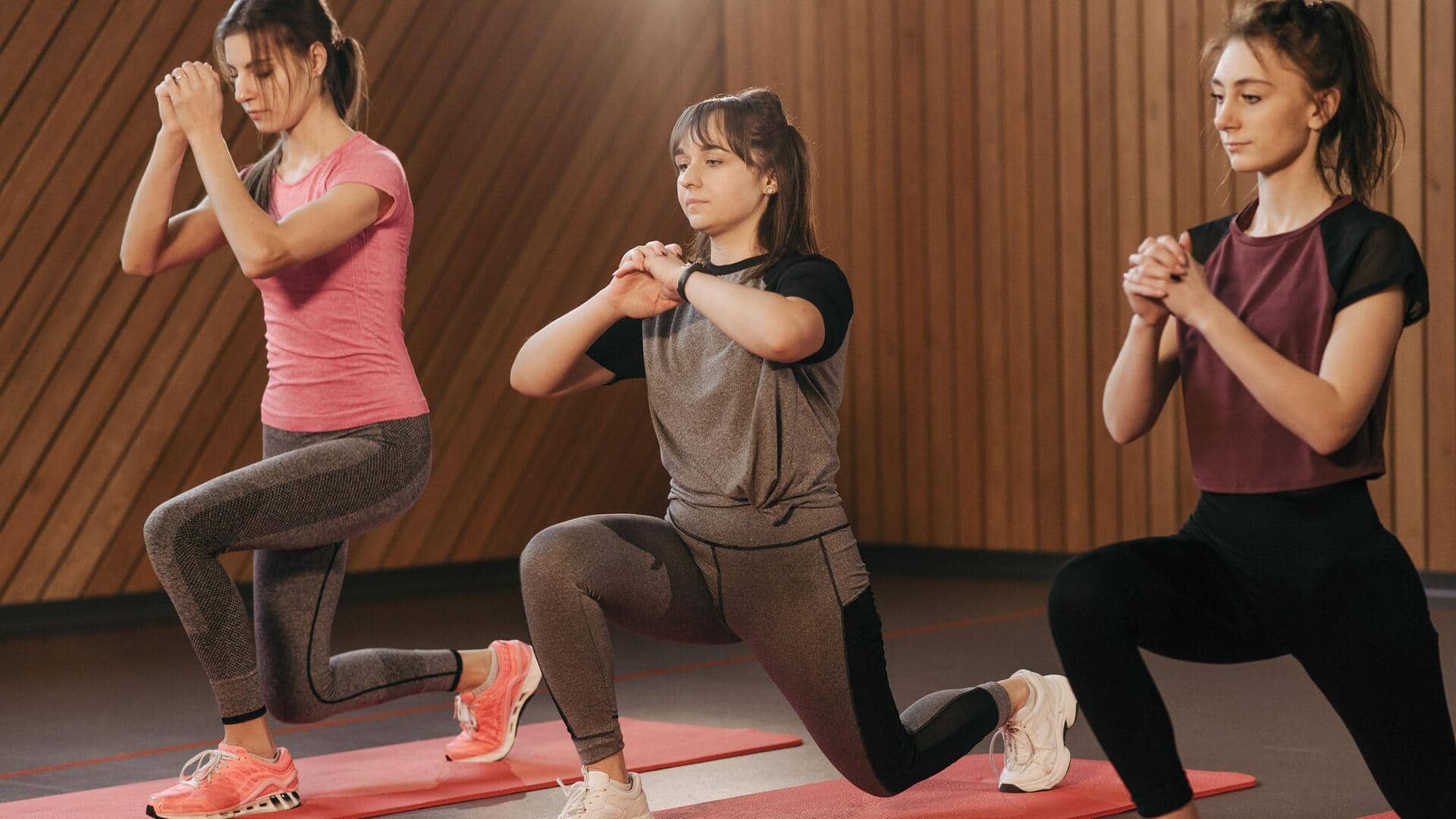
How to master the static lunge for stronger legs
What's the story
The static lunge is a basic exercise that can do wonders for your lower body strength and stability. It targets the quadriceps, hamstrings, glutes, and calves, making it a comprehensive workout for your legs. By mastering this movement, you can improve your balance and coordination, while also building muscle endurance. Here's a guide to perfecting the static lunge technique for maximum benefits.
Tip 1
Proper stance and alignment
Start by standing with feet hip-width apart. Step forward with one leg, ensuring that both knees are bent at a right angle. The front knee should be directly above the ankle, while the back knee hovers just above the ground. This alignment prevents strain on the joints, and ensures that the right muscles are engaged during the exercise.
Tip 2
Engaging core muscles
To maintain balance during a static lunge, it is important to engage your core muscles. Tighten your abdominal muscles as you lower yourself into the lunge position. This not only helps keep your torso upright but also provides stability throughout the movement. A strong core support prevents leaning or wobbling, making the exercise more effective.
Tip 3
Controlled movement pace
Performing static lunges at a controlled pace is essential for maximizing benefits and minimizing injury risk. Avoid rushing through repetitions; instead, focus on slow, deliberate movements. Lower yourself smoothly into each lunge position without bouncing or jerking motions. This methodical approach ensures that each part of the exercise is executed correctly, enhancing muscle engagement and overall workout effectiveness.
Tip 4
Breathing techniques
Breathing plays an important role in maintaining energy levels and focus while performing static lunges. Inhale deeply before you begin each repetition, exhaling slowly as you lower yourself into position. Proper breathing helps regulate oxygen flow to working muscles, enhancing endurance and performance during the exercise session.