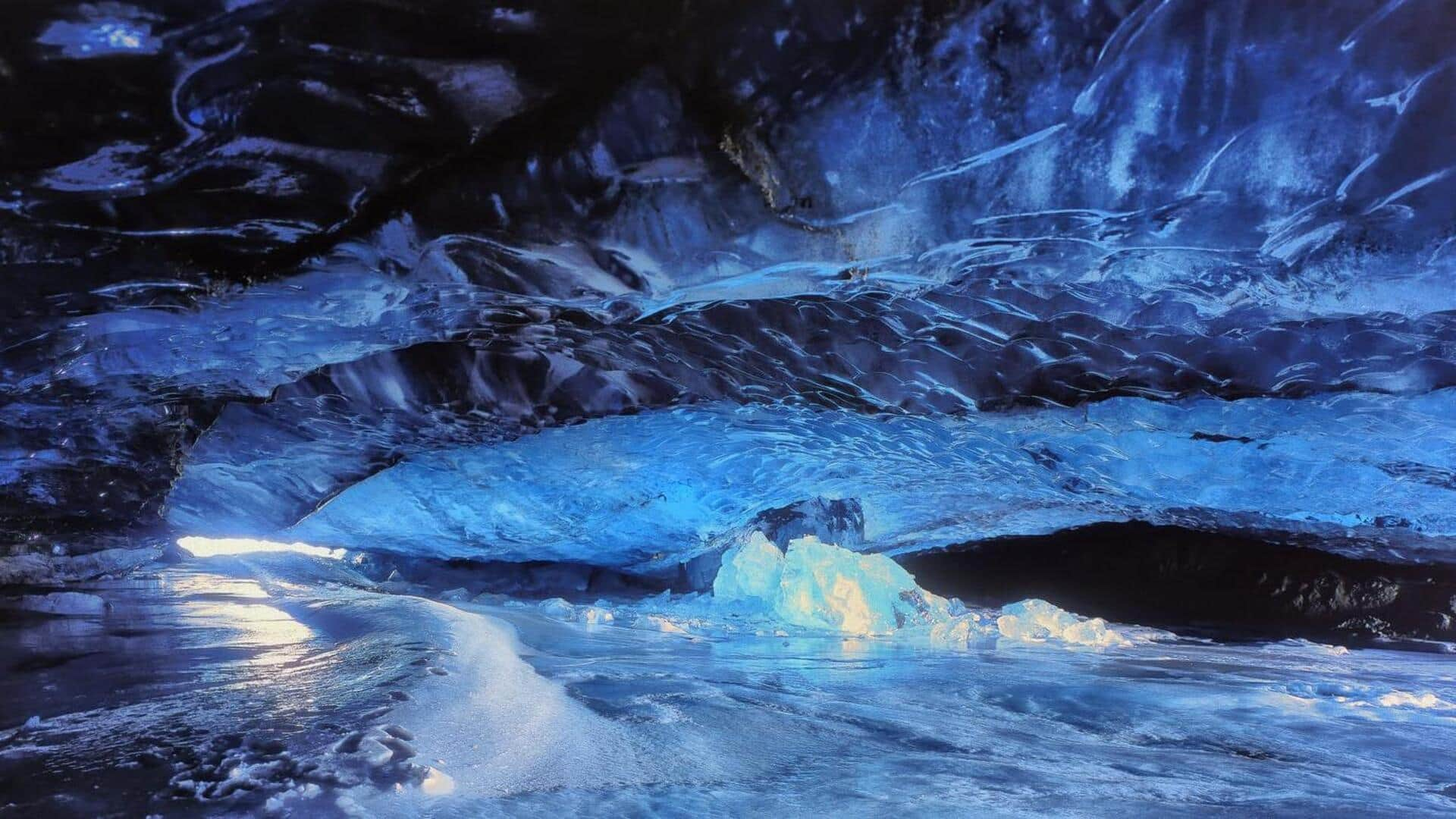
Don't leave Iceland without seeing these caves!
What's the story
Exploring the ice caves of Vatnajokull Glacier in Iceland is an experience like no other. The caves, which form and melt with the glacier, provide a glimpse into the ever-changing beauty of nature. The journey through these blue-hued tunnels is a rare opportunity to witness the raw power of ice and its intricate formations. Here's what you can expect on this icy adventure.
Formation
How ice caves form
Ice caves form when geothermal activity melts the ice from below, creating tunnels within glaciers.
These tunnels can be accessed during winter when the surface of the glacier is stable enough to walk on.
The constant freeze and thaw cycle shapes the cave's structure, resulting in stunning ice formations that change every year.
Timing
Best time to visit
The best time to visit Vatnajokull's ice caves is between November and March. During this period, the temperatures are low enough to keep the caves stable.
However, conditions can change quickly, so it's important to check weather forecasts and cave accessibility before planning your visit.
Safety first
Safety precautions
Safety is paramount while exploring ice caves.
Always wear appropriate gear such as crampons and helmets for traction and protection against falling ice.
Guided tours are recommended for those unfamiliar with glacier travel, as experienced guides can navigate safely through these icy landscapes.
Tips
Photography tips for ice caves
Capturing the beauty of ice caves requires some planning.
Use a tripod for stability in low light conditions inside the cave.
A wide-angle lens can help capture expansive views, while a polarizing filter reduces glare from icy surfaces.
Experiment with different settings to highlight textures within the ice formations.