
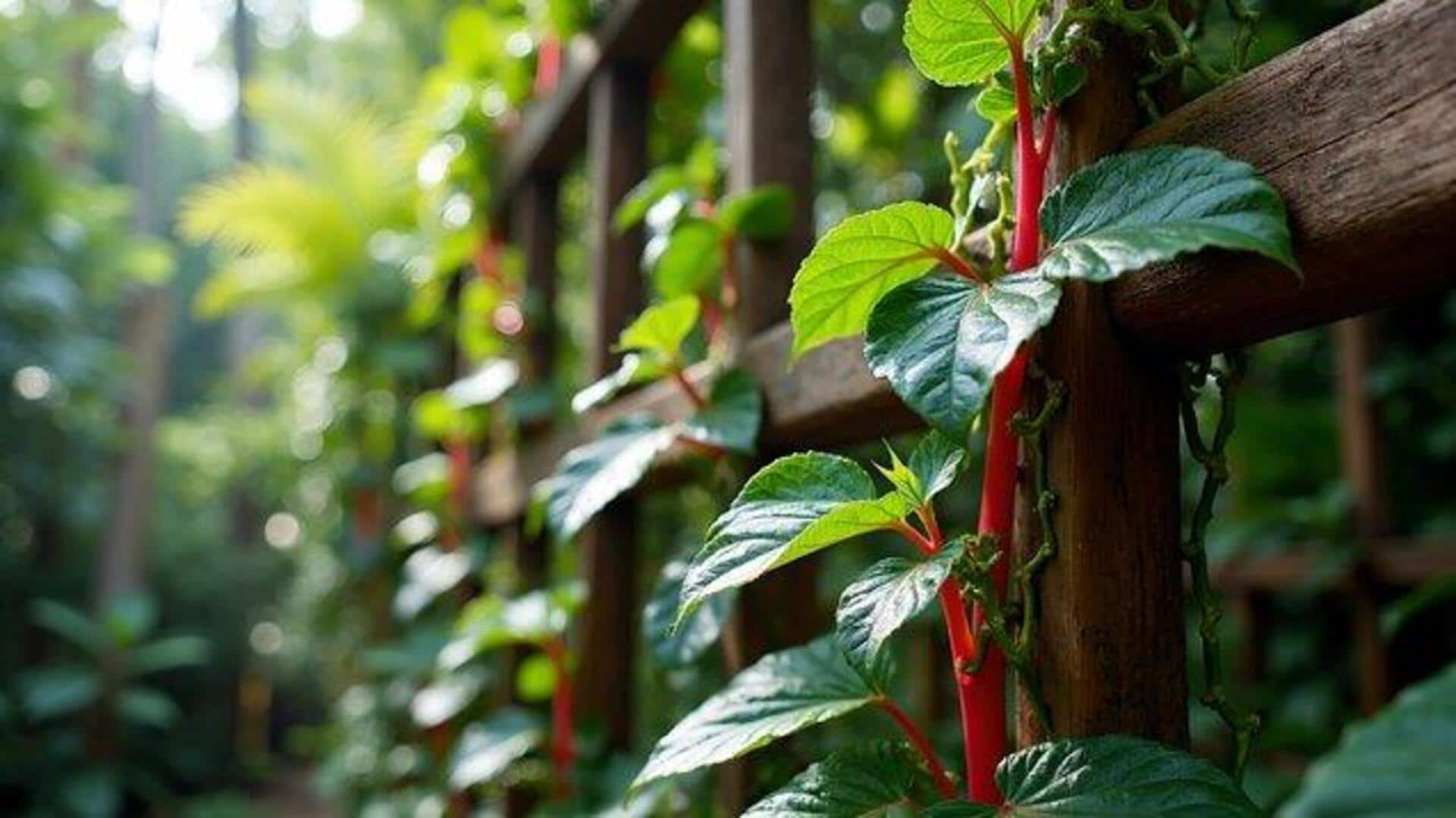
How to grow Malabar spinach at home
What's the story
Growing Malabar spinach indoors can be a rewarding experience, providing fresh greens year-round. This tropical vine is known for its heart-shaped leaves and climbing ability, making it an ideal candidate for indoor gardening. With the right conditions and care, you can enjoy a bountiful harvest of this nutritious plant. Here are some practical tips to help you successfully grow Malabar spinach indoors.
Tip 1
Choosing the right container
Selecting an appropriate container is essential for growing Malabar spinach indoors. Choose a pot that is at least 12 inches in diameter and has good drainage holes to prevent waterlogging. A larger container allows the roots to spread out, promoting healthier growth. Consider using a trellis or support system within the container, as Malabar spinach is a climbing vine that requires vertical space.
Tip 2
Providing adequate light
Malabar spinach thrives in bright light conditions, so it's important to place your plant near a south-facing window where it can receive at least six hours of sunlight each day. If natural light is insufficient, you can supplement it with grow lights positioned about 12 inches above the plant. Ensure the lights are on for 12 to 14 hours daily to mimic natural daylight conditions.
Tip 3
Maintaining optimal temperature and humidity
To keep Malabar spinach healthy indoors, keep the temperature between 65 degrees Fahrenheit and 85 degrees Fahrenheit (18 degrees Celsius and 29 degrees Celsius). This temperature range is ideal for its growth. Since indoor air can be dry, humidity levels should be kept at around 50% to 70%. To achieve this, you can use a humidifier or keep a tray of water near the plant to increase humidity levels naturally.
Tip 4
Watering and fertilizing techniques
Proper watering is key to keeping Malabar spinach healthy indoors. Water the plant when the top inch of soil feels dry but avoid overwatering as it can lead to root rot. Use a balanced liquid fertilizer every four weeks during the growing season to provide essential nutrients without overloading them with excess salts that could harm roots over time.