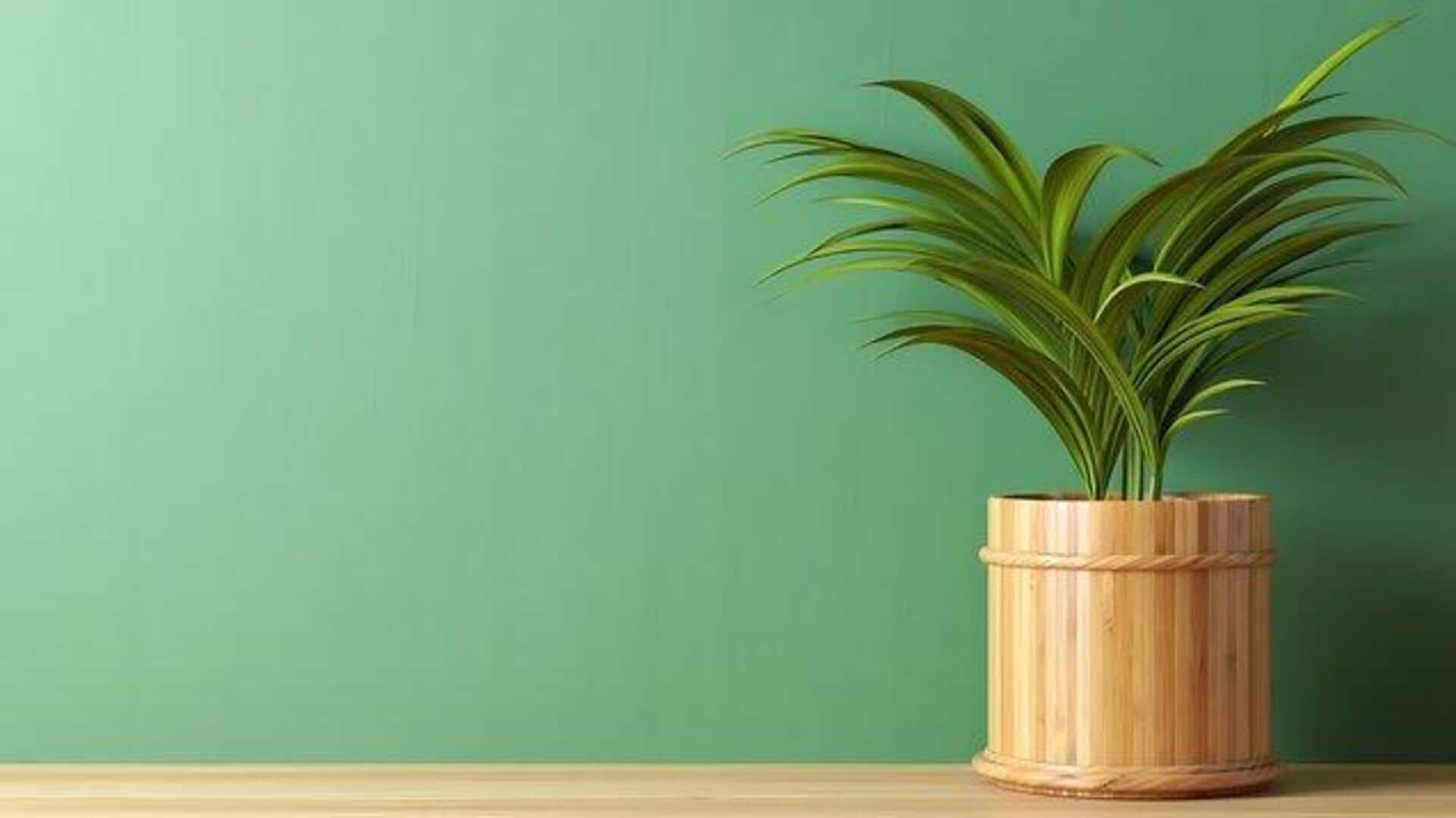
5 eco-friendly ideas for indoor plant pots
What's the story
Creating eco-friendly indoor plant pots is a great way to contribute to sustainability while adding a touch of greenery to your home. By using natural materials, you can reduce waste and minimize environmental impact. Here are five innovative ideas for crafting indoor plant pots from natural materials, each offering unique benefits and aesthetic appeal. These ideas not only promote sustainability but also encourage creativity in home gardening.
Tip 1
Coconut shell planters
Coconut shells make for an excellent biodegradable option for indoor plant pots.
After using the coconut, the shell can be cleaned and used as a planter.
Its sturdy structure makes it ideal for small to medium-sized plants.
Plus, coconut shells have natural drainage holes, which prevent overwatering.
They also add a tropical vibe to your indoor space, making them both functional and decorative.
Tip 2
Terracotta clay pots
Terracotta clay pots are a classic choice for indoor gardening.
Made from natural clay, these pots are porous, allowing air and moisture to circulate through the soil. This helps keep the roots healthy by preventing waterlogging.
Terracotta pots come in various sizes and shapes, giving you the freedom to choose according to your plant's needs.
Their earthy color also adds warmth to any room.
Tip 3
Bamboo fiber containers
Bamboo fiber containers are an innovative way to use one of nature's most sustainable resources.
These containers are made by mixing bamboo fibers with biodegradable resins, resulting in strong, yet lightweight, planters.
Bamboo fiber containers are resistant to cracking and breaking, making them ideal for indoor use. They also offer good insulation for plant roots, maintaining optimal temperature conditions.
Tip 4
Recycled paper mache pots
Recycled paper mache pots provide an eco-friendly way to repurpose old newspapers or paper waste into sturdy planters.
By mixing shredded paper with water and natural adhesives like flour paste or starch glue, you can create a moldable paste that hardens over time.
Once shaped into desired forms around molds or balloons, these pots become lightweight alternatives that decompose naturally when disposed of properly.
Tip 5
Wooden crate planters
Wooden crate planters provide rustic charm and durability when crafted from reclaimed wood sources such as pallets or old furniture pieces.
Sanded down smooth edges ensure safety during handling, while retaining characterful imperfections unique only found within each piece used during construction.
Ideal for larger plants needing ample space, these versatile crates can be painted or stained to match existing decor styles effortlessly.