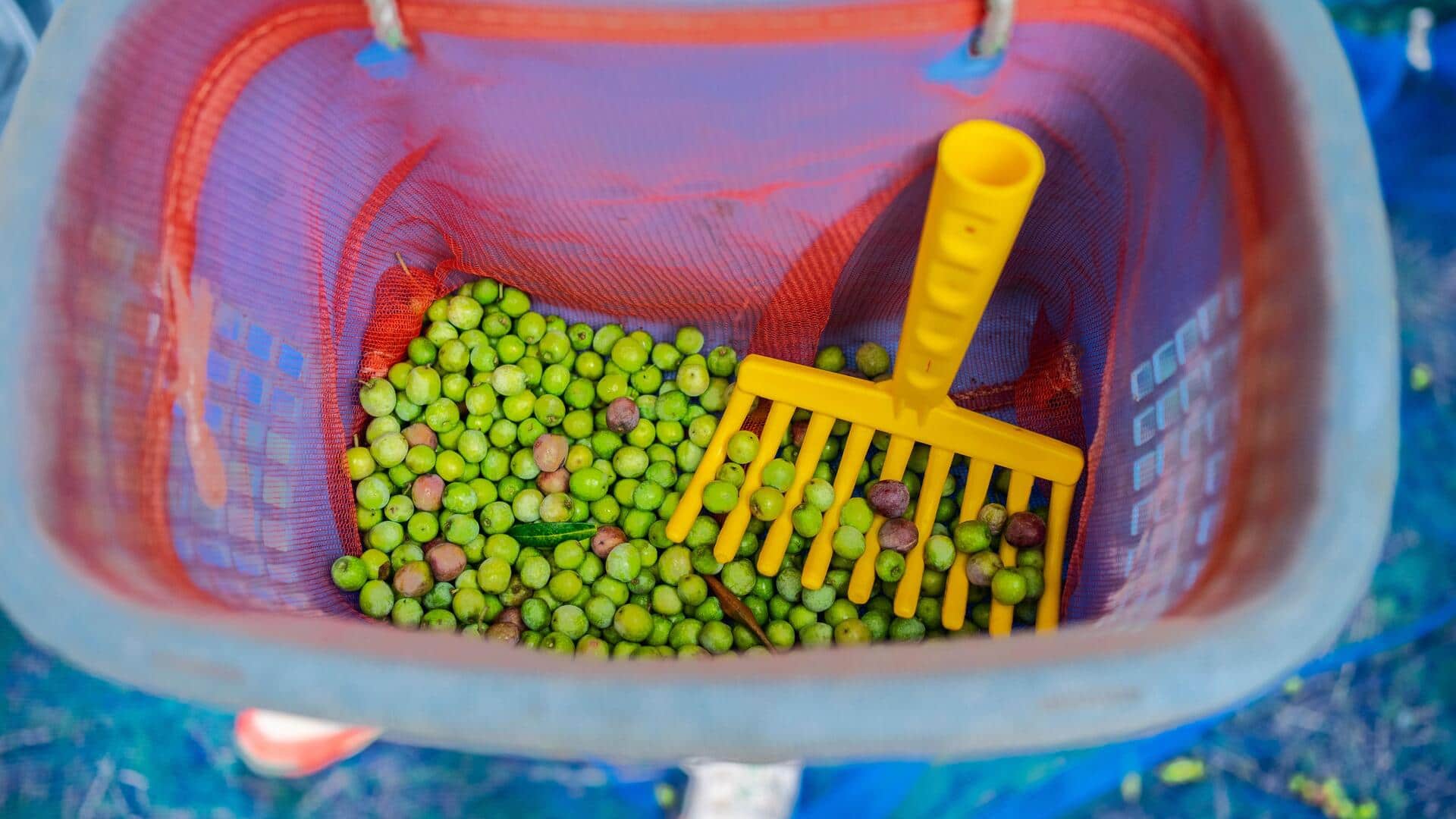
A look at Italy's age-old olive harvesting tradition
What's the story
Italian olive harvesting is a centuries-old tradition, integral to the country's agricultural heritage. The process, which is a labor of love, is carried out with care and precision to ensure the best quality olives. From the tools used to the methods adopted, olive harvesting in Italy has remained largely unchanged over the years. Here are some insights into this timeless practice and its importance to Italian culture and economy.
#1
Traditional harvesting methods
Traditionally, Italian olive harvesting was done by hand, with workers plucking olives directly from the trees.
This method ensured that only ripe olives were collected, minimizing damage to the fruit and tree.
In many regions, nets are spread under trees to catch falling olives, making collection easier.
Though modern machinery is increasingly being used, many producers still prefer hand-picking for quality control.
#2
Tools of the trade
The tools used in olive harvesting have remained largely unchanged over the years.
Hand-held rakes are commonly used to gently comb through branches and dislodge ripe olives without damaging them.
Some workers also use small sticks or poles to reach higher branches.
In recent years, electric rakes have become popular as they speed up the process while minimizing physical strain on workers.
#3
Timing is everything
The timing of olive harvest is critical to determining the quality of oil produced.
In Italy, olives are usually harvested from late autumn to early winter when they are perfectly ripe.
Harvesting too early or too late can alter the flavor profile of the resulting oil.
Farmers keep a close eye on weather conditions and test olive ripeness before deciding on the perfect time for harvest.
#4
Economic impact on local communities
Olive cultivation is a major contributor to Italy's economy, especially in rural communities where it is the main source of income.
The harvest season creates jobs for thousands of people across the country.
Not only does it support local economies, but it also preserves traditional agricultural practices that have been passed down through generations.