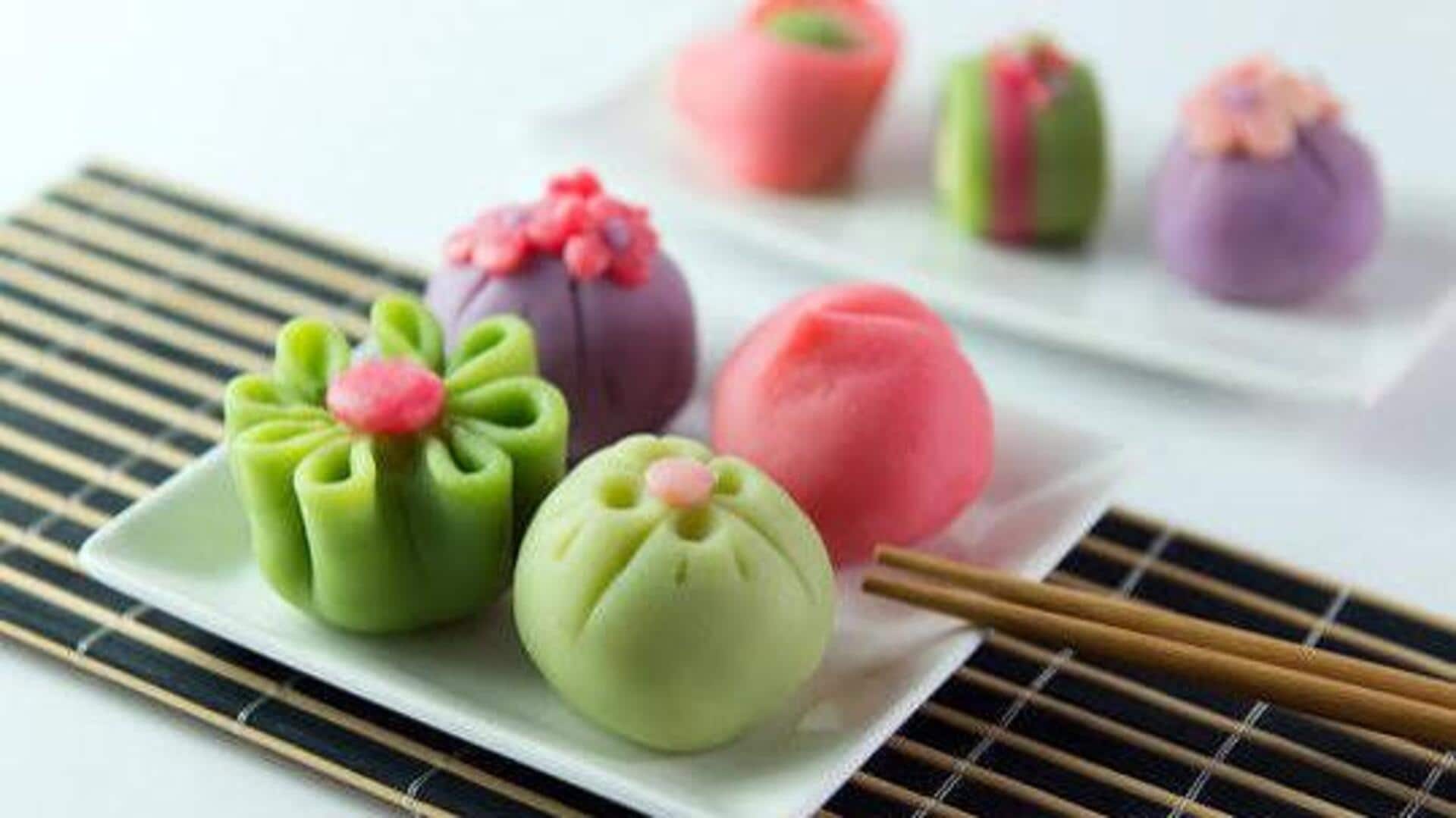
Wagashi: The beautiful sweet treats of Japan
What's the story
Wagashi, the traditional Japanese sweets, are an integral part of the country's culture. These delicacies are not just about taste but also about aesthetics and seasonal themes. Made with natural ingredients like rice flour, red bean paste, and fruits, wagashi are often enjoyed with tea. They come in a variety of shapes and flavors, each telling a story or celebrating a season.
#1
Hanami dango: A spring favorite
Hanami dango is a popular spring wagashi that celebrates the cherry blossom season. These colorful rice dumplings are skewered on sticks and usually served in three colors: pink, white, and green. The pink symbolizes cherry blossoms, the white represents purity, and the green stands for new growth. Hanami dango is often enjoyed during hanami picnics under blooming cherry trees.
#2
Nerikiri: Artful seasonal treats
Nerikiri is an exquisite wagashi made from sweetened white bean paste mixed with natural colorings. These treats are shaped into delicate flowers or leaves to reflect the changing seasons. Nerikiri is commonly served at tea ceremonies and is appreciated for its artistic presentation, as well as its subtle sweetness.
#3
Yatsuhashi: Cinnamon-spiced delight
Yatsuhashi is a unique wagashi that hails from Kyoto. Made from glutinous rice flour mixed with sugar and cinnamon, this sweet is often rolled out flat or folded into triangles. It can be filled with anko (sweet red bean paste) or left plain. Yatsuhashi has a distinct aroma due to the cinnamon, which makes it different from other Japanese sweets.
#4
Kashiwa mochi: Celebrating Children's Day
Kashiwa mochi is a traditional wagashi enjoyed on Children's Day in Japan on May 5. Made by wrapping sweetened red bean paste in oak leaves, this treat symbolizes strength and protection for children, as the oak tree doesn't shed its leaves until the next spring. The earthy flavor of the oak leaf adds an interesting dimension to the sweetness of the mochi.
#5
Daifuku: Soft rice confections
Daifuku is a beloved wagashi characterized by its soft, chewy texture. It consists of glutinous rice flour dough enveloping a filling, most commonly sweetened red bean paste. Occasionally, it may also be filled with fruit or other sweet fillings. Daifuku is available year-round and is loved for its versatility and the delightful contrast between its tender exterior and sweet interior.