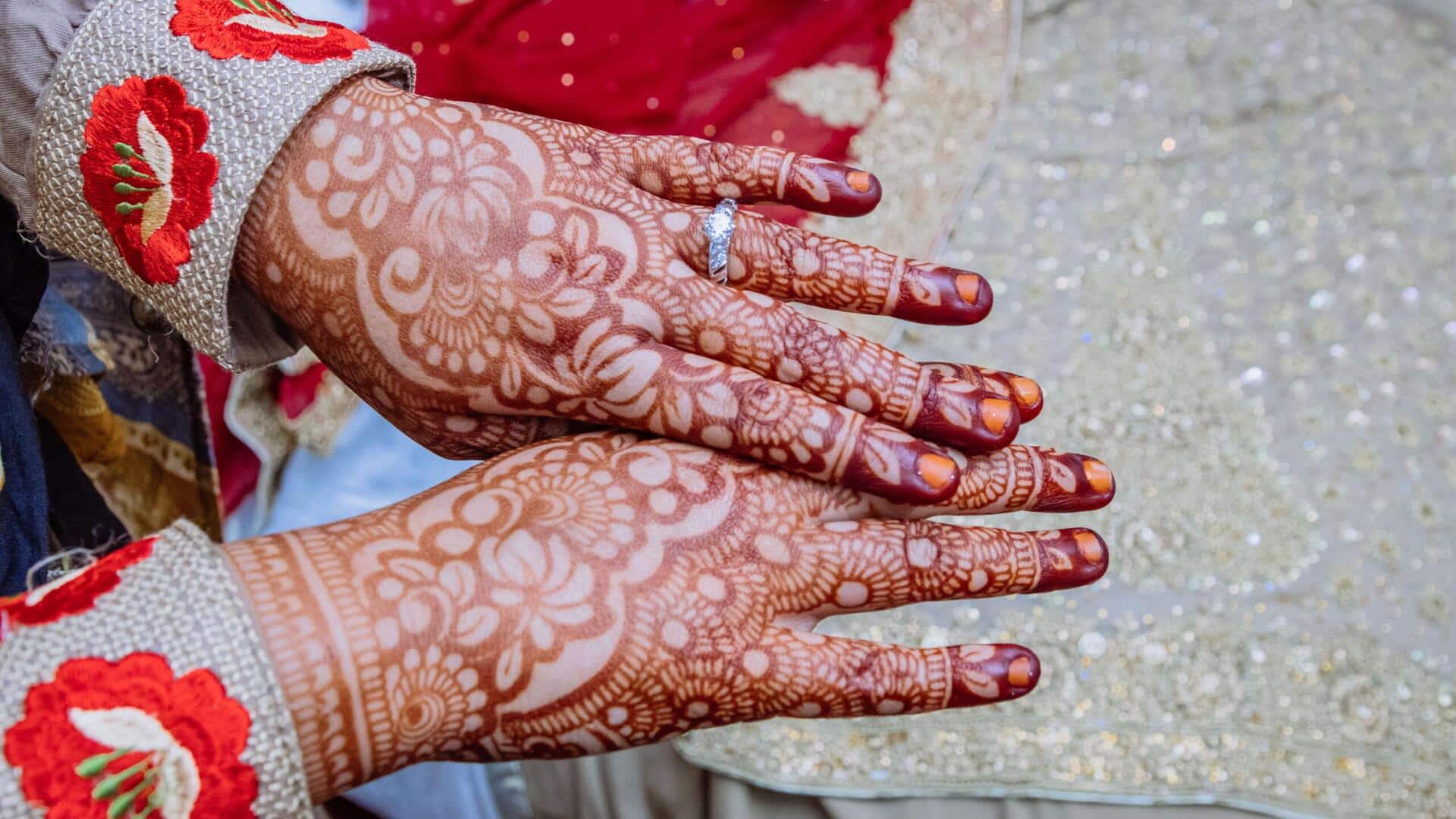
These Kenyan wedding henna designs are so beautiful!
What's the story
Kenyan wedding henna designs are steeped in cultural significance, often used to adorn brides on their special day. These intricate patterns are not just for beauty, but also for blessings and protection. Each design has its own meaning, reflecting the rich traditions of various Kenyan communities. From floral motifs to geometric shapes, these henna designs play an integral role in the celebrations, making them memorable and meaningful.
#1
Floral motifs in henna designs
Floral motifs are a common sight in Kenyan wedding henna designs. They are said to symbolize beauty and new beginnings. Roses, lilies, and other flowers are often used to create delicate patterns on the bride's hands and feet. These designs not only look beautiful but also represent the blossoming of love and commitment between the couple.
#2
Geometric patterns and their meanings
Geometric patterns are also a favorite in Kenyan henna art. Triangles, circles, and squares are arranged in intricate designs that symbolize harmony and balance. These patterns are often used to represent unity within the family and community during weddings. The symmetry of geometric shapes adds an element of elegance to traditional henna applications.
#3
Symbolic elements in henna art
Certain elements like peacocks or paisleys are common in Kenyan wedding henna designs. These symbols usually stand for prosperity and fertility. Peacocks, with their beautiful plumage, are a symbol of grace, while paisleys are commonly associated with abundance. Their presence in henna art adds layers of meaning to the bride's adornment.
#4
Regional variations in henna designs
Kenya's diverse cultures also mean that henna designs vary by region. Coastal communities may prefer more floral-heavy designs, while inland areas may favor geometric patterns. Each region's unique style is a testament to its cultural heritage, ensuring that every wedding is a reflection of its own traditions and values.